
The Room Next Door (2024)
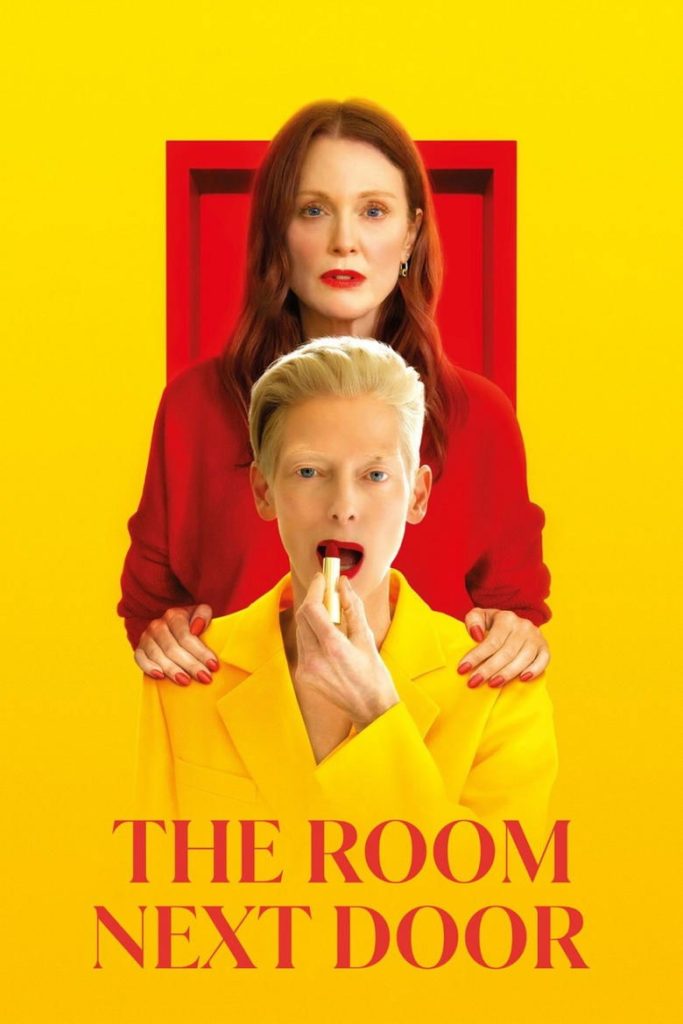
Story overview
The Room Next Door is a 2024 Spanish drama directed by Pedro Almodóvar, starring Julianne Moore, Tilda Swinton, John Turturro, Alessandro Nivola, and Juan Diego Botto. The film follows Ingrid and Martha, former close friends who worked together at a magazine in their youth. Ingrid became an autofiction novelist, while Martha pursued a career as a war reporter. Life circumstances separated them for years, but they unexpectedly reunite in an extreme yet strangely sweet situation, exploring themes of friendship, memory, and reconnection.
Parent Guide
A character-driven drama with emotional depth, suitable for mature pre-teens and teens. Focuses on adult friendships, career reflections, and reconnection without graphic content.
Content breakdown
Possible references to war reporting contexts, but no depicted violence or physical peril.
Emotionally intense scenes about separation and reunion; may be disturbing for sensitive viewers due to thematic weight.
Subtitled Spanish dialogue; no strong profanity expected, but may include mature conversational language.
Possible romantic or intimate references typical of drama, but no explicit sexual content or nudity indicated.
No substance use depicted or implied.
High emotional intensity from themes of lost friendship, career pressures, and reconciliation; may resonate deeply with older viewers.
Parent tips
This PG-13 drama focuses on mature themes of friendship, career paths, and life choices, with emotional depth typical of Almodóvar's work. It may be suitable for teens and some pre-teens, but younger children might find it slow or confusing. Consider your child's sensitivity to emotional intensity and ability to follow nuanced character-driven stories. The film is in Spanish with subtitles, which may require reading skills.
Parent chat guide
Parent follow-up questions
—
- What did you think about Ingrid and Martha being friends again?
- How do you think they felt when they met after so long?
- Why do you think Ingrid and Martha lost touch? How do careers affect friendships?
- What does the 'extreme but sweet situation' tell us about their relationship?
- How does Almodóvar use drama to explore themes of memory and identity? Compare Ingrid's autofiction to Martha's war reporting—what do they say about truth and storytelling? Discuss the film's portrayal of adult friendships and reconciliation.
🎭 Story Kernel
The film explores the profound intimacy of friendship at the threshold of death. Based on Sigrid Nunez’s novel, it follows Ingrid, a writer terrified of mortality, as she reconnects with Martha, a former war correspondent facing terminal cancer. Rather than a morbid exploration of suicide, Almodóvar frames Martha’s choice to end her life with dignity as an act of autonomy. The "room next door" symbolizes the supportive presence that doesn't interfere but validates existence. It’s a dialogue-heavy piece that examines how we confront the inevitable, contrasting Martha’s past in war zones with her current internal battle. The film shifts from the fear of death to the grace of companionship, suggesting that while we die alone, we don't have to be lonely in the process.
🎬 Visual Aesthetics
Almodóvar’s transition to English-language cinema doesn't dilute his aesthetic signature; instead, it refines it. Working with cinematographer Eduard Grau, the film is saturated with a deliberate, painterly color palette—vivid reds, deep greens, and melancholic blues that echo the emotional states of the protagonists. The production design often evokes Edward Hopper’s sense of architectural solitude, particularly in the secluded house where the climax unfolds. Visual metaphors abound, such as the falling pink snow, which serves as a surreal, poetic bridge between the harsh reality of illness and the stylized beauty of Almodóvar’s world. The framing often places Moore and Swinton in profile or reflected in glass, emphasizing their connection and the thin veil between life and the beyond.
🔍 Details & Easter Eggs
💡 Behind the Scenes
This marks Pedro Almodóvar’s first full-length feature film in the English language, following his successful short films The Human Voice and Strange Way of Life. The film achieved a major milestone by winning the Golden Lion at the 81st Venice International Film Festival, a first for the legendary Spanish director. Interestingly, the screenplay is an adaptation of Sigrid Nunez’s novel What Are You Going Through. The production was filmed primarily in Madrid and New York, blending Almodóvar’s European sensibilities with an American literary foundation, featuring powerhouse performances from Academy Award winners Tilda Swinton and Julianne Moore.
Where to watch
Choose region:
- Netflix
- Amazon Video
- Apple TV Store
- Google Play Movies
- YouTube
- Fandango At Home
Trailer
Trailer playback is unavailable in your region.