The School for Good and Evil (2022)
Story overview
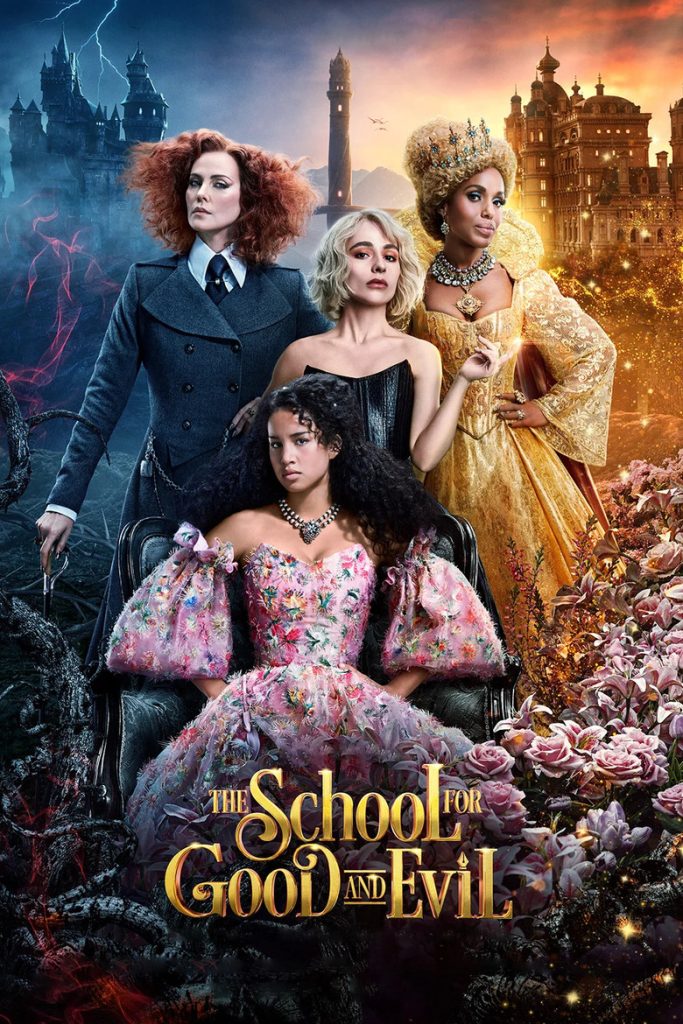
The School for Good and Evil is a 2022 fantasy adventure film based on the popular book series. It follows two best friends who are unexpectedly whisked away to a magical school where students are trained to become fairy tale heroes or villains. The story explores themes of friendship, identity, and challenging stereotypes as the girls navigate this enchanted world where nothing is as simple as good versus evil.
Parent Guide
A fantasy adventure with magical action and themes of friendship and identity, suitable for older children and teens with some guidance for intense moments.
Content breakdown
Fantasy action sequences with magical combat, characters in peril, and some threatening situations typical of fairy tale adventures.
Some dark fantasy elements and magical creatures that might be unsettling for younger viewers, but nothing graphic or excessively frightening.
Occasional mild language or insults consistent with fantasy adventure dialogue.
No sexual content or nudity present in the film.
No substance use depicted in the movie.
Themes of friendship conflict, identity crisis, and moral dilemmas create emotional tension, particularly in character relationships.
Parent tips
This PG-13 fantasy adventure contains magical action sequences and some darker themes that may be intense for younger viewers. The film explores moral ambiguity and challenges traditional fairy tale tropes, which could prompt discussions about friendship, identity, and societal expectations. Parents should be aware that while the film has comedic elements, it also includes fantasy peril and some emotionally intense moments that might be overwhelming for sensitive children.
Parent chat guide
Parent follow-up questions
- What was your favorite magical creature in the movie?
- How did the two friends help each other?
- What colors did you see in the magical school?
- Which character made you smile the most?
- What would you learn at a magic school?
- Why do you think the two friends were sent to different schools?
- What makes someone 'good' or 'evil' in the story?
- How did the characters show bravery?
- What would you do if you were in a magical school?
- How did the friends solve their problems together?
- How does the movie challenge traditional fairy tale stereotypes?
- What does the film say about judging people by appearances?
- How do the characters grow and change throughout the story?
- What role does friendship play in overcoming challenges?
- How does the magical world reflect real-world social dynamics?
- How does the film explore the complexity of moral choices?
- What commentary does the movie make about societal expectations and labels?
- How do the characters' journeys reflect coming-of-age experiences?
- What does the film suggest about the nature of good and evil?
- How does the school system in the movie parallel real educational institutions?
🎭 Story Kernel
At its core, 'The School for Good and Evil' is less about good versus evil and more about the tyranny of narrative expectation. The film critiques the rigid, binary archetypes of classic fairy tales, arguing that true identity is a messy, self-authored choice, not a preordained destiny. Sophie and Agatha's journey reveals that 'good' can be performative and narcissistic (Sophie's initial desire for the 'Ever' role), while 'evil' can be born from protective love and moral complexity (Agatha's actions). The driving force isn't magic, but the characters' rebellion against the storybook roles the School—and society—tries to force upon them. The real villain is the system itself, which demands conformity to simplistic labels.
🎬 Visual Aesthetics
The film employs a stark, almost didactic visual dichotomy that gradually dissolves. The School for Good is awash in pastels, clean lines, and soft, ethereal lighting, mirroring the superficial perfection its students perform. The School for Evil is all jagged edges, moody shadows, and a saturated, grim palette. Crucially, this separation breaks down as the story progresses; color bleeds between realms, and the climactic battles occur in a merged, chaotic visual space. The camera often uses tight close-ups on the girls' faces during moral crises, emphasizing internal conflict over external spectacle. The action leans into theatrical, spell-casting choreography rather than raw physicality, keeping the focus on the power of words and intent.
🔍 Details & Easter Eggs
💡 Behind the Scenes
The film is based on the first book in a six-novel series by Soman Chainani. Director Paul Feig, known for comedies like 'Bridesmaids,' intentionally sought to subvert the genre. Key scenes were shot at Hatfield House in England, a frequent stand-in for magical academies. Actress Sophia Anne Caruso (Sophie) has a strong Broadway background, which influenced the theatrical delivery of many lines. Notably, the elaborate costume and set designs required separate, dedicated units for the 'Good' and 'Evil' sides to maintain their distinct visual languages throughout production.
Where to watch
Choose region:
- Netflix
- Netflix Standard with Ads
Trailer
Trailer playback is unavailable in your region.