
The Secret: Dare to Dream (2020)
Story overview
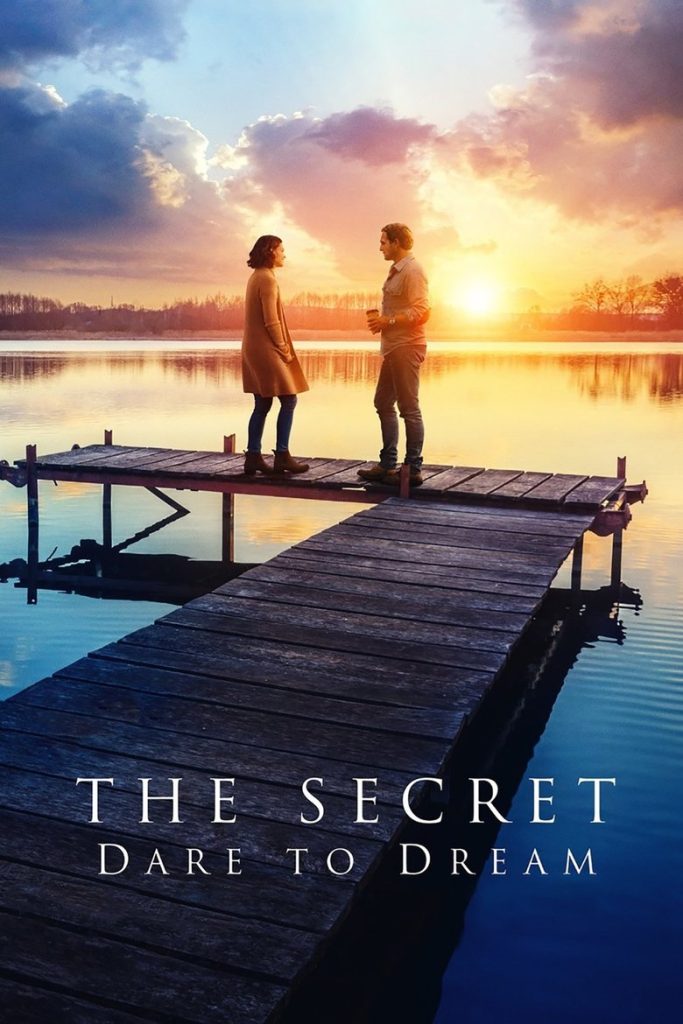
The Secret: Dare to Dream is a 2020 drama-romance film based on Rhonda Byrne's self-help book. It follows a widowed mother of three who encounters a mysterious man with a positive outlook on life. The story explores themes of hope, resilience, and finding joy after loss through gentle, uplifting interactions.
Parent Guide
A gentle drama about hope and resilience with mild emotional themes suitable for older children.
Content breakdown
No violence or physical peril depicted.
Themes of grief and loss are present but handled gently.
No offensive language expected in this type of film.
Mild romantic themes without sexual content.
No substance use depicted.
Emotional themes of loss and hope are present but not intense.
Parent tips
This PG-rated film deals with themes of grief and loss in a gentle, hopeful manner that may be appropriate for older children. Parents should be prepared to discuss how the characters cope with difficult emotions and find positivity. The romantic elements are mild and focus on emotional connection rather than physical intimacy.
Parent chat guide
Parent follow-up questions
- What was your favorite part of the movie?
- How did the characters help each other feel better?
- What makes you feel happy when you're sad?
- Can you draw a picture of something that makes you smile?
- What nice things did the characters do for each other?
- How did the main character handle her difficult situation?
- What did you learn about being positive from this movie?
- Why do you think the characters kept trying even when things were hard?
- How did the children in the movie help their mom?
- What would you do to cheer someone up who was feeling sad?
- What different ways did characters cope with loss in the story?
- How does the movie show that positive thinking can affect outcomes?
- What responsibilities did the mother have, and how did she manage them?
- How did relationships between characters change throughout the film?
- What life lessons about resilience did you notice in the story?
- How does the film balance realistic challenges with optimistic messaging?
- What critiques might someone have about the 'positive thinking' approach presented?
- How do the romantic elements serve the story's larger themes?
- What does the film suggest about rebuilding life after major loss?
- How might different family members interpret the movie's message differently?
🎭 Story Kernel
The film is ultimately a vehicle for the core tenets of Rhonda Byrne's 'The Secret' philosophy—specifically, the 'law of attraction'—dressed in a romantic drama. It expresses that focused positive thinking and gratitude can manifest desired outcomes, literally bending reality. The characters are driven not by complex internal conflicts but by their alignment (or misalignment) with this principle. Miranda's financial despair and Bray's mysterious optimism are opposing poles of this belief system. The plot mechanics, including the sudden inheritance and the contrived car crash, exist solely to demonstrate the philosophy's 'magic,' reducing human struggle to a simple matter of correct mental posture.
🎬 Visual Aesthetics
The visual language is relentlessly polished and sun-drenched, employing a soft-focus, high-key lighting scheme that bathes even the storm sequences in a kind of glamorous sheen. This aesthetic sanitizes poverty and trauma, making Miranda's crumbling house look quaintly charming rather than desperate. The camera often lingers on characters' beatific smiles during moments of 'manifestation,' visually equating enlightenment with a generic Hallmark-card sincerity. Symbolism is blunt: the persistent rain and grey skies clear to brilliant sunshine as characters embrace positivity, and the color palette shifts from muted blues and greys to warm golds and greens, mapping emotional states onto the weather with zero subtlety.
🔍 Details & Easter Eggs
💡 Behind the Scenes
The film is a direct adaptation of Rhonda Byrne's 2006 best-selling self-help book 'The Secret,' with Byrne serving as a producer. It was shot primarily in New Orleans, Louisiana, standing in for the Gulf Coast setting. Katie Holmes, who plays Miranda, was also an executive producer on the project. Director Andy Tennant previously helmed similar aspirational, faith-adjacent dramas like 'Fools Rush In' and 'Hitch.' The script went through numerous revisions over a decade, struggling to translate the book's abstract concepts into a conventional three-act narrative structure.
Where to watch
Choose region:
- Netflix
- Starz Apple TV Channel
- Netflix Standard with Ads
- Amazon Video
- Apple TV
- Google Play Movies
- YouTube
- Fandango At Home
Trailer
Trailer playback is unavailable in your region.