
The Secret in Their Eyes (2009)
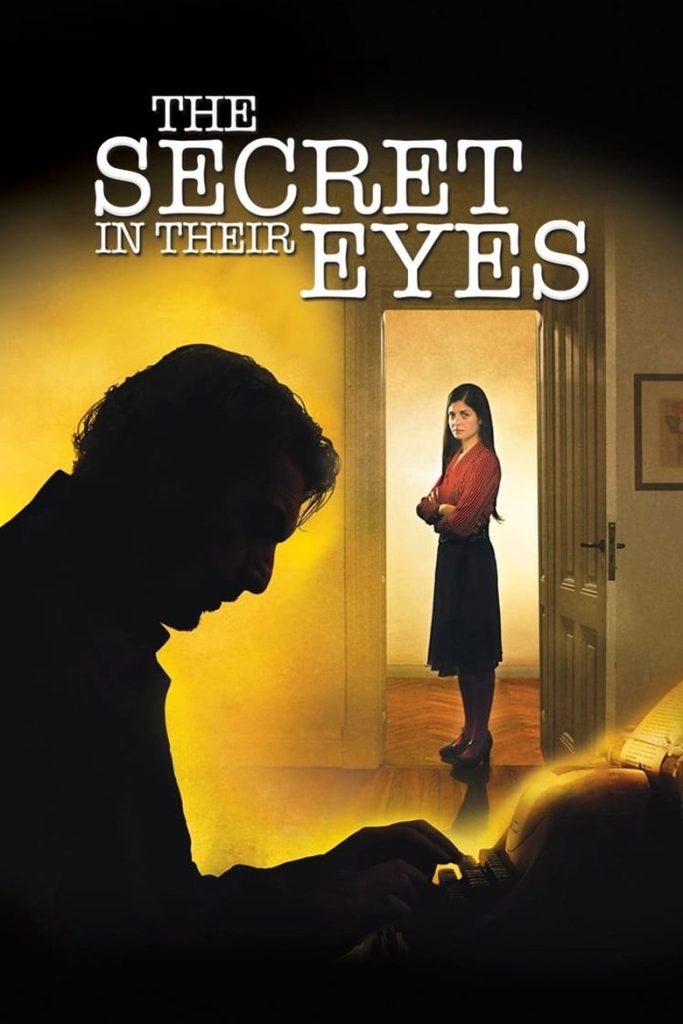
Story overview
This Argentine-Spanish mystery drama follows a retired investigator revisiting a haunting unsolved case from his past. As he writes a novel about the brutal crime, he reconnects with a former colleague to examine the evidence and memories that have troubled him for years. The film explores themes of justice, obsession, and the lingering impact of violence through a complex narrative that shifts between past and present.
Parent Guide
A mature mystery thriller dealing with graphic violent crime and its psychological aftermath, suitable only for older teens with parental guidance.
Content breakdown
Graphic depiction of rape and murder shown in flashbacks; crime scene investigation with blood evidence; tense confrontations; overall violent theme central to plot
Disturbing crime scenes and flashbacks; psychological tension; themes of obsession and unresolved trauma; emotional intensity throughout
Strong language including profanity related to crime and frustration; not excessive but present in emotional scenes
Graphic sexual violence (rape scene); brief consensual sexual situations; thematic sexual content integral to plot
Social drinking in some scenes; characters shown with alcohol in social settings
High emotional stakes throughout; themes of grief, obsession, and injustice; sustained psychological tension
Parent tips
This R-rated film contains mature themes including a graphic depiction of rape and murder that forms the central mystery. The violent crime is shown in disturbing flashbacks with intense emotional impact. While not excessively gory, the psychological weight of the crime and its investigation creates sustained tension throughout the 130-minute runtime.
Parents should note the film includes strong language, brief sexual content, and scenes of emotional distress related to the violent crime. The complex narrative structure with time jumps may be challenging for younger viewers to follow. The film's exploration of obsession, injustice, and trauma requires emotional maturity to process appropriately.
Parent chat guide
After viewing, focus conversations on the film's themes rather than graphic details. Discuss how the characters deal with unresolved trauma and the passage of time. Emphasize that while the crime depicted is fictional, similar real-world issues exist and can be discussed with trusted adults if they raise concerns.
Parent follow-up questions
- What was your favorite part of the movie?
- How did the movie make you feel?
- What colors or sounds do you remember from the movie?
- Was there anything that surprised you?
- What would you tell a friend about this movie?
- What was the main problem the characters were trying to solve?
- How did the characters show they cared about each other?
- What did you learn about how investigators solve crimes?
- How did the movie show the importance of telling the truth?
- What would you do if you saw something unfair happening?
- Why do you think the main character couldn't forget this case?
- How does the movie show the difference between past and present?
- What does the film suggest about how people deal with difficult memories?
- How did the characters show persistence in seeking justice?
- What responsibilities do people have when they witness injustice?
- How does the film explore the theme of obsession versus justice?
- What commentary does the movie make about how legal systems handle violent crimes?
- How does the narrative structure (shifting between time periods) affect the story's impact?
- What does the film suggest about the lasting effects of trauma on individuals and relationships?
- How does the movie balance depicting violence while maintaining artistic integrity?
🎭 Story Kernel
At its core, 'The Secret in Their Eyes' explores how trauma freezes time, creating parallel prisons for both victim and pursuer. Benjamin Esposito's 25-year obsession with solving Liliana Coloto's murder isn't about justice—it's about refusing to let his own life move forward. The film reveals how we use unresolved cases as containers for our own regrets, with the investigation becoming a mirror for Benjamin's inability to process his love for Irene. Every character is trapped by what they witnessed: Morales by his wife's death, Benjamin by the moment he failed to act on his feelings, and even the corrupt judicial system by its own inertia. The movie asks whether some truths are better left buried, not because they're dangerous, but because uncovering them forces us to confront the people we failed to become.
🎬 Visual Aesthetics
Director Juan José Campanella employs a masterful dual color palette that visually separates past from present. The 1970s sequences glow with warm, saturated yellows and browns—a romanticized memory tinted by nostalgia. The present-day scenes are colder, dominated by blues and grays that reflect emotional stagnation. The film's most famous shot—the continuous take at the soccer stadium—isn't just technical bravado; it mimics Benjamin's obsessive, circular investigation. Notice how the camera often frames characters through windows, bars, or doorways, visually reinforcing their emotional imprisonment. Even the rain feels different in each timeline: violent and chaotic in the past, gentle and mournful in the present.
🔍 Details & Easter Eggs
💡 Behind the Scenes
Ricardo Darín (Benjamin) and Soledad Villamil (Irene) had never worked together before but developed such convincing chemistry that audiences assumed they were longtime collaborators. The iconic soccer stadium sequence required two days of rehearsal and seven takes—the final version used take five. Director Campanella insisted on shooting in actual Buenos Aires locations rather than sets, including the now-demolished Palace of Justice. The film's original Spanish title 'El secreto de sus ojos' plays on the double meaning of 'ojos' as both eyes and surveillance, a nuance lost in translation.
Where to watch
Choose region:
- Amazon Video
- Apple TV
- Google Play Movies
- YouTube
- Fandango At Home
Trailer
Trailer playback is unavailable in your region.