
The Shawshank Redemption (1994)
Story overview
The Shawshank Redemption is a powerful drama set in a prison during the 1940s. It follows Andy Dufresne, a banker wrongfully convicted of murder, as he navigates life behind bars while maintaining his integrity and hope. The film explores themes of friendship, resilience, and the human spirit's ability to endure injustice.
Parent Guide
A mature drama about prison life with strong themes of hope and friendship, recommended for older teens with parental guidance.
Content breakdown
Contains prison violence including fights, threats, and implied assaults. Some scenes show physical altercations and perilous situations, though not excessively graphic.
Includes disturbing themes of wrongful imprisonment, corruption, and the harsh realities of incarceration. Some scenes depict emotional distress and institutional cruelty.
Contains frequent strong language typical of prison settings, including profanity and crude references.
Contains brief sexual references and discussions, but no explicit scenes. Some suggestive dialogue related to prison life.
Includes scenes with alcohol consumption and brief references to substance use in prison contexts.
High emotional intensity throughout, dealing with themes of injustice, despair, hope, and friendship under extreme circumstances.
Parent tips
This R-rated film contains mature themes and content unsuitable for younger viewers. It includes strong language, violence, and intense emotional situations related to prison life. Parents should preview the film to determine its appropriateness for their teen's maturity level.
The story deals with wrongful imprisonment, corruption, and the harsh realities of incarceration, which may be distressing for sensitive viewers. While the film ultimately conveys a message of hope and perseverance, it does so through challenging circumstances that require emotional maturity to process.
Consider watching this film with older teens to discuss its themes of justice, friendship, and maintaining hope in difficult situations. The complex moral questions presented make it valuable for thoughtful family conversations.
Parent chat guide
During viewing, pause if needed to check in about emotional reactions to intense scenes. The film's length (over 2 hours) may require breaks for younger teens. Use natural pauses to briefly discuss character motivations or ethical dilemmas as they arise.
After watching, focus conversations on the film's themes rather than graphic details. Discuss how characters maintained hope in challenging circumstances and what the story says about friendship and justice. Ask open-ended questions about what resonated with your teen and what they found most meaningful.
Parent follow-up questions
- What did you think about the people in the story?
- How did the characters help each other?
- What does it mean to be a good friend?
- How do people show they care about others?
- What makes you feel hopeful?
- What did you learn about friendship from this story?
- How did the main character stay strong in difficult times?
- What does fairness mean to you?
- How do people show courage in different ways?
- What helps people get through hard situations?
- What themes about justice did you notice in the film?
- How did the characters maintain hope during challenging circumstances?
- What does the story show about the importance of friendship?
- How do people demonstrate integrity in difficult situations?
- What did you think about how the characters treated each other?
- How does the film explore the concept of institutional injustice?
- What does the story suggest about maintaining hope in seemingly hopeless situations?
- How do the characters' relationships evolve throughout their experiences?
- What commentary does the film make about the prison system and rehabilitation?
- How does the film balance harsh realities with messages of human resilience?
🎭 Story Kernel
At its core, 'The Shawshank Redemption' explores institutionalization versus human dignity. Andy Dufresne's journey isn't about escaping prison but about refusing to let Shawshank define his soul. His quiet resistance—maintaining his identity through chess pieces, Mozart records, and the library—contrasts with Red's gradual acceptance of captivity. The film argues that true imprisonment happens when people stop imagining life beyond walls. Andy's escape isn't just physical; it's the triumph of an inner world the system couldn't touch. The final beach reunion shows freedom isn't geographical but psychological—two men who finally believe they deserve to breathe free air.
🎬 Visual Aesthetics
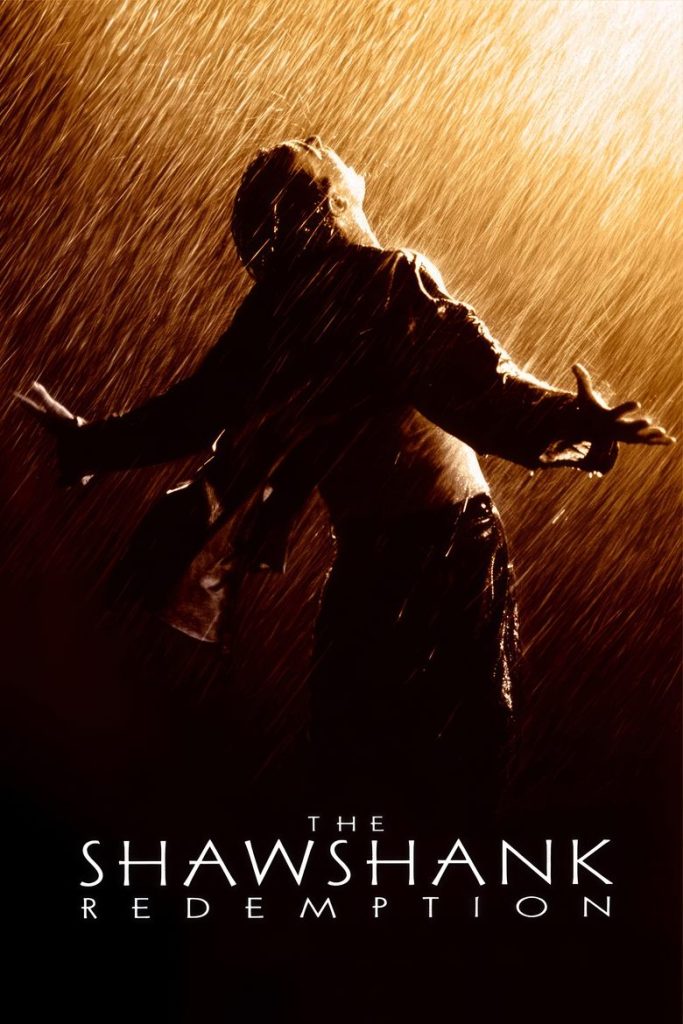
Director Frank Darabont uses deliberate visual language to mirror the story's emotional arc. The early prison scenes are dominated by cold blues and grays, with tight framing that emphasizes confinement. As Andy's influence grows, warmer tones gradually appear—notice how the library scenes feature golden light. The iconic rain-drenched escape sequence shifts from dark sewage tunnels to a cleansing downpour, visually washing away decades of oppression. Camera movements are restrained until Andy's freedom, when sweeping shots finally open up the frame. Even the poster's aerial view of Andy with arms outstretched visually echoes his psychological liberation.
🔍 Details & Easter Eggs
💡 Behind the Scenes
Tim Robbins and Morgan Freeman spent two weeks in actual prison isolation cells to understand confinement. The iconic oak tree where Red finds Andy's letter was struck by lightning in 2011 and later removed. Frank Darabont optioned Stephen King's novella for $5,000 after being captivated by its themes, though the film initially underperformed at theaters before becoming a video and cable phenomenon. The sewage pipe Andy crawls through used real chocolate syrup for 'realistic' texture, making the scene particularly unpleasant to film.
Where to watch
Choose region:
- Amazon Video
- Apple TV
- Google Play Movies
- YouTube
- Fandango At Home
- Spectrum On Demand
- Plex
Trailer
Trailer playback is unavailable in your region.