
The Simpsons Movie (2007)
Story overview
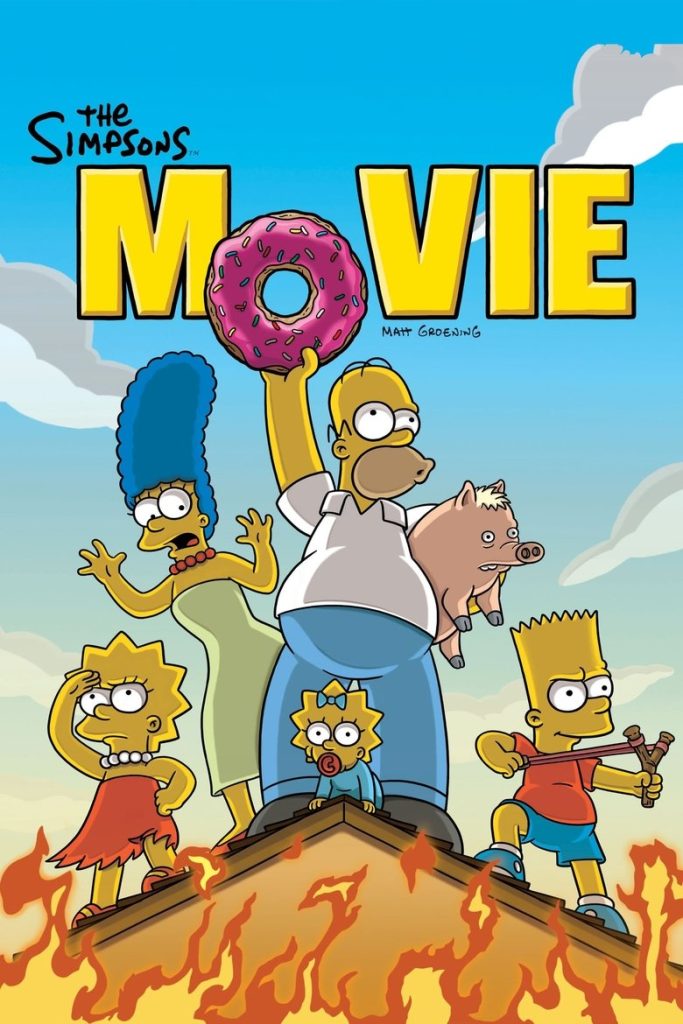
The Simpsons Movie follows the animated family as they face unexpected consequences when Homer accidentally causes environmental damage in their town. This leads to government intervention that isolates their community and forces the family to become fugitives. The film blends family dynamics with social satire as they navigate this chaotic situation.
Parent Guide
An animated comedy with social satire that may be more appropriate for older children who can understand its humor and themes.
Content breakdown
Cartoon-style action and peril, including chase scenes and exaggerated physical comedy without graphic detail.
Some scenes of community isolation and government intervention that might be intense for sensitive viewers.
Occasional mild innuendo and suggestive humor typical of the series, without strong profanity.
Brief suggestive humor and innuendo, presented in cartoon style without explicit content.
References to adult beverages in comedic contexts, consistent with the television series.
Family conflict and community crisis situations that create tension, balanced with humor.
Parent tips
This PG-13 animated film contains the same type of humor and social commentary as the television series, which may include mild innuendo, cartoon violence, and satire of adult institutions. While the animation style is familiar and comedic, some younger children might find the government intervention and family conflict scenes intense. The environmental theme provides opportunities to discuss responsibility and community impact.
Parent chat guide
Parent follow-up questions
- What was your favorite funny part?
- How did the family help each other?
- What colors did you see in the movie?
- Was there anything that made you feel worried?
- What would you do if your family had an adventure?
- Why do you think the family had to leave their town?
- What lesson did Homer learn about his actions?
- How did the characters show they cared about each other?
- What was fair or unfair in how the town was treated?
- What would you do differently if you were in that situation?
- How does the movie use humor to talk about serious topics?
- What does the film say about taking responsibility for our environment?
- How are family relationships tested during difficult times?
- What examples of satire did you notice about government or society?
- How do characters balance personal desires with community needs?
- What social commentary does the film make through its exaggerated situations?
- How does the animation style affect how serious topics are presented?
- What does the movie suggest about individual versus collective responsibility?
- How are adult institutions portrayed and what message does that send?
- What makes this animated film different from children's cartoons in its approach to themes?
🎭 Story Kernel
At its core, 'The Simpsons Movie' is about the tension between individual freedom and collective responsibility, cleverly disguised as a family comedy. Homer's selfish act—dumping a silo of pig waste into Lake Springfield—triggers an environmental catastrophe that forces the entire town into a dome. The real conflict isn't just about saving Springfield from the EPA's bomb; it's about Homer finally recognizing that his actions have consequences beyond his immediate desires. The film explores how a dysfunctional family unit becomes the town's unlikely salvation, suggesting that even the most flawed individuals can rise to heroic occasions when pushed to their limits.
🎬 Visual Aesthetics
The film elevates the show's signature 2D animation with cinematic scope—wider aspect ratios, more detailed backgrounds, and fluid action sequences that TV budgets couldn't accommodate. Notice the color palette shifts: Springfield's usual vibrant yellows and greens become muted under the dome, then explode into fiery oranges during the climax. The camera work feels more dynamic, with sweeping pans across the Alaskan wilderness and dramatic low-angle shots of President Schwarzenegger. Most striking is how the animation emphasizes scale—the dome looming over Springfield feels genuinely imposing, while Homer's spider-pig hallucination uses surreal distortion to externalize his guilt.
🔍 Details & Easter Eggs
💡 Behind the Scenes
The film's production involved 150 animators working for nearly three years—the longest development in Simpsons history. Creator Matt Groening insisted on keeping the traditional 2D animation despite industry pressure to go 3D. Albert Brooks improvised most of his lines as EPA chief Russ Cargill, with the animators later matching the animation to his delivery. The Alaska sequences were inspired by the animators' research trip to Juneau, though Homer's igloo was entirely fictional. Tom Hanks recorded his cameo as himself in just 20 minutes.
Where to watch
Choose region:
- Disney Plus
- Amazon Video
- Apple TV
- Google Play Movies
- YouTube
- Fandango At Home
Trailer
Trailer playback is unavailable in your region.