
The Sixth Sense (1999)
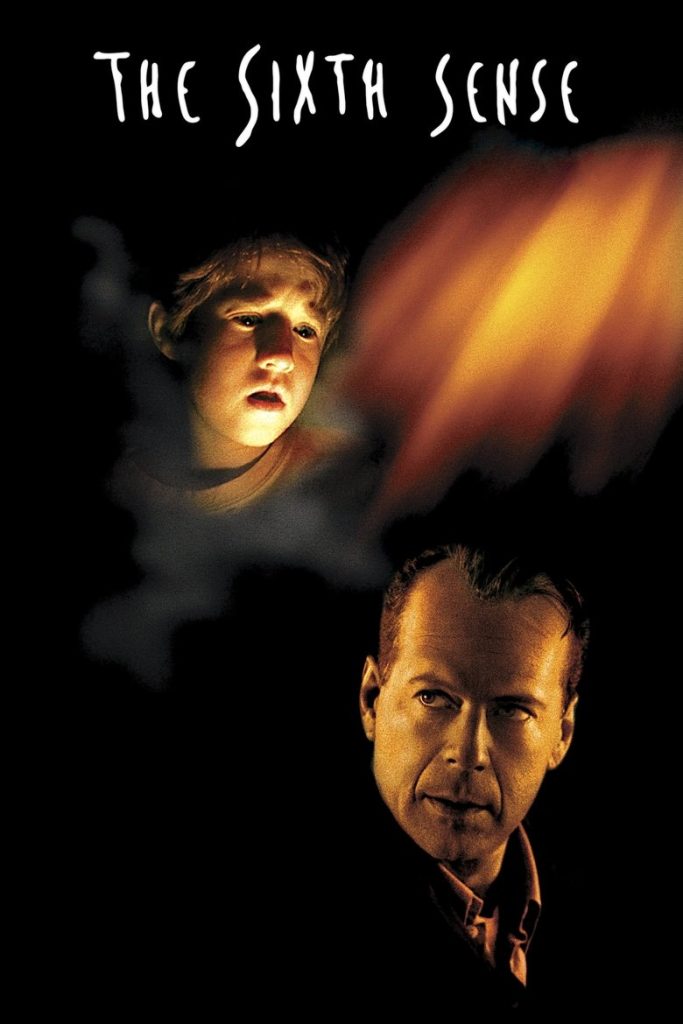
Story overview
The Sixth Sense follows a child psychologist who begins working with a young boy who claims to see and communicate with spirits. As their relationship develops, the psychologist tries to help the boy cope with his unusual abilities while dealing with his own personal struggles. The film explores themes of communication, fear, and the supernatural through a psychological lens.
Parent Guide
A psychological thriller with supernatural elements that requires emotional maturity to process its themes and suspenseful moments.
Content breakdown
Contains scenes of implied violence, perilous situations, and supernatural threats that create tension without graphic violence.
Features intense supernatural elements, frightening imagery, and psychological suspense that may be disturbing to sensitive viewers.
Contains minimal strong language, with occasional mild profanity consistent with the PG-13 rating.
No sexual content or nudity present in the film.
No substance use depicted in the film.
High emotional intensity throughout, dealing with themes of fear, grief, and supernatural experiences that may be overwhelming for younger viewers.
Parent tips
This PG-13 rated psychological thriller contains intense supernatural themes and frightening moments that may disturb younger viewers. The film deals with mature concepts including death, grief, and the supernatural, presented in a suspenseful manner that builds emotional tension throughout. Parents should consider their child's sensitivity to scary content and ability to handle psychological themes before viewing.
Parent chat guide
Parent follow-up questions
- What was your favorite part of the movie?
- Did any parts make you feel scared?
- What did you think about the boy in the story?
- How do you think the characters helped each other?
- What would you do if you felt scared like the boy did?
- What did you think about the boy's special ability?
- How did the psychologist try to help the boy?
- What were some ways the characters showed they cared about each other?
- What parts of the movie made you feel nervous or excited?
- What did you learn about talking to others when you're scared?
- How did the movie explore the theme of communication?
- What did you think about how the characters dealt with difficult situations?
- How did the movie balance scary moments with emotional storytelling?
- What messages about helping others did you notice?
- How did the characters show courage in the story?
- How did the film use psychological elements to create tension?
- What themes about grief and understanding did you notice?
- How did the relationship between the main characters develop throughout the story?
- What did you think about the film's approach to supernatural themes?
- How did the movie handle mature concepts in a thoughtful way?
🎭 Story Kernel
The film's core is not the supernatural, but the profound human disconnect it reveals. It explores the loneliness of being unseen and unheard, even by those closest to you. Malcolm Crowe's drive is his professional guilt and need for redemption, while Cole Sear is propelled by the terrifying burden of his secret and a desperate need for connection. The twist reframes the entire narrative as a meditation on denial and acceptance—Malcolm's inability to accept his own death mirrors how the living often fail to truly 'see' the emotional dead walking among them. The real resolution comes not from banishing ghosts, but from giving voice to unspoken pain.
🎬 Visual Aesthetics
Director M. Night Shyamalan employs a restrained, cold color palette dominated by blues, grays, and muted reds, visually reinforcing the film's themes of isolation and the chilling unknown. The camera work is deliberate and often static, creating a sense of unease and observation rather than action. Key scenes use shallow focus to isolate characters, mirroring Cole's alienation. The iconic visual motif is the breath—the white puff of air signifying the presence of the dead—a simple, brilliant symbol of the invisible made tangible. The film's visual language is one of quiet dread, where terror lurks in ordinary, dimly lit spaces like a school hallway or a child's bedroom.
🔍 Details & Easter Eggs
💡 Behind the Scenes
Haley Joel Osment was only 10 years old during filming. His profoundly mature performance was guided by Shyamalan's unique direction; for emotional scenes, the director would whisper specific, personal fears to Osment just before filming. Bruce Willis took a significant pay cut to star in the film, believing strongly in the script. The iconic line 'I see dead people' was almost cut, deemed too on-the-nose in early drafts. Much of the filming took place in Philadelphia, utilizing its historic, sometimes Gothic architecture to enhance the atmospheric tension. Toni Collette, who played Cole's mother, deliberately avoided meeting Osment off-set to preserve the authentic, strained dynamic of their on-screen relationship.
Where to watch
Choose region:
- Hulu
- HBO Max
- HBO Max Amazon Channel
- YouTube TV
- Amazon Video
- Apple TV
- Google Play Movies
- YouTube
- Fandango At Home
Trailer
Trailer playback is unavailable in your region.