
The Skeleton Dance (1929)
Story overview
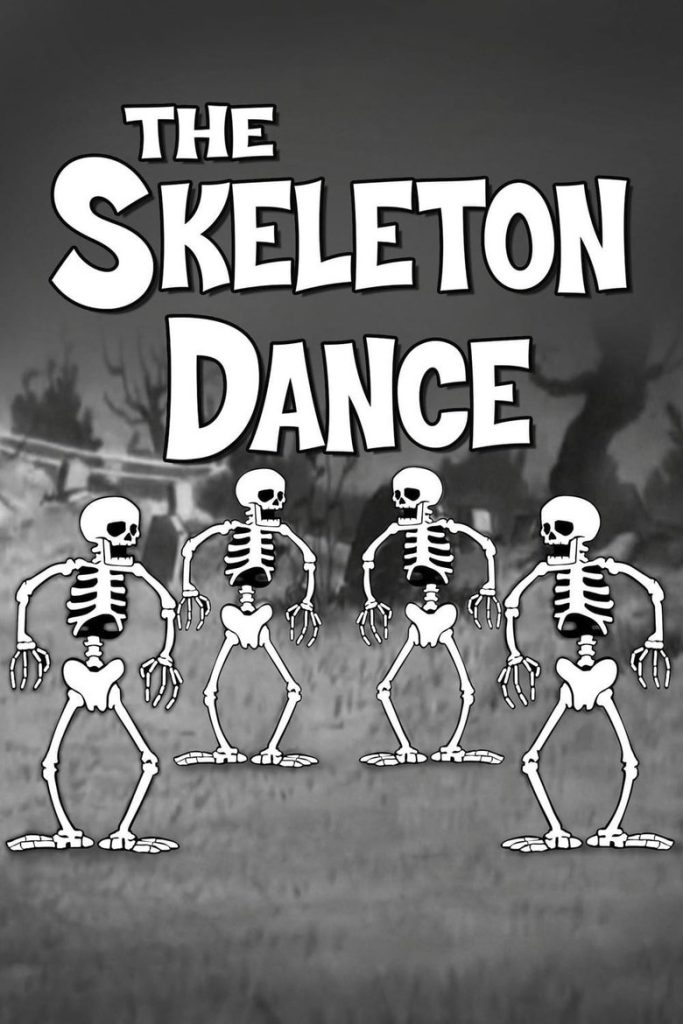
The Skeleton Dance is a 1929 animated short film by Walt Disney that combines spooky elements with musical comedy. Set in a graveyard at midnight, the film features four skeletons who emerge to perform a lively dance routine. With its silent-era animation style and playful approach to Halloween themes, this early Disney creation blends mild horror imagery with family-friendly entertainment.
Parent Guide
A classic silent-era animated short featuring dancing skeletons in a graveyard, presented with musical comedy rather than genuine horror.
Content breakdown
Cartoon cats fight briefly, and skeletons playfully interact in ways that might resemble roughhousing but cause no harm.
Skeletons dancing in a graveyard at midnight with bats and howling dogs creates spooky atmosphere, but the tone is comedic and musical rather than frightening.
No dialogue in this silent film, only musical score and sound effects.
No sexual content or nudity present.
No substance use depicted.
Brief moments of spooky atmosphere balanced by playful music and dancing, unlikely to cause significant emotional distress.
Parent tips
This classic animated short from 1929 features cartoon skeletons dancing in a graveyard, which might be mildly spooky for very young children but is presented in a comedic, musical style. The film has no dialogue, only sound effects and music, making it accessible to all ages. At just 5 minutes long, it's a brief introduction to early animation that parents can easily watch with their children.
Parent chat guide
Parent follow-up questions
- What sounds did you hear in the movie?
- Were the skeletons friendly or scary?
- What was your favorite part of their dance?
- How did the music make you feel?
- Would you like to dance like the skeletons?
- Why do you think the skeletons came out at midnight?
- How did the music help tell the story without words?
- What made the skeletons seem funny instead of scary?
- How is this animation different from cartoons you watch today?
- What would you add to make the dance even better?
- How does this 1929 animation compare to modern animation techniques?
- What mood does the music create in different scenes?
- Why might this have been considered spooky when it was made?
- How do the sound effects contribute to the storytelling?
- What themes about nighttime or graveyards does this film explore?
- How does this early Disney film reflect animation styles of the silent era?
- What cultural attitudes toward death and the supernatural might this film represent?
- How effective is the musical storytelling without dialogue?
- In what ways does this film blend horror and comedy genres?
- How might modern audiences interpret this nearly 100-year-old animation differently than original viewers?
🎭 Story Kernel
At its core, 'The Skeleton Dance' explores the universal, cyclical nature of life and death through subversion. There's no traditional plot or character motivation—these skeletons are driven purely by the primal, joyous energy of existence itself, even in decay. The film expresses that death isn't an end but a transformation into a different state of being, one that can be playful and rhythmic. By stripping away flesh and narrative, Disney reduces existence to its most basic elements: movement, music, and mortality. The skeletons aren't haunted or frightening; they're celebrants in a midnight revelry that suggests decay and life are two sides of the same coin.
🎬 Visual Aesthetics
The animation employs a stark, high-contrast black-and-white palette that emphasizes form over detail, making every bone movement crisp and expressive. The camera language is surprisingly dynamic for 1929—swinging perspectives mimic the skeletons' dizzying dances, while extreme close-ups on rattling vertebrae create visceral texture. Action style blends rubber-hose animation's fluidity with precise anatomical rendering, resulting in movements that are both cartoony and eerily authentic. Symbolism emerges through visual juxtaposition: the dark, cross-marked graveyard versus the lively skeletons, suggesting that death's imagery often masks its inherent vitality. Shadows are characters themselves, elongating and contorting to enhance the macabre whimsy.
🔍 Details & Easter Eggs
💡 Behind the Scenes
Directed by Walt Disney and animated by Ub Iwerks in 1929, this was the first Silly Symphony cartoon, created to experiment with synchronized sound and music-driven animation. The graveyard setting was inspired by European folk art and Halloween postcards, not horror films. Animators studied real human skeletons at the USC medical school to ensure anatomical accuracy in movements. Composer Carl Stalling's score was recorded first, with animation drawn to match the beats—a reverse of typical processes. Originally considered too macabre for some audiences, it became a cult classic and influenced later works like 'The Nightmare Before Christmas.'
Where to watch
Choose region:
- Disney Plus