
The Straight Story (1999)
Story overview
The Straight Story is a 1999 drama film that follows an elderly man's journey across the Midwest on a lawnmower to visit his estranged brother. The story focuses on themes of family reconciliation, aging, and determination as the protagonist travels slowly through rural America. Along the way, he encounters various people who share their own stories and perspectives on life.
Parent Guide
A gentle, character-driven drama about family reconciliation and perseverance, suitable for most viewers with its G rating but best appreciated by those who can engage with slower-paced, thoughtful storytelling.
Content breakdown
No violence depicted. Some mild peril related to the challenges of an elderly man traveling alone on rural roads.
No scary or disturbing content. The tone is consistently calm and reflective throughout.
No offensive language. Dialogue is respectful and family-appropriate.
No sexual content or nudity present.
No substance use depicted.
Emotional moments related to family estrangement and aging are handled gently without becoming overwhelming.
Parent tips
This gentle drama is suitable for most family viewing with its G rating, though its slow pace and mature themes about aging and family conflict may require parental guidance for younger viewers. The film's contemplative nature makes it an excellent opportunity to discuss perseverance, forgiveness, and how people handle difficult relationships. Consider watching with children ages 8 and up who can appreciate character-driven stories without fast-paced action.
Parent chat guide
Parent follow-up questions
- What was your favorite vehicle in the movie?
- How did the man travel in the story?
- What colors did you see in the countryside?
- Did you see any animals during the trip?
- What sounds did you hear on the journey?
- Why do you think the man wanted to see his brother?
- What made the man's trip difficult?
- How did people help him along the way?
- What does it mean to be determined?
- How would you travel a long distance?
- What does the film show about repairing family relationships?
- How does the slow pace of travel affect the story?
- What qualities help someone complete a difficult journey?
- Why might someone avoid seeing family for a long time?
- What did different characters teach the main character?
- How does the film portray aging and limitations?
- What does the journey symbolize about life's pace?
- How do small interactions with strangers contribute to personal growth?
- What does the film suggest about forgiveness across time?
- How does the setting enhance the story's themes?
🎭 Story Kernel
The Straight Story is fundamentally about the weight of time and the quiet heroism of reconciliation. It's not about the lawnmower journey itself, but about the accumulated life that propels it. Alvin Straight's drive isn't fueled by urgency, but by the heavy, patient understanding that some debts—emotional ones—must be settled before it's too late. The film argues that true courage isn't in dramatic action, but in the deliberate, vulnerable act of showing up, of making oneself available for a reckoning that has been deferred for a decade. Every encounter on the road is a mirror reflecting fragments of his own life—regret, family, mortality—forcing him to articulate his purpose to others and, more importantly, to himself.
🎬 Visual Aesthetics
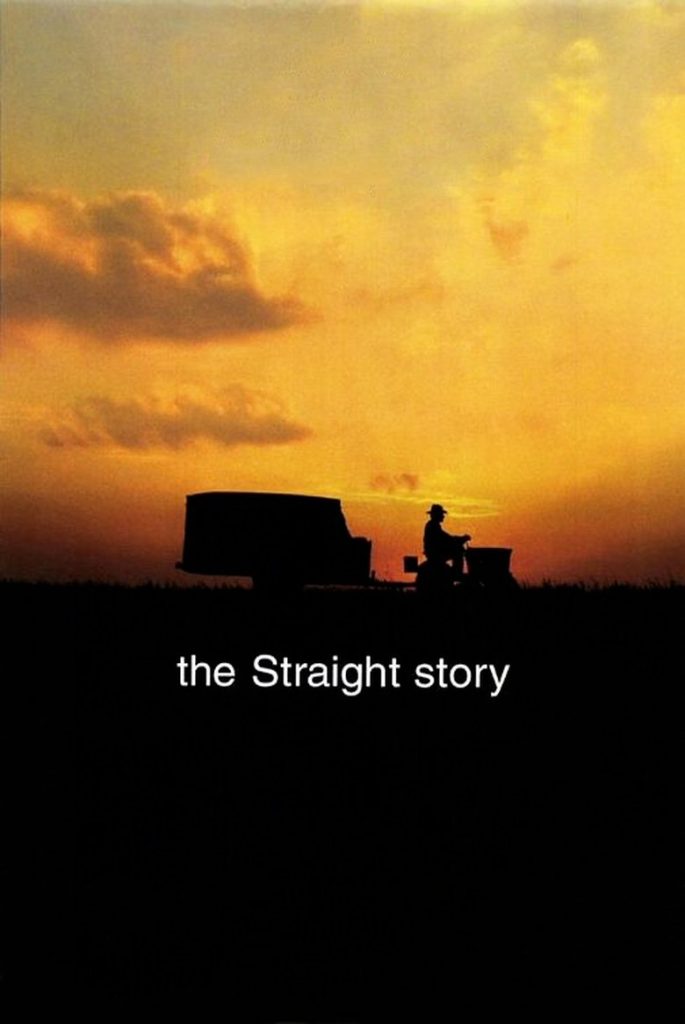
David Lynch, in a radical departure, employs a style of serene, classical realism. The camera is static and observational, often framing Alvin against the vast, flat expanse of the Midwest, emphasizing his smallness and determination. The color palette is dominated by earthy tones—golden fields, deep greens, the muted red of the tractor—creating a warm, nostalgic, and grounded atmosphere. There are no Lynchian surrealist touches; instead, the visual symbolism is gentle: the slow, steady chug of the mower becomes a metaphor for persistence, and the endless horizon line represents both the distance to be covered and the linear, unchangeable path of a life lived.
🔍 Details & Easter Eggs
💡 Behind the Scenes
In a remarkable casting against type, the late Richard Farnsworth, a former stuntman and supporting actor, delivered this career-defining lead performance at age 79, earning an Academy Award nomination. He performed most of his own driving on the modified John Deere lawn tractor. The film was shot in chronological order along the actual route from Laurens, Iowa, to Mt. Zion, Wisconsin, with the crew moving at the story's slow pace, which deeply influenced the meditative tone. It remains David Lynch's only G-rated film and his most straightforward narrative work, funded by Disney.
Where to watch
Choose region:
- Disney Plus
- Amazon Video
- Apple TV
- Google Play Movies
- YouTube
- Fandango At Home
Trailer
Trailer playback is unavailable in your region.