
The Summit of the Gods (2021)
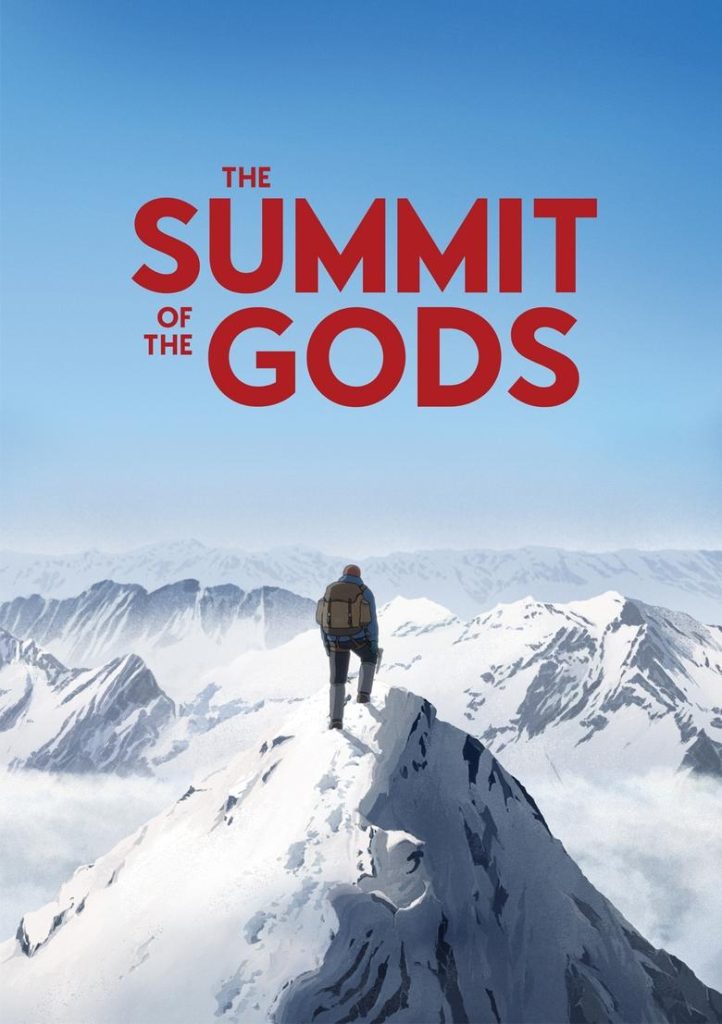
Story overview
The Summit of the Gods is an animated adventure mystery film that follows a photojournalist's determined search for a missing climber who may have been part of the first Everest expedition. His investigation becomes an obsessive journey that explores themes of truth, obsession, and human limits. The story unfolds through breathtaking mountain landscapes and tense moments as characters confront both physical and emotional challenges in their pursuit of answers.
Parent Guide
An atmospheric animated adventure with themes of obsession and danger in extreme mountain settings, suitable for older children who can handle suspenseful situations.
Content breakdown
Contains perilous mountain climbing situations with characters facing life-threatening conditions, falls, and environmental dangers, though not graphically depicted.
Atmospheric tension, suspenseful climbing sequences, and themes of obsession may be unsettling for sensitive viewers; includes moments of isolation and danger in extreme environments.
No strong or offensive language noted in the PG rating.
No sexual content or nudity present.
No substance use depicted.
Themes of obsession, determination, and facing mortality create emotional weight; characters experience frustration, desperation, and psychological pressure.
Parent tips
This PG-rated animated film contains themes of obsession, danger, and emotional intensity that may be challenging for younger viewers. While there's no graphic violence or strong language, the story deals with characters risking their lives in extreme mountain conditions and facing psychological pressures. The film's atmospheric tension and themes of obsession might be more suitable for older children who can process these concepts.
Parents should be aware that the film explores mature themes like the cost of pursuing dangerous goals and the emotional toll of obsession. The mountain climbing sequences create suspenseful situations where characters face life-threatening peril. The animation style is realistic and atmospheric, which may intensify the emotional impact of certain scenes.
Parent chat guide
After watching, ask open-ended questions about what they thought of the characters' choices and motivations. Discuss the difference between healthy determination and dangerous obsession. Talk about how the film portrays nature's power and human limitations. This can lead to conversations about setting goals, understanding risks, and balancing passion with safety.
Parent follow-up questions
- What did you think about the big mountains in the movie?
- How did the people in the story help each other?
- What was your favorite part of the movie?
- What do you think the photographer was looking for?
- How do you think the climbers felt when they were high up?
- Why do you think the photographer was so determined to find the climber?
- What challenges did the characters face in the mountains?
- How did the movie make you feel during the climbing scenes?
- What did you learn about mountain climbing from this film?
- What would you do if you wanted to find something very important?
- What do you think the film says about obsession versus determination?
- How did the characters' goals affect their decisions and relationships?
- What risks do you think were worth taking in the story, and which weren't?
- How did the animation style contribute to the movie's mood and tension?
- What questions about truth and discovery did the film raise for you?
- How does the film explore the psychological aspects of extreme sports and obsession?
- What commentary does the movie make about the human drive to conquer nature?
- How did the photojournalist's pursuit reflect broader themes of truth-seeking?
- What ethical questions arise from the characters' choices and motivations?
- How does the film balance adventure elements with psychological depth?
🎭 Story Kernel
The film's core is an exploration of obsession versus truth, using Everest as the ultimate metaphor. It's not really about climbing a mountain, but about the human need to conquer personal demons and validate existence through extreme acts. Photographer Makoto Fukamachi is driven by professional ambition to uncover a historical mystery, while climber Habu Joji is propelled by a deeper, almost spiritual compulsion to prove a disputed ascent. Their parallel journeys reveal how both men are climbing different versions of the same mountain—one of evidence, the other of legacy. The climax suggests that the greatest achievement isn't the summit itself, but the integrity of the story you bring back.
🎬 Visual Aesthetics
The animation masterfully contrasts two visual languages: the gritty, textured realism of 1990s Kathmandu and Tokyo with handheld-like camera work, and the sublime, almost abstract beauty of the Himalayan sequences. The mountain scenes shift to sweeping, majestic vistas with a cooler, desaturated palette that emphasizes isolation and scale. During climbs, the animation becomes intensely focused on tactile details—ice axes biting into blue ice, ropes straining under weight—creating visceral tension. Symbolically, the recurring shots of Fukamachi's camera viewfinder frame the narrative itself as an act of selective witnessing and proof-making.
🔍 Details & Easter Eggs
💡 Behind the Scenes
The film is a French-Japanese co-production adapted from Jiro Taniguchi's manga, which itself was based on Baku Yumemakura's novel. Director Patrick Imbert insisted on animated realism, consulting with professional climbers and using actual Everest expedition footage for reference. The voice cast includes renowned Japanese actor Akio Kaneda as Habu. Production took five years, with particular attention to accurately animating climbing techniques and gear across different eras. The Kathmandu scenes were meticulously researched using photographs from the 1990s to capture the city's specific atmosphere during that period.
Where to watch
Choose region:
- Netflix
- Netflix Standard with Ads
Trailer
Trailer playback is unavailable in your region.