The Survivor (2022)
Story overview
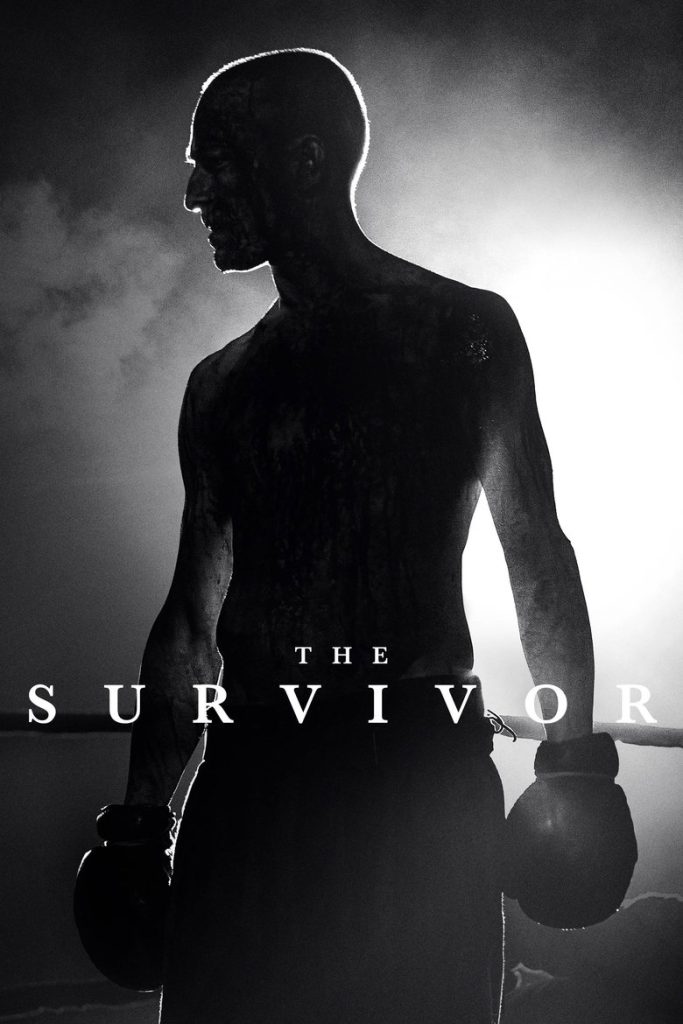
The Survivor (2022) is a historical drama based on the true story of Harry Haft, a Jewish boxer who survived Nazi concentration camps by fighting fellow prisoners. The film follows his post-war life as he grapples with trauma and guilt while pursuing boxing matches in hopes of reconnecting with his lost love. Directed by Barry Levinson, it stars Ben Foster, Billy Magnussen, Vicky Krieps, Peter Sarsgaard, and Saro Emirze.
Parent Guide
Mature historical drama with intense violence, Holocaust trauma, and strong emotional content. Requires parental guidance for viewers under 17.
Content breakdown
Graphic boxing violence with blood and injuries. Disturbing concentration camp scenes including prisoner fights, beatings, and executions. Intense peril throughout.
Holocaust imagery including camps, starvation, and death. Psychological trauma themes. Disturbing scenes of human suffering and survival guilt.
Some strong language including profanity. Period-appropriate slurs and aggressive dialogue.
Brief romantic scenes without explicit content. Some suggestive dialogue.
Social drinking in post-war scenes. Period-appropriate smoking.
Heavy themes of trauma, guilt, loss, and survival. Intense emotional scenes dealing with Holocaust memories and post-war adjustment.
Parent tips
This R-rated film contains intense violence, disturbing Holocaust themes, strong language, and emotional trauma. Not suitable for children under 17 without parental guidance. Consider watching with mature teens to discuss historical context and psychological impact.
Parent chat guide
Parent follow-up questions
—
—
—
- What did you learn about Holocaust history from this film?
- How did the boxing scenes make you feel compared to the camp scenes?
- Why do you think Harry continued boxing after the war?
- What messages about survival and guilt did you notice?
- How does the film handle difficult historical topics responsibly?
🎭 Story Kernel
The film's core is not about boxing, but about the unbearable weight of survival. Harry Haft's drive isn't glory or redemption in the ring; it's a desperate, violent attempt to prove he's still alive after Auschwitz, to carve a new identity from the ashes of the one that was destroyed. His brutal fights are a physical manifestation of his internal battle—each opponent he defeats is a proxy for the guards he couldn't fight, a way to reclaim agency through controlled violence. The narrative tension stems from this impossible quest: can you build a life on a foundation of trauma, or does survival itself become a different kind of prison?
🎬 Visual Aesthetics
The cinematography creates a stark, visceral dichotomy. The Auschwitz sequences are drained of color, dominated by grays, mud, and ash, with a handheld, claustrophobic camera that makes the horror inescapable. In contrast, the post-war American scenes are bathed in a harsh, almost garish Technicolor vibrancy—bright lights of the boxing ring, saturated neon signs. This isn't nostalgia; it's sensory overload, highlighting the dissonance between his past and present. The boxing scenes themselves are shot with brutal intimacy, focusing on impact and exhaustion rather than athletic grace, mirroring Haft's raw, survivalist fighting style.
🔍 Details & Easter Eggs
💡 Behind the Scenes
Ben Foster, known for his intense physical transformations, underwent a drastic weight loss regimen to portray Haft in the Auschwitz scenes, then bulked up significantly for the post-war boxing sequences, mirroring the character's physical journey. The film is based on the real-life story of Harry Haft, whose son, Alan Scott Haft, wrote the biography that served as source material. Director Barry Levinson deliberately cast actors with lesser-known faces for the camp sequences to enhance the feeling of anonymity and dehumanization Haft experienced.
Where to watch
Choose region:
- HBO Max
- HBO Max Amazon Channel
- Amazon Video
- Apple TV Store
- Google Play Movies
- YouTube
- Fandango At Home
Trailer
Trailer playback is unavailable in your region.