
The Sword in the Stone (1963)
Story overview
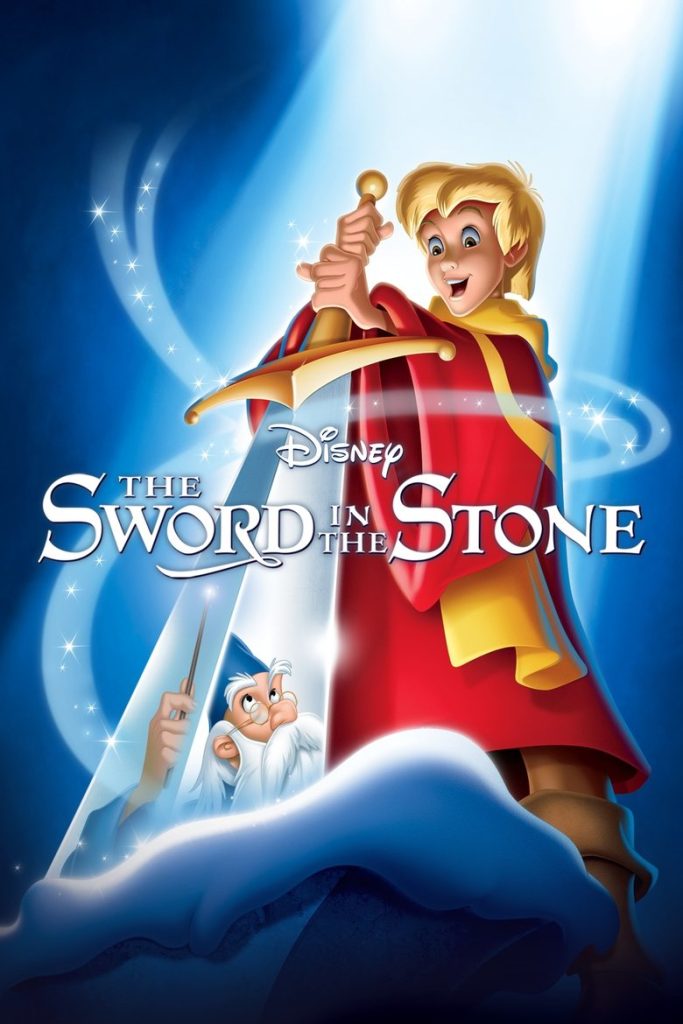
This classic animated film tells the story of a young boy named Wart who dreams of becoming a knight's squire. His life changes when he meets Merlin, a wise but forgetful wizard who believes education is the key to success. Through magical adventures and humorous mishaps, Merlin tries to teach Wart important life lessons beyond traditional knightly training. The story explores themes of learning, personal growth, and finding one's true potential.
Parent Guide
A gentle animated fantasy suitable for most children, featuring positive messages about education and personal growth with mild magical elements.
Content breakdown
Some mild fantasy peril involving magical transformations and brief moments of tension, but no actual violence or harm.
Mildly intense scenes with magical transformations that might briefly startle very young children, but nothing truly frightening.
No concerning language; all dialogue is family-appropriate.
No sexual content or nudity.
No substance use depicted.
Mild emotional moments related to learning challenges and personal growth, but nothing overwhelming.
Parent tips
This gentle animated film from 1963 is suitable for most children, featuring mild fantasy elements and positive messages about education and self-discovery. Parents should be aware that some scenes involve magical transformations and mild peril that might be slightly intense for very young viewers, but nothing graphic or frightening. The film's slower pacing compared to modern animations might require some patience from younger children, but its timeless themes and humor make it engaging for family viewing.
Parent chat guide
Parent follow-up questions
- What was your favorite magic trick in the movie?
- How did Merlin help Wart learn new things?
- What animals did you see in the movie?
- What makes a good teacher like Merlin?
- What would you want to learn if you had a wizard teacher?
- Why do you think education was so important to Merlin?
- What different ways did Wart learn things throughout the story?
- How did Wart's adventures help him grow as a person?
- What does it mean to 'go anywhere' with an education?
- What would you do if you had magical powers to help you learn?
- How does the film show that learning happens in many different ways?
- What do you think the sword in the stone represents in the story?
- How does Merlin's approach to teaching compare to traditional education?
- What qualities make someone ready for responsibility and leadership?
- How do the magical elements help tell a story about real-life growth?
- How does the film explore the relationship between knowledge and power?
- What commentary does the story make about traditional education systems?
- How do the fantasy elements serve as metaphors for personal development?
- What does the film suggest about finding one's true potential versus following expected paths?
- How do the themes of this 1963 film remain relevant today?
🎭 Story Kernel
At its core, 'The Sword in the Stone' is a fable about the acquisition of wisdom through experience, not birthright. The film argues that true leadership is forged not by lineage, but by empathy and understanding gained from literally walking in another's shoes—or paws, or fins. Young Arthur's transformation from a clumsy, undervalued squire to King is driven by Merlin's unorthodox pedagogy, which forces him to learn from the bottom of the food chain. The characters are propelled by a central tension between chaotic, experiential knowledge (Merlin) and rigid, power-hungry tradition (Madam Mim, Sir Ector). Arthur's final, effortless pull of the sword is the visual payoff of this internal education; he earns the throne because he has learned to see the world from perspectives beyond his own.
🎬 Visual Aesthetics
The film's visual language is a charming clash of eras, mirroring Merlin's time-traveling mind. The medieval setting is rendered in soft, storybook watercolors and elegant, elongated character designs, which are then violently interrupted by Merlin's anachronistic, rubber-hose animation style during his chaotic magical duels. This aesthetic dissonance visually represents the film's theme of progressive knowledge disrupting stagnant tradition. The color palette often shifts to reflect Arthur's lessons: cool blues and greens during the fish transformation evoke fluidity and fear, while the warm, earthy tones of the squirrel sequence highlight community and instinct. The climactic wizard duel with Madam Mim is a masterpiece of transformative, psychedelic chaos, using rapid-fire shape-shifting as its primary action language.
🔍 Details & Easter Eggs
💡 Behind the Scenes
The film was the last Disney animated feature released before Walt Disney's death. The voice of Merlin, the legendary actor Karl Swenson, reportedly ad-libbed many of his character's eccentric lines, contributing to the wizard's wonderfully unscripted feel. Wolfgang Reitherman, the director, also served as the head animator for Merlin, wanting to ensure the character's kinetic energy was perfectly captured. The iconic wizard's duel was storyboarded by veteran animator Milt Kahl and is celebrated for its breakneck pace and creativity, setting a high bar for magical confrontations in animation.
Where to watch
Choose region:
- Disney Plus
- Amazon Video
- Apple TV
- Google Play Movies
- YouTube
- Fandango At Home
Trailer
Trailer playback is unavailable in your region.