
The Tattooist’s Son: Journey to Auschwitz (2025)
Story overview
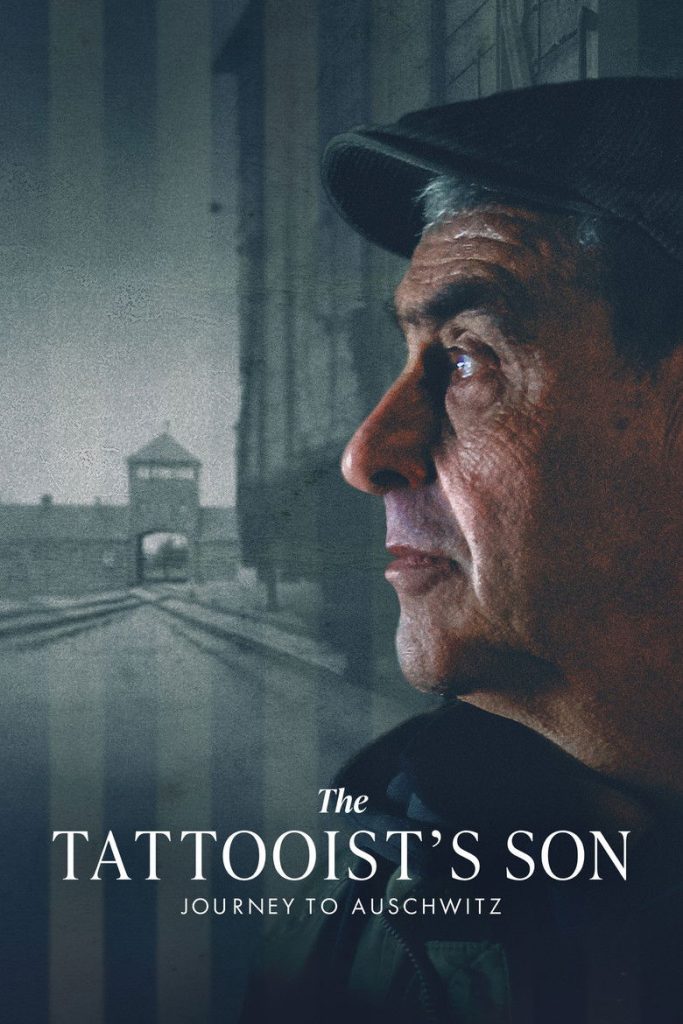
This documentary explores the journey of a tattooist's son as he visits Auschwitz, a former Nazi concentration camp. It likely examines historical events, personal reflections, and the impact of the Holocaust through a familial lens. The film aims to educate viewers about this dark chapter in history while honoring the memories of those affected.
Parent Guide
A documentary about the Holocaust with educational value but potentially intense emotional content.
Content breakdown
Discusses historical violence and atrocities, though likely without graphic visuals.
Themes of genocide and suffering may be disturbing, especially for sensitive viewers.
No offensive language expected in a documentary of this nature.
No sexual content or nudity anticipated.
No substance use expected.
Deals with heavy historical topics that may evoke strong emotional responses.
Parent tips
This documentary deals with the Holocaust, a topic that may be emotionally challenging and require parental guidance. It is suitable for older children and teens who have some prior knowledge of World War II history. Parents should be prepared to discuss the historical context and provide emotional support during or after viewing.
Parent chat guide
Parent follow-up questions
- What did you see in the movie?
- How did the people in the movie feel?
- What is a special place you like to visit?
- What do you think the tattooist's son learned on his journey?
- Why is it important to remember places like Auschwitz?
- How can we be kind to others?
- What historical events does this documentary cover?
- How might visiting a place like Auschwitz affect someone emotionally?
- What can we learn from studying difficult history?
- How does personal family history connect to larger historical events?
- What responsibilities do we have to remember and teach about the Holocaust?
- How can documentaries shape our understanding of history?
🎭 Story Kernel
The film transcends a mere historical retracing, focusing on the psychological inheritance of trauma. Gary Sokolov’s pilgrimage to Auschwitz-Birkenau serves as a bridge between his father Lale’s romanticized yet harrowing narrative and the stark, industrial reality of the Holocaust. It explores how the tattooist identity shaped Gary’s upbringing, moving beyond the celebrity of the bestseller to examine the quiet, lingering shadows of a survivor's household. The core theme is the burden of legacy—how a son reconciles the loving father he knew with the victim and witness Lale had to be to survive. It is a profound study of memory’s evolution across generations, questioning what it means to carry a history that is both a source of life and a mark of unimaginable suffering.
🎬 Visual Aesthetics
Stephen Bennett employs a somber, observational aesthetic that contrasts the sterile, modern-day memorial sites with the heavy weight of the past. The cinematography often lingers on Gary’s face, capturing the subtle shifts from intellectual curiosity to visceral grief. There is a deliberate use of space; the vast, empty landscapes of the camp emphasize the scale of loss, while close-ups of archival documents and the infamous numbers provide a grounding, tactile reality. The visual language avoids melodrama, instead opting for a quiet, respectful stillness that allows the environment to speak for itself. This restraint forces the viewer to confront the physical remnants of history without the filter of cinematic dramatization, creating an atmosphere of reflective mourning that feels both intimate and expansive in its historical scope.
🔍 Details & Easter Eggs
💡 Behind the Scenes
Directed by Stephen Bennett, this documentary was produced to complement the high-profile drama series adaptation of the same name. While the drama focused on the narrative adaptation of Heather Morris’s book, Bennett’s film provides the factual foundation and the human aftermath. Gary Sokolov’s participation was crucial, as he had previously been relatively private about his family’s history before the book’s global success. The production involved extensive filming on location at the Auschwitz-Birkenau State Museum, utilizing rare access to archives that help verify the specific administrative roles Lale Sokolov held within the camp’s hierarchy during his imprisonment.
Where to watch
Choose region:
- Peacock Premium
- Peacock Premium Plus
Trailer
Trailer playback is unavailable in your region.