
The Teachers’ Lounge (2023)
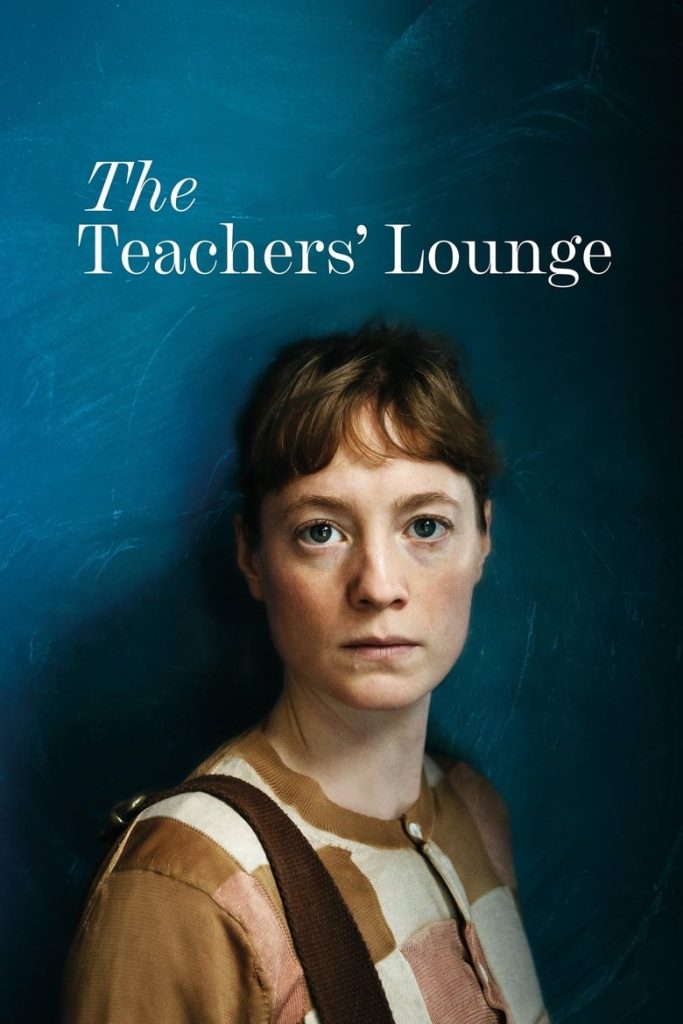
Story overview
The Teachers' Lounge is a 2023 drama film that explores ethical dilemmas and interpersonal conflicts within a school setting. The story follows a teacher who becomes embroiled in a challenging situation that tests professional boundaries and moral principles. This thought-provoking film examines themes of trust, responsibility, and the complex dynamics between educators and students.
Parent Guide
A thoughtful drama about ethical conflicts in education, best suited for mature middle schoolers and teenagers who can engage with complex moral questions.
Content breakdown
No physical violence, but includes tense situations and interpersonal conflicts that create emotional peril.
Contains emotionally intense situations and ethical dilemmas that may be disturbing to sensitive viewers.
May include mild language appropriate to professional settings and emotional situations.
No sexual content or nudity present.
No substance use depicted.
Features significant emotional tension and moral conflicts that require mature understanding.
Parent tips
This PG-13 drama deals with mature themes involving ethical conflicts in an educational environment. Parents should be aware that the film presents complex moral situations that may require explanation for younger viewers. The content is appropriate for teenagers who can engage with nuanced storytelling about responsibility and integrity.
Consider watching this film with your children if they're in middle school or older, as it provides excellent opportunities for discussions about ethics, fairness, and professional conduct. The film's school setting makes it particularly relevant for families with children in educational systems.
Parent chat guide
Use the film as a springboard to discuss real-world situations your children might encounter in school or other settings. Emphasize that complex problems often don't have simple solutions, and different perspectives can lead to different conclusions about what's right.
Parent follow-up questions
- What did you notice about the school in the movie?
- How do you think teachers help students?
- What colors or sounds did you remember from the movie?
- Did you see any children in the movie?
- What was your favorite part of the movie?
- What was the main problem in the story?
- How did the teachers work together or disagree?
- What would you do if you saw something unfair at school?
- Why do you think rules are important in schools?
- How did the movie make you feel about school?
- What ethical dilemmas did the characters face?
- How did different characters have different perspectives on the same situation?
- What responsibilities do teachers have toward their students?
- How can people handle conflicts professionally?
- What did you learn about trust from this movie?
- How does the film explore the balance between institutional rules and personal ethics?
- What systemic issues in education does the movie highlight?
- How do power dynamics affect decision-making in professional settings?
- What alternative approaches could the characters have taken?
- How does the film comment on modern educational challenges?
🎭 Story Kernel
The film explores the fragility of the social contract within the microcosm of a school. Carla Nowak, an idealistic math and PE teacher, attempts to solve a series of thefts through a self-styled sting operation. However, her pursuit of truth triggers a cascade of unintended consequences, exposing the systemic biases and power struggles inherent in institutional life. It is not a traditional whodunit, but rather a study of how systems break down. The narrative interrogates the impossibility of neutrality in a polarized environment. As Carla tries to protect her students while holding a colleague accountable, she becomes the catalyst for a total breakdown in trust. The film masterfully illustrates how a single act of surveillance—intended to provide clarity—instead creates a hall of mirrors where every gesture is misinterpreted and the pursuit of justice becomes a form of psychological warfare.
🎬 Visual Aesthetics
Director İlker Çatak and cinematographer Judith Kaufmann utilize a tight 4:3 aspect ratio to amplify the sense of entrapment and institutional pressure. This boxy frame mirrors the rigid structures of the school system, leaving Carla with nowhere to hide from the scrutiny of her peers or the camera's gaze. The visual language is defined by a restless, handheld camera that follows Carla through narrow corridors, creating a kinetic energy that borders on a thriller. The lighting is often cold and sterile, emphasizing the bureaucratic nature of the environment. Symbolism is found in the recurring motifs of mathematical patterns and the Rubik's Cube, representing Carla’s desire for logical solutions in an inherently chaotic social situation. The visual focus on small, nervous gestures—tapping fingers and shifting eyes—heightens the tension, making the school feel like a pressure cooker ready to explode.
🔍 Details & Easter Eggs
💡 Behind the Scenes
The Teachers' Lounge was Germany's official submission for the 96th Academy Awards, where it successfully secured a nomination for Best International Feature Film. Lead actress Leonie Benesch, known for her roles in The White Ribbon and The Crown, underwent rigorous preparation to portray Carla’s deteriorating composure. Director İlker Çatak drew inspiration from his own school experiences, aiming to depict the school as a laboratory for society at large. The film swept the German Film Awards, winning in major categories including Best Film, Best Director, and Best Actress, solidifying its status as a critical powerhouse.
Where to watch
Choose region:
- Netflix
- Amazon Video
- Apple TV
- Google Play Movies
- YouTube
- Fandango At Home
- Spectrum On Demand
Trailer
Trailer playback is unavailable in your region.