
The Third Man (1949)
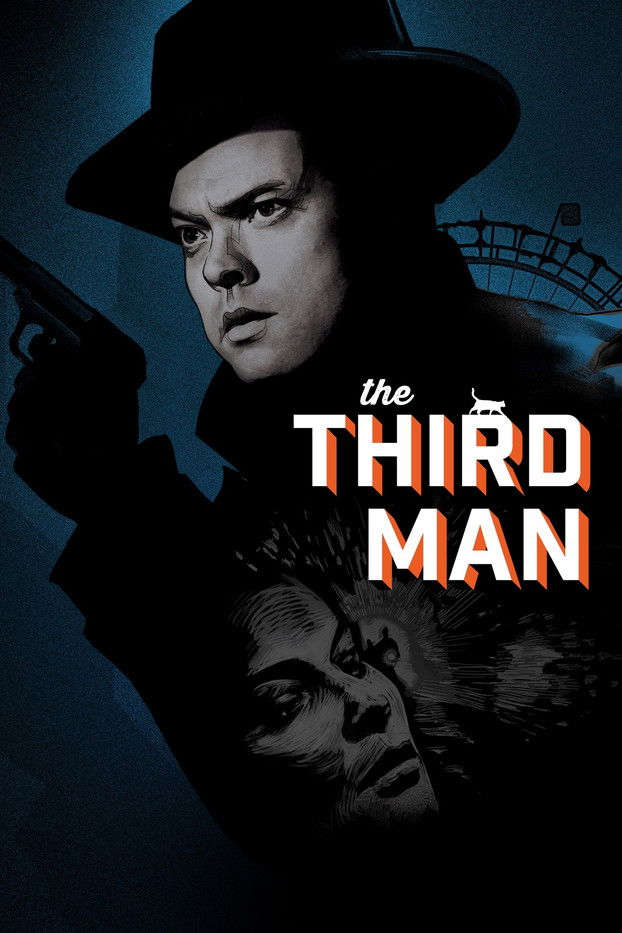
Story overview
Set in post-World War II Vienna, this classic thriller follows an American writer who arrives to visit an old friend, only to discover his friend has recently died under mysterious circumstances. As he investigates what happened, he uncovers a complex conspiracy involving a mysterious third man present at the death. The film explores themes of friendship, betrayal, and moral ambiguity against the backdrop of a divided city. Atmospheric cinematography and a memorable zither score create a tense, noir-inspired mood throughout.
Parent Guide
A classic thriller with psychological tension and moral complexity, suitable for mature pre-teens and teenagers who can appreciate atmospheric storytelling.
Content breakdown
Some tense scenes with implied violence and peril, including a chase sequence and characters in dangerous situations. No graphic violence shown.
Atmospheric tension, suspenseful sequences, and themes of death and betrayal. The noir style and shadowy cinematography create an unsettling mood.
No notable strong language. Period-appropriate dialogue without modern profanity.
No sexual content or nudity. Some romantic tension is implied but not explicit.
Social drinking in some scenes, typical of the time period. No excessive or glorified substance use.
Themes of betrayal, moral conflict, and post-war disillusionment. Characters experience grief, suspicion, and ethical dilemmas.
Parent tips
This 1949 British thriller contains atmospheric tension and moral complexity rather than graphic violence. The film's black-and-white cinematography and period setting may feel dated to younger viewers, but the suspenseful mystery and psychological themes remain engaging. Parents should note the film deals with themes of betrayal, deception, and post-war corruption, which might require explanation for younger audiences. The overall tone is more cerebral than action-oriented, focusing on character motivations and moral dilemmas.
Parent chat guide
Parent follow-up questions
- What was your favorite part of the movie?
- How did the music make you feel?
- What colors did you see in the movie?
- Did you like any of the characters?
- Was there anything that surprised you?
- Why do you think the main character wanted to find out what happened?
- How did the setting of the city affect the story?
- What makes a good friend according to this movie?
- How did the music help tell the story?
- What questions would you ask the characters?
- What moral dilemmas did the characters face?
- How does the black-and-white cinematography affect the mood?
- What does the film say about truth and deception?
- How does the post-war setting influence the story?
- What makes this a 'thriller' rather than just a mystery?
- How does the film explore themes of moral ambiguity?
- What commentary does the film make about post-war society?
- How effective is the visual style in creating tension?
- What does the film suggest about friendship and loyalty?
- How does the score contribute to the overall atmosphere?
🎭 Story Kernel
At its core, 'The Third Man' explores the moral decay of post-war Vienna, where survival has replaced honor as the primary currency. Holly Martins arrives seeking the noble friend he idealized, only to discover Harry Lime's true nature as a black marketeer who diluted penicillin, causing children's deaths. The film dissects how easily idealism curdles into complicity—Holly's initial quest for justice becomes compromised by his lingering affection for Harry and attraction to Anna. The famous Ferris wheel confrontation reveals the film's chilling thesis: from a distance, human suffering appears insignificant, a philosophy that justifies any atrocity. Ultimately, it's a story about confronting the gap between our romanticized perceptions and grim realities.
🎬 Visual Aesthetics
Carol Reed and cinematographer Robert Krasker created Vienna as a character through expressionist noir techniques. The city is a labyrinth of shadows, canted angles, and wet cobblestones that reflect fractured light. The iconic sewer chase uses extreme low angles and echoing footsteps to transform the underground into a visceral, claustrophobic hell. The final shot—Anna walking past Holly without acknowledgment—is a masterclass in emotional devastation, framed with relentless stillness. The zither score by Anton Karas provides ironic, jaunty counterpoint to the moral darkness, making the corruption feel disturbingly casual. Every visual choice reinforces the theme of a world where nothing stands upright.
🔍 Details & Easter Eggs
💡 Behind the Scenes
Orson Welles filmed his scenes in just two weeks, often rewriting his dialogue on set. The iconic sewer sequences were shot in London's abandoned Shepherd's Bush sewers, with the production battling rats and flooding. Author Graham Greene wrote the screenplay first as a novella to explore characters' inner lives, then adapted it. The zither score was a last-minute replacement when Reed heard Anton Karas playing in a Vienna pub; Karas recorded it in one take, creating one of cinema's most recognizable themes. The film's final cut famously omitted a happier ending Greene preferred, preserving its devastating ambiguity.
Where to watch
Choose region:
- Amazon Prime Video
- IndieFlix
- Cineverse
- Amazon Prime Video with Ads
- BFI Player Amazon Channel
- IndieFlix Shorts Amazon Channel
- Amazon Video
- Apple TV
- Google Play Movies
- YouTube
- Fandango At Home
- Amazon Prime Video Free with Ads
- Tubi TV
- Kanopy
- Artflix
Trailer
Trailer playback is unavailable in your region.