
The Tigger Movie (2000)
Story overview
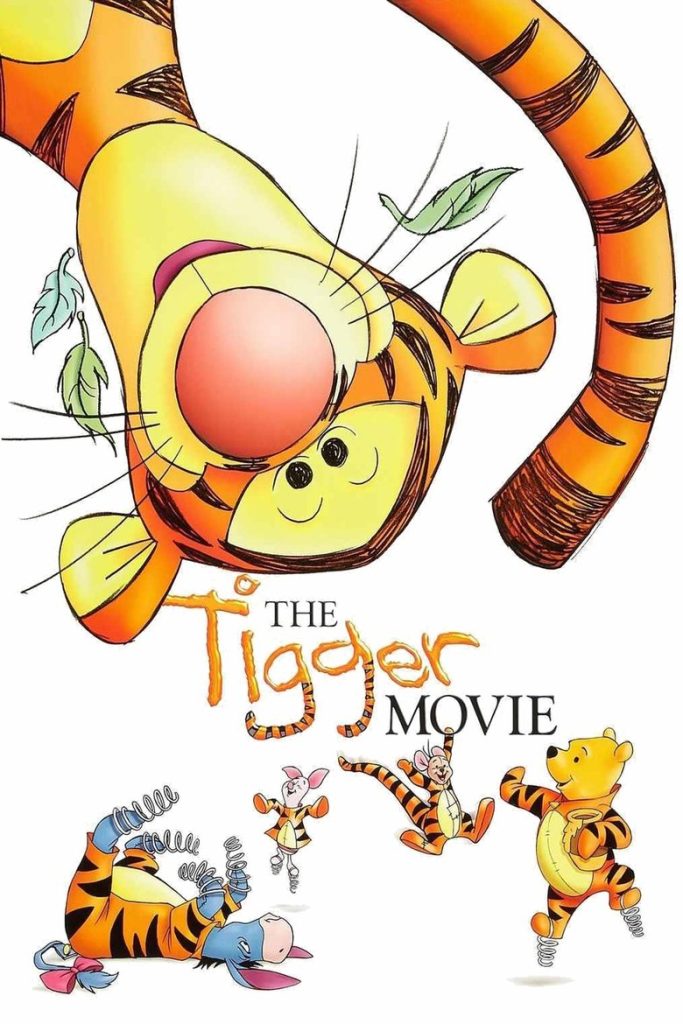
In this gentle animated adventure, Tigger's exuberant bouncing disrupts his friends' efforts to build a winter home for Eeyore. When Rabbit suggests Tigger find other Tiggers to bounce with, Tigger embarks on a journey of self-discovery, learning valuable lessons about family, friendship, and belonging. The film explores themes of identity, acceptance, and the importance of community through the beloved characters from the Hundred Acre Wood.
Parent Guide
A gentle, heartwarming family film with positive messages about friendship, acceptance, and self-worth. Perfect for young children and families looking for wholesome entertainment.
Content breakdown
Some mild peril when Tigger gets lost in a snowstorm and appears to be in danger, but the situation is resolved quickly and safely. No physical violence.
No scary or disturbing content. The snowstorm scene might be slightly intense for very sensitive young children, but it's brief and ends happily.
No inappropriate language. All dialogue is gentle and appropriate for young audiences.
No sexual content or nudity. Characters are fully clothed cartoon animals.
No substance use of any kind.
Mild emotional moments when Tigger feels lonely or different, and during his journey to find his family. These moments are handled gently and resolved positively, teaching valuable lessons about friendship and self-acceptance.
Parent tips
This G-rated film is appropriate for all ages. The story deals with themes of loneliness and searching for one's place in the world, which may resonate with children who feel different or isolated. Tigger's emotional journey provides opportunities to discuss how we all have unique qualities that make us special. The gentle humor and familiar characters make this accessible even for very young viewers.
Parent chat guide
Parent follow-up questions
- What was your favorite part when Tigger bounced?
- How did Tigger's friends help him feel better?
- Can you bounce like Tigger?
- Why did Tigger want to find other Tiggers?
- What did Tigger learn about being the only one?
- How did Rabbit's suggestion turn out differently than he expected?
- What does this story teach us about accepting people who are different?
- How does Tigger's journey reflect real feelings of loneliness or being different?
- What makes the characters in the Hundred Acre Wood a family even though they're not related?
- How does the film handle themes of identity and belonging?
- What commentary does the story make about the search for one's roots or heritage?
- How do the animation style and storytelling techniques contribute to the emotional impact of Tigger's journey?
🎭 Story Kernel
At its core, 'The Tigger Movie' explores the universal human need for belonging and identity through the lens of childhood innocence. Tigger's search for his 'family tree' isn't just about finding other Tiggers—it's about reconciling his unique, energetic nature with his desire for connection. The film cleverly subverts the 'found family' trope by revealing that Tigger's real family was always present in his friends, who accept his bouncing as integral to who he is. This drives every character: Tigger's desperate need for validation, Pooh's simple loyalty, Rabbit's reluctant caretaking, and Roo's innocent belief in magic. The narrative exposes how even in childhood, we grapple with feeling different while craving acceptance.
🎬 Visual Aesthetics
The film employs a distinct visual language that bridges classic Disney animation with early 2000s techniques. Tigger's orange fur creates a vibrant focal point against the softer pastels of the Hundred Acre Wood, visually emphasizing his 'otherness.' During emotional moments like the snowfall sequence, the animation slows Tigger's typically frantic movements, using stillness to convey loneliness. The 'Heffalumps and Woozles' dream sequence revives the psychedelic style of the original Winnie the Pooh films, using surreal imagery to externalize Tigger's anxiety. Camera angles often position Tigger alone in wide shots of the forest, then transition to intimate close-ups during heartfelt conversations with Roo, visually tracking his emotional journey from isolation to connection.
🔍 Details & Easter Eggs
💡 Behind the Scenes
This was the first Winnie the Pooh theatrical film since 1977's 'The Many Adventures of Winnie the Pooh,' marking Disney's return to traditional animation for the franchise. Voice actor Jim Cummings performed both Tigger and Pooh, recording their dialogue conversations by rapidly switching between vocal registers. The film's songs were composed by the Sherman Brothers, who wrote the original 'Winnie the Pooh' theme in the 1960s, creating musical continuity. Production faced challenges in maintaining the classic watercolor background style while incorporating more detailed character animation. Notably, the film's development coincided with Disney's experimental phase with direct-to-video sequels, but its stronger narrative earned it a theatrical release instead.
Where to watch
Choose region:
- Disney Plus
- Amazon Video
- Apple TV Store
- Google Play Movies
- YouTube
- Fandango At Home
Trailer
Trailer playback is unavailable in your region.