
The Truman Show (1998)
Story overview
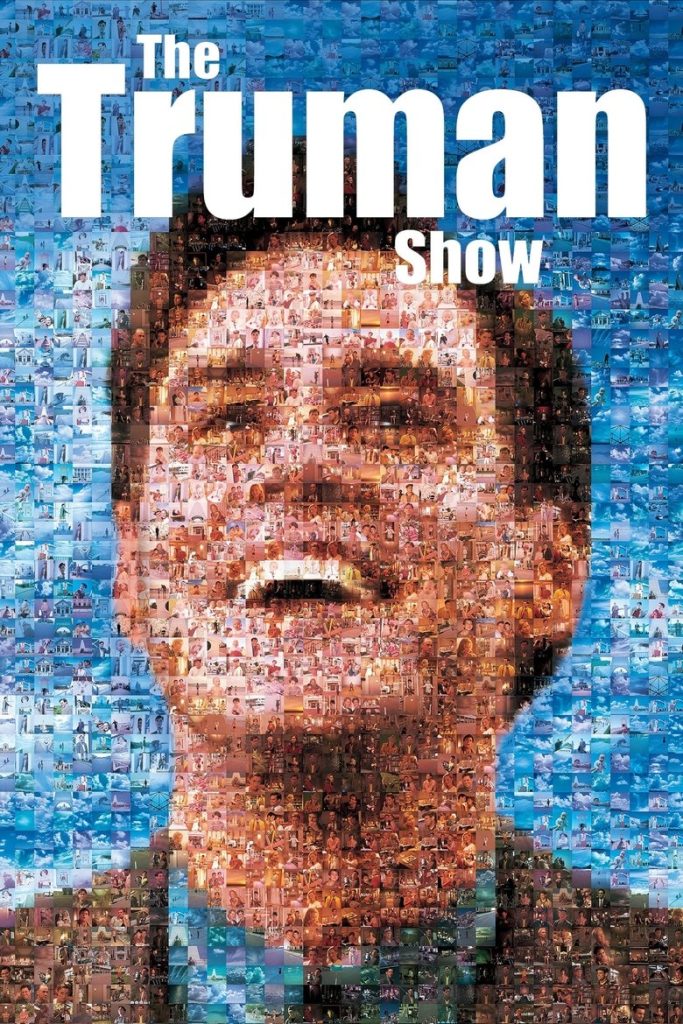
The Truman Show follows an ordinary man who gradually discovers his entire life is being broadcast as a 24/7 television program without his knowledge. He lives in a carefully constructed artificial town where everyone around him is an actor, and every aspect of his existence is controlled by producers. As Truman begins to question the reality around him, he embarks on a journey to uncover the truth about his life and seek genuine freedom.
Parent Guide
A thought-provoking film about reality, privacy, and media that's suitable for older children with parental guidance.
Content breakdown
Some tense moments as the protagonist confronts his situation, including a storm scene where he appears to be in danger while sailing.
The concept of constant surveillance and a fabricated reality may be conceptually unsettling. Some emotional distress as the protagonist discovers the truth.
Very mild language, nothing stronger than occasional light exclamations.
No sexual content or nudity.
No substance use depicted.
Significant emotional moments as the protagonist experiences betrayal, confusion, and determination to escape his controlled life.
Parent tips
This film explores themes of reality, privacy, and media manipulation in a thought-provoking way that may prompt family discussions. While rated PG, some scenes contain emotional intensity as the protagonist confronts the artificial nature of his world. The concept of being constantly watched and controlled may be unsettling for younger viewers who are just developing their understanding of privacy and autonomy.
Parents should be aware that the film presents a world where deception is normalized, and the main character experiences significant emotional distress upon discovering the truth about his life. The movie raises ethical questions about media exploitation and personal freedom that may require explanation for younger audiences. The overall tone is more philosophical than frightening, but the premise itself can be conceptually challenging.
Parent chat guide
During viewing, pause if your child seems confused about why characters are behaving strangely or why the protagonist is distressed. Emphasize that Truman's journey is about seeking truth and freedom, which are positive values. Point out how the film shows the importance of questioning things that don't seem right.
After watching, focus conversations on the film's themes rather than plot specifics. Ask open-ended questions about privacy, media influence, and what makes life authentic. Connect the story to real-world situations where people might feel pressured to perform or conform to expectations.
Parent follow-up questions
- How did you feel when Truman was confused?
- What was your favorite part of the movie?
- Do you think it's nice to watch people without them knowing?
- What makes you feel safe and happy?
- How do you know something is real?
- Why do you think people wanted to watch Truman's life?
- How would you feel if you discovered your life was on TV?
- What does it mean to be 'real' or 'authentic'?
- Why is privacy important?
- What would you do if you suspected something wasn't right in your life?
- What ethical issues does the show within the movie raise?
- How does the film comment on modern media and reality TV?
- What does Truman's journey teach us about courage and truth-seeking?
- How can we balance entertainment with respect for people's privacy?
- What makes a life meaningful or authentic?
- How does the film explore themes of free will versus determinism?
- What parallels can you draw between Truman's world and modern social media/surveillance culture?
- How does the movie comment on the relationship between consumers and media producers?
- What philosophical questions about reality and perception does the film raise?
- How does Truman's character development reflect universal human experiences of self-discovery?
🎭 Story Kernel
The Truman Show explores the tension between authentic existence and manufactured reality through Truman Burbank's awakening. At its core, the film critiques media manipulation and the commodification of human experience, asking what happens when entertainment becomes indistinguishable from life. Truman's journey from passive acceptance to active rebellion is driven by primal human instincts—curiosity, love, and the desire for truth—that no script can contain. The show's creator, Christof, represents the god-like control of media creators who believe they can engineer happiness, yet his creation ultimately rejects his perfect world for the messy uncertainty of reality.
🎬 Visual Aesthetics
The film's visual language masterfully contrasts Truman's perceived reality with the show's artificiality through precise camera work. Early scenes use bright, saturated colors and static shots that feel like sitcom staging, while subtle glitches—a falling light, rain targeting only Truman—hint at the constructed world. As Truman's suspicion grows, the cinematography becomes more dynamic, with handheld shots and Dutch angles reflecting his destabilizing reality. The dome's artificial sky and horizon lines create a visual prison, while Christof's control room, bathed in blue monitor light, represents the cold machinery behind the warm facade.
🔍 Details & Easter Eggs
💡 Behind the Scenes
Jim Carrey reportedly stayed in character as Truman even when cameras weren't rolling, asking crew members about the 'real world' to maintain his performance's authenticity. The seaside town of Seahaven was actually Seaside, Florida—a master-planned community that perfectly embodied the film's theme of artificial perfection. Director Peter Weir intentionally cast lesser-known actors as Truman's friends and family to enhance their 'actorly' quality, while Ed Harris' Christof was partly inspired by television producer and 'Big Brother' creator John de Mol.
Where to watch
Choose region:
- fuboTV
- MGM+ Amazon Channel
- MGM Plus
- Philo
- Paramount Plus Essential
- Paramount Plus Premium
- Amazon Video
- Apple TV
- Google Play Movies
- YouTube
- Fandango At Home
- JustWatchTV
- Spectrum On Demand
- Plex
Trailer
Trailer playback is unavailable in your region.