
The Tuskegee Airmen (1995)
Story overview
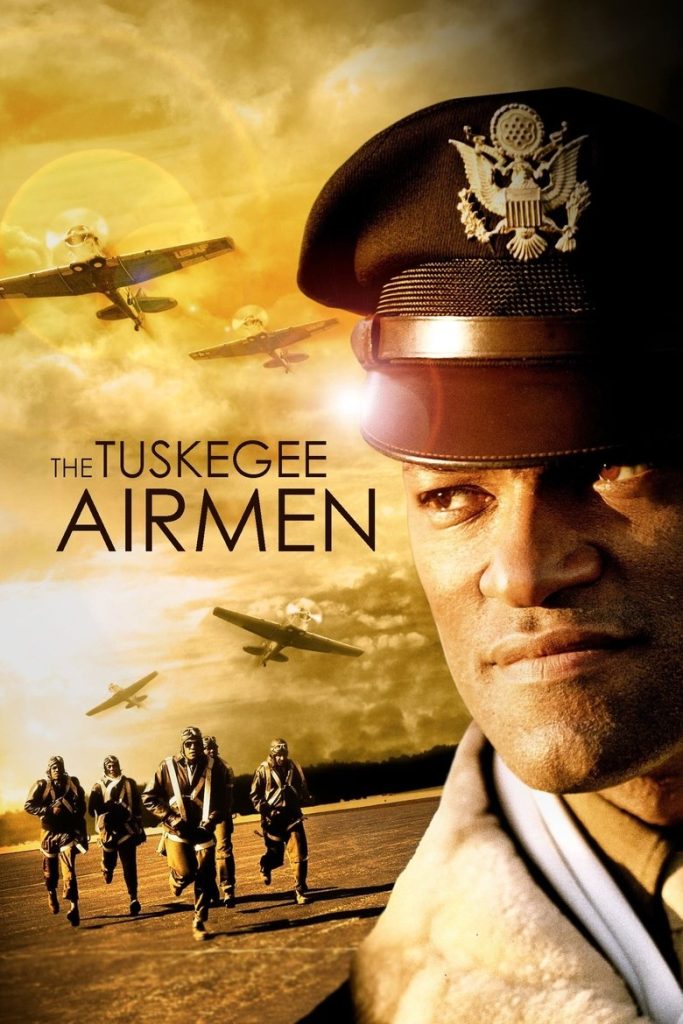
The Tuskegee Airmen is a 1995 historical drama about the first African-American military pilots who served in World War II. It follows their journey through training and combat missions while facing racial discrimination and prejudice. The film highlights their courage, determination, and significant contributions to the war effort despite the challenges they encountered.
Parent Guide
Historical war drama with themes of racial discrimination and military service. Suitable for mature children who can handle wartime themes and discussions about prejudice.
Content breakdown
Contains wartime combat scenes with aircraft battles, explosions, and peril. Some characters are injured or killed in action, though not graphically depicted.
Some tense moments during combat missions and emotional scenes dealing with discrimination. Historical prejudice and racial slurs may be disturbing to sensitive viewers.
May include period-appropriate racial slurs and mild wartime language. No excessive profanity.
No sexual content or nudity present.
May include social drinking in military settings typical of the period. No prominent substance abuse.
Deals with themes of discrimination, wartime stress, and historical injustice. Characters face significant challenges that may elicit strong emotional responses.
Parent tips
This PG-13 rated war drama deals with mature themes including racial discrimination, wartime violence, and historical prejudice. While it portrays important historical events and positive messages about perseverance and equality, it contains scenes that may be intense for younger viewers. Parents should consider their child's sensitivity to war-related content and discussions about racism before viewing.
The film offers valuable opportunities to discuss American history, civil rights, and the experiences of minority groups during wartime. It can serve as a starting point for conversations about equality, courage in the face of adversity, and how historical events shape society today.
Parent chat guide
You could explore how the film portrays teamwork and determination in challenging circumstances. Discuss the importance of recognizing historical contributions from all groups in society. These conversations can help children understand both historical context and contemporary relevance.
Parent follow-up questions
- What did the pilots do in the airplanes?
- How did the characters help each other?
- What colors did you see in the movie?
- Did you see any friends in the story?
- What was your favorite part?
- Why was it special that these pilots could fly planes?
- How did the characters show bravery?
- What challenges did the pilots face besides flying?
- How did working together help them succeed?
- What did you learn about history from this movie?
- Why was this group of pilots historically important?
- How did discrimination affect the characters' experiences?
- What qualities helped the pilots overcome challenges?
- How does this story connect to what you've learned about civil rights?
- What messages about equality does this film convey?
- How does this film portray the intersection of military service and civil rights?
- What historical context is necessary to fully understand the pilots' achievements?
- How does the film handle themes of institutional racism?
- What contemporary parallels can you draw from this historical story?
- How does this representation challenge traditional narratives about WWII?
🎭 Story Kernel
At its core, 'The Tuskegee Airmen' is less about aerial combat and more about the psychological warfare of proving one's humanity against systemic racism. The film's true conflict isn't the dogfights over Europe but the daily battles against prejudice within their own military. What drives the characters isn't just patriotism or skill, but the desperate need to validate their existence as equals in a society that has predetermined them as inferior. Their determination becomes a quiet, collective rebellion—every successful mission is a silent argument against segregation, every casualty a tragic testament to the cost of dignity. The movie ultimately argues that their greatest achievement wasn't military success, but shattering the myth of racial inferiority through sheer excellence under impossible pressure.
🎬 Visual Aesthetics
The film employs a deliberate visual dichotomy: the vibrant, sun-drenched scenes at Tuskegee contrast sharply with the muted, cold tones of European combat zones, visually separating the 'training' world from the 'real' war. Camera work emphasizes isolation—frequent close-ups on individual pilots in cockpits or alone in quarters highlight their psychological separation even within their unit. The aerial sequences use practical effects and model work that feel authentic to the period, avoiding glamorization of combat. Symbolically, the recurring shots of white officers watching through binoculars or windows create a visual theme of surveillance and judgment, reinforcing how the airmen are constantly being measured against prejudiced expectations.
🔍 Details & Easter Eggs
💡 Behind the Scenes
The film features several actors who would become better known later, including Cuba Gooding Jr. in one of his earliest roles and Laurence Fishburne as the lead. Many aerial sequences were shot using actual WWII-era aircraft and careful model work rather than CGI, giving the dogfights an authentic, gritty feel. Interestingly, several real Tuskegee Airmen served as technical consultants, ensuring historical accuracy in everything from flight procedures to uniform details. The production faced challenges recreating 1940s Alabama and Italian locations, ultimately filming in multiple states to capture the right period atmosphere.
Where to watch
Choose region:
- HBO Max
- HBO Max Amazon Channel
- History Vault
- Amazon Video
- Apple TV
- Google Play Movies
- YouTube
- Fandango At Home