
The U (2009)
Story overview
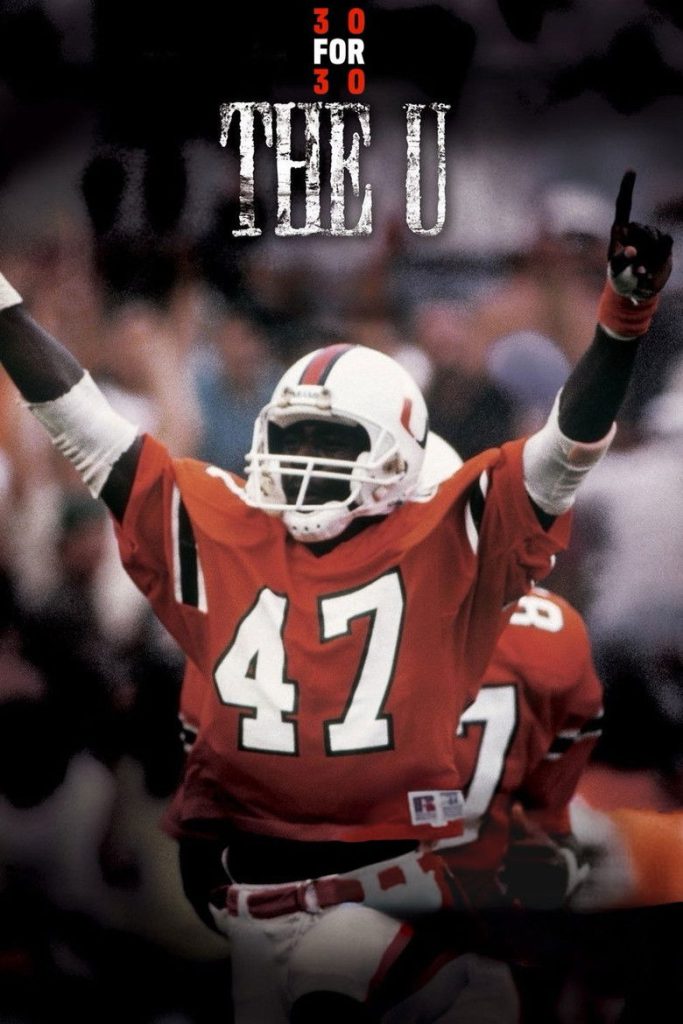
This documentary explores the University of Miami football team's transformation in the 1980s and early 1990s, highlighting how racial integration and local hip-hop culture influenced their success and swagger. It addresses broader social issues like racial tensions and urban challenges in Miami during that era.
Parent Guide
A family-friendly documentary about sports history and social change, with minimal concerning content.
Content breakdown
Mentions of historical riots and tensions in Miami, but no graphic violence depicted.
Discussions of racial conflicts and urban challenges might be unsettling for very young viewers.
Possible mild language typical in sports contexts, but nothing explicit or frequent.
No sexual content or nudity.
No depiction or mention of substance use.
Moderate emotional moments related to team struggles and societal issues.
Parent tips
Suitable for most ages, but younger children may need context on historical racial issues. Focus on themes of teamwork, overcoming adversity, and cultural impact.
Parent chat guide
Parent follow-up questions
- What was your favorite part of the football game?
- Can you name a color in the team's uniform?
- How do you think the players worked together as a team?
- What does it mean to have 'swagger' in sports?
- Why was it significant that the team recruited players from different backgrounds?
- How did hip-hop culture influence the team's identity?
- What broader social issues in Miami during the 1980s does this documentary highlight?
- How can sports serve as a microcosm for societal change?
🎭 Story Kernel
At its core, 'The U' is about the collision of identity, power, and systemic resistance. It's not just a sports documentary; it's a sociological autopsy of how a football team became a defiant cultural and political statement. The University of Miami Hurricanes weren't just playing to win games; they were weaponizing swagger to challenge the establishment's perception of young Black athletes. The driving force for players and coaches alike was a profound, often angry, need for respect and recognition from a system that had historically marginalized them. Their on-field dominance was a form of loud, unapologetic protest.
🎬 Visual Aesthetics
The film's visual language masterfully mirrors its subject's brash energy. Archival game footage is intercut with stark, intimate modern interviews, creating a dialogue between past rebellion and present reflection. The color palette often leans into the iconic orange and green of the 'Canes, but it's used symbolically—flashes of vibrant color against darker, more contemplative tones. The editing is rhythmic and aggressive during game sequences, mimicking the team's punishing style of play, while slowing to a confessional pace in interviews, allowing the weight of history to settle on the speakers' faces.
🔍 Details & Easter Eggs
💡 Behind the Scenes
Director Billy Corben, a Miami native, leveraged deep local connections to secure incredibly candid interviews, including with formerly reticent figures like Luther Campbell. Much of the most powerful archival footage was sourced from local Miami news stations, not national networks, preserving the raw, unfiltered perspective of the city itself. The film's production was notably independent, allowing Corben to maintain a fiercely authentic, non-sanitized narrative that major studios might have softened.
Where to watch
Choose region:
- Disney Plus
- Netflix Standard with Ads
- Amazon Video