
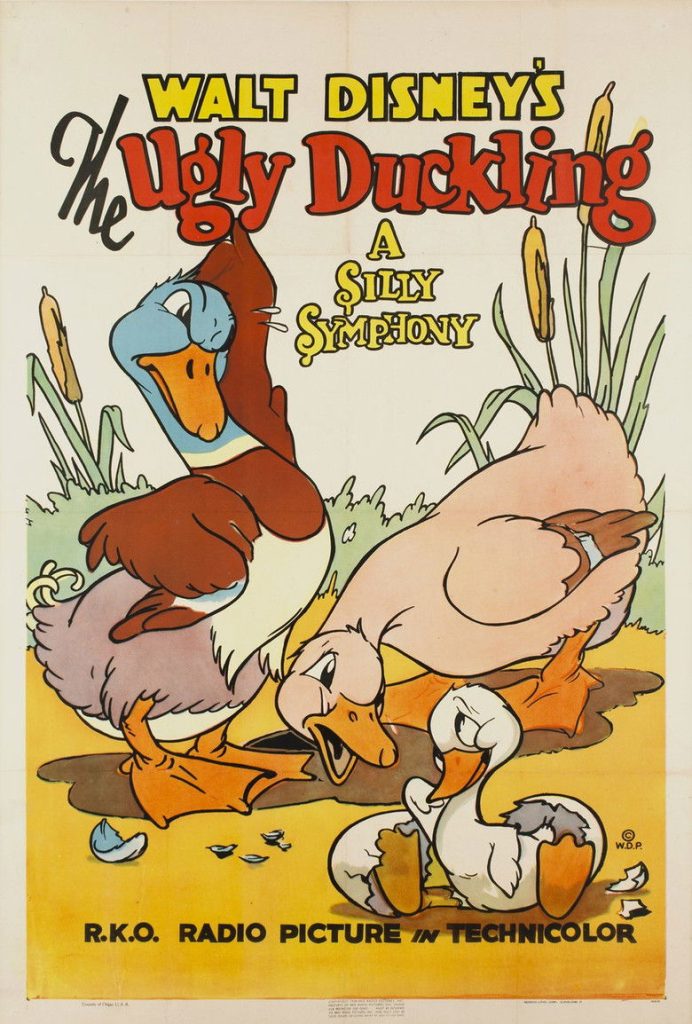
The Ugly Duckling (1939)
Story overview
This 1939 animated short film tells the classic story of a duckling who looks different from his siblings and faces rejection from his family and community. The duckling embarks on a journey searching for acceptance, experiencing loneliness and hardship along the way. Ultimately, the story reveals the duckling's true identity as a swan, delivering a message about self-discovery and belonging.
Parent Guide
A gentle adaptation of the classic fairy tale with themes of rejection and self-discovery suitable for most children.
Content breakdown
Some chasing and mild peril as the duckling faces rejection and wanders alone.
Emotional scenes of rejection and loneliness that might upset sensitive children.
No concerning language present.
No sexual content or nudity.
No substance use depicted.
Themes of rejection and searching for acceptance create emotional moments.
Parent tips
This film presents themes of rejection and bullying that may resonate with children who have felt excluded. The duckling's journey includes moments of sadness and loneliness that could be emotionally affecting for sensitive viewers. The happy ending provides a positive resolution about finding one's place and embracing differences.
Parent chat guide
Parent follow-up questions
- How did the duckling feel when others didn't like him?
- What made the duckling special?
- How did the story end happily?
- Why do you think the other animals treated the duckling differently?
- What did the duckling learn about himself?
- Have you ever felt different from others?
- How does the film show the impact of bullying and exclusion?
- What does this story teach us about judging others by appearance?
- How did the duckling show resilience during his journey?
- How does this classic story relate to modern concepts of identity and belonging?
- What societal messages about conformity does the film present?
- How might different viewers interpret the transformation theme?
🎭 Story Kernel
The film's core isn't about transformation but about the violence of belonging. The duckling's journey exposes how communities define 'ugliness' as deviation from their norms, using exclusion as social glue. The swans' eventual acceptance isn't redemption for the duckling but an indictment of the barnyard's cruel, arbitrary standards. The protagonist is driven not by a desire to be beautiful, but by a desperate, primal need to escape relentless persecution and find a place where its existence isn't a daily insult. It's a stark parable about identity being conferred by the group you stumble into, not the one you're born into.
🎬 Visual Aesthetics
The cinematography masterfully uses scale and perspective to convey alienation. Early scenes employ high-angle shots looking down on the tiny, isolated duckling amidst the towering, blurred bodies of its siblings and the mother duck, visually crushing it. The color palette shifts from the muted, muddy browns and greys of the hostile farmyard to the startling, almost surreal clarity of blues and whites in the final lake scene with the swans. This isn't just prettier; it's a different visual language, signaling a transition into a world where the protagonist finally fits the frame. The animation of the duckling's movements—consistently hesitant, withdrawn, and off-rhythm compared to the synchronized paddling of others—is a subtle masterpiece of nonverbal storytelling.
🔍 Details & Easter Eggs
💡 Behind the Scenes
This 1939 Silly Symphony short from Disney was based on Hans Christian Andersen's story but significantly softened the original's darker ending. The voice actor for the duckling, Clarence Nash, was primarily known as the voice of Donald Duck, adding an ironic layer given Donald's famously short temper versus this character's gentle suffering. The challenging water and ice effects for the winter scenes pushed the studio's animation techniques, with artists studying real swans and cygnets at local parks to capture the specific, graceful movements that contrast so sharply with the duckling's earlier clumsiness.
Where to watch
Choose region:
- Disney Plus
Trailer
Trailer playback is unavailable in your region.