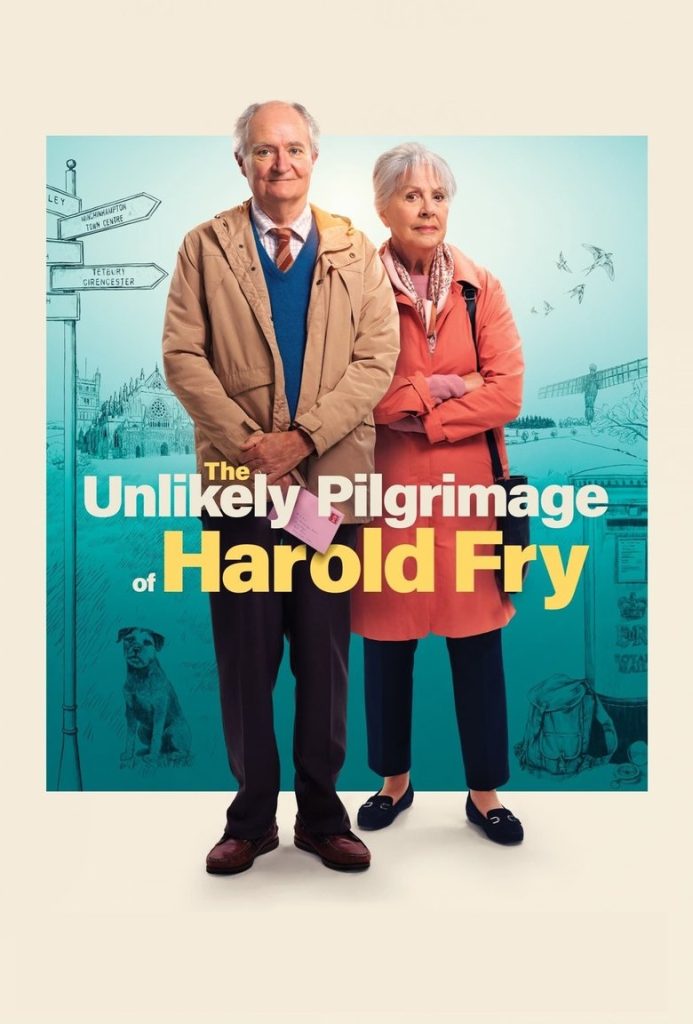
The Unlikely Pilgrimage of Harold Fry (2023)
Story overview
The Unlikely Pilgrimage of Harold Fry is a gentle, character-driven drama about a retired man in his 60s who embarks on an unexpected 450-mile walk across England to visit a dying friend. The film explores themes of regret, redemption, friendship, and the search for meaning in later life through Harold's quiet journey and the people he meets along the way.
Parent Guide
A contemplative drama about redemption and human connection with minimal concerning content. Best suited for mature children who can engage with emotional themes.
Content breakdown
No physical violence. Mild peril includes Harold facing physical exhaustion, bad weather during his walk, and one scene where he appears briefly disoriented. Some emotional tension in discussions of illness and death.
The central theme involves a friend dying of cancer, which may be emotionally difficult for sensitive children. Some scenes show Harold's physical discomfort and loneliness. No jump scares or horror elements.
No profanity or strong language noted. Polite, conversational dialogue throughout.
No sexual content, nudity, or romantic situations. The film focuses on platonic friendship and family relationships.
Social drinking in pubs and restaurants (beer, wine). Harold is occasionally offered drinks by people he meets. No intoxication or substance abuse depicted.
Emotionally resonant themes of regret, mortality, friendship, and redemption. Several poignant moments as Harold reflects on his life choices and relationships. The ending is bittersweet but hopeful. May prompt discussions about aging, forgiveness, and saying goodbye.
Parent tips
This is a thoughtful, slow-paced drama suitable for mature children who can appreciate character development over action. The film deals with themes of mortality, regret, and aging in a gentle but emotionally resonant way. Parents should be prepared to discuss these themes with children, particularly the concept of saying goodbye to loved ones.
Parent chat guide
Parent follow-up questions
- What was your favorite part of Harold's walk?
- What animals or pretty things did you see in the movie?
- How did Harold help people he met?
- Why do you think Harold decided to walk instead of taking a car or train?
- What did Harold learn about being a good friend?
- How did the walk change how Harold felt about himself?
- What regrets did Harold have about his life, and how did he try to make things right?
- How does the film show that it's never too late to change or grow?
- What role do the people Harold meets play in his journey?
- How does the film explore themes of mortality and legacy?
- What commentary does the film make about modern life versus simpler, more intentional living?
- How does Harold's physical journey mirror his emotional and psychological transformation?
🎭 Story Kernel
At its heart, the film is a meditation on the paralyzing nature of repressed grief and the desperate, illogical hope that physical endurance can compensate for emotional failure. Harold’s walk isn't a traditional religious pilgrimage but a secular atonement for decades of domestic silence and the tragic loss of his son, David. By walking to reach the dying Queenie Hennessy, he is attempting to outrun the stagnation of his marriage to Maureen and the crushing guilt of his perceived inadequacy as a father. The narrative strips away the comforts of modern life to reveal a man finally confronting the ghosts he ignored in his quiet, suburban existence. It expresses the idea that healing requires a radical disruption of routine, transforming a simple errand into a grueling, public confrontation with a private history of profound sorrow and missed opportunities.
🎬 Visual Aesthetics
Hettie Macdonald and cinematographer Kate McCullough utilize a visual palette that evolves from the sterile, muted tones of Harold’s domestic life to the vibrant, often harsh reality of the British landscape. The early scenes are characterized by tight framing and a sense of claustrophobia within the Fry household, emphasizing the emotional distance between Harold and Maureen. As Harold moves north, the camera pulls back, capturing the vastness of the terrain which mirrors his internal expansion and vulnerability. The use of natural light emphasizes the passage of time and the physical toll on Harold’s body. Symbolically, the recurring imagery of the road and the changing weather serves as a metaphor for the unpredictability of memory, shifting from the clarity of the present to the hazy, painful flashbacks of his family’s past, creating a visceral sense of displacement.
🔍 Details & Easter Eggs
💡 Behind the Scenes
Jim Broadbent’s involvement with the story predates the film by over a decade; he famously narrated the audiobook version of Rachel Joyce’s novel, giving him a deep, pre-existing connection to Harold’s internal monologue. The production opted for a degree of chronological filming to allow Broadbent to physically age and wear down alongside the character, enhancing the realism of his exhaustion. Author Rachel Joyce adapted the screenplay herself, ensuring the delicate balance of the novel's internal emotional landscape was preserved. The film was shot on location across England, tracing the actual route from South Devon to Berwick-upon-Tweed.
Where to watch
Choose region:
- Netflix
- Amazon Prime Video
- Netflix Standard with Ads
- Amazon Prime Video with Ads
- The Roku Channel
- Amazon Prime Video Free with Ads
- Tubi TV
- Amazon Video
- Apple TV Store
- Google Play Movies
- YouTube
- Fandango At Home
Trailer
Trailer playback is unavailable in your region.