
The Usual Suspects (1995)
Story overview
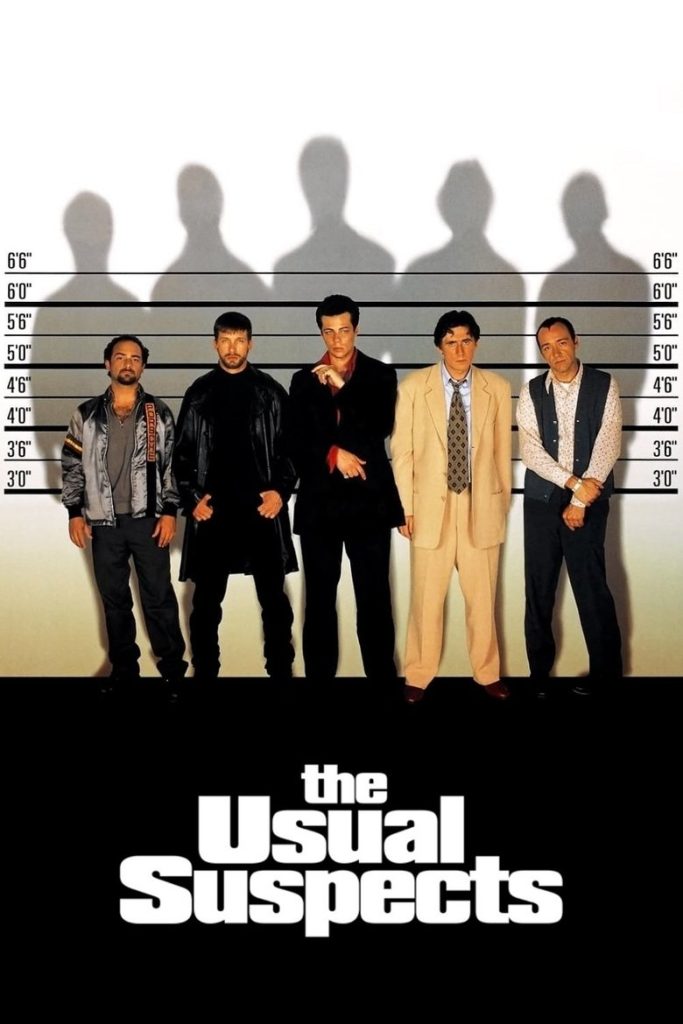
The Usual Suspects is a crime thriller that follows a small-time criminal named Verbal Kint as he recounts an elaborate heist to police interrogators. Through his story, he describes a mysterious and powerful crime figure named Keyser Soze who manipulates events from the shadows. The film focuses on deception, criminal conspiracies, and the unreliable nature of storytelling as the truth remains elusive throughout.
Parent Guide
A complex crime thriller with mature themes and violent content suitable only for older teenagers and adults.
Content breakdown
Contains scenes of criminal violence including shootings, explosions, and physical confrontations, though not excessively graphic.
Psychological tension and suspense throughout, with themes of manipulation and criminal conspiracy that may be disturbing.
Frequent strong language including profanity and crude expressions typical of the crime genre.
Minimal sexual content with some suggestive dialogue but no explicit scenes or nudity.
Characters shown drinking alcohol and smoking in social and criminal contexts.
High tension throughout with psychological manipulation and betrayal creating emotional complexity.
Parent tips
This film contains mature themes including criminal activity, violence, and strong language that make it inappropriate for younger viewers. The complex narrative structure with its twists and deception may be confusing for some audiences, particularly those not accustomed to non-linear storytelling. Parents should be aware that the R rating reflects significant adult content that requires careful consideration before viewing with teenagers.
Parent chat guide
Parent follow-up questions
- Did you see any people being mean in the movie?
- How did the movie make you feel?
- What colors did you notice most?
- Was there any loud music or sounds?
- Did you see any police officers?
- What was confusing about the story?
- How did the characters try to trick each other?
- What made some scenes feel tense or scary?
- Why do you think people tell stories differently?
- What did you learn about how police work?
- How does the movie play with our expectations of truth?
- What techniques did the filmmakers use to create suspense?
- How do the characters' criminal choices affect others?
- What makes a story believable versus unbelievable?
- How does the ending change how you view the whole film?
- How does the film explore the nature of memory and storytelling?
- What commentary does the movie make about criminal justice systems?
- How do power dynamics operate between the characters?
- What cinematic techniques enhance the themes of deception?
- How does the film challenge traditional narrative structures?
🎭 Story Kernel
At its core, 'The Usual Suspects' is a masterclass in narrative deception, exploring how identity is constructed through storytelling rather than inherent truth. Verbal Kint doesn't just lie to Agent Kujan—he builds a myth from the flotsam of the office, transforming mundane objects into the architecture of Keyser Söze. The film suggests that power lies not in brute force but in controlling the narrative; Söze's legend grows precisely because it's told by survivors who witnessed his brutality. Every character is driven by their relationship to this myth—some seek to expose it, others to become part of it, while Kujan's fatal flaw is believing he can separate truth from fiction through logic alone.
🎬 Visual Aesthetics
Bryan Singer employs a deliberately murky visual palette—grainy blues and sickly yellows dominate the interrogation scenes, creating a haze of uncertainty that mirrors Kint's storytelling. The camera often lingers on objects before revealing their narrative significance, like the coffee mug or bulletin board that become props in Kint's fabrication. Notice how Söze is always shot from behind or in shadow until the final reveal, his identity literally constructed through others' perspectives. The editing creates a rhythmic dance between 'present' interrogation and 'past' heist sequences, blurring timelines until we can no longer distinguish memory from invention.
🔍 Details & Easter Eggs
💡 Behind the Scenes
The famous lineup scene where the suspects mock the police was largely improvised—the actors genuinely made each other laugh with their escalating ridiculous line readings. Kevin Spacey studied actual con artists' mannerisms for his performance, particularly how they use hesitation and self-deprecation to appear harmless. The film was shot in just 35 days on a modest budget, with the iconic ending walk being Spacey's first take as he simply dropped his limp and walked away—a moment so perfect they never shot another.
Where to watch
Choose region:
- fuboTV
- MGM+ Amazon Channel
- MGM Plus
- Philo
- Amazon Video
- Apple TV
- Google Play Movies
- YouTube
- Fandango At Home
- Plex
Trailer
Trailer playback is unavailable in your region.