
The Velveteen Rabbit (2023)
Story overview
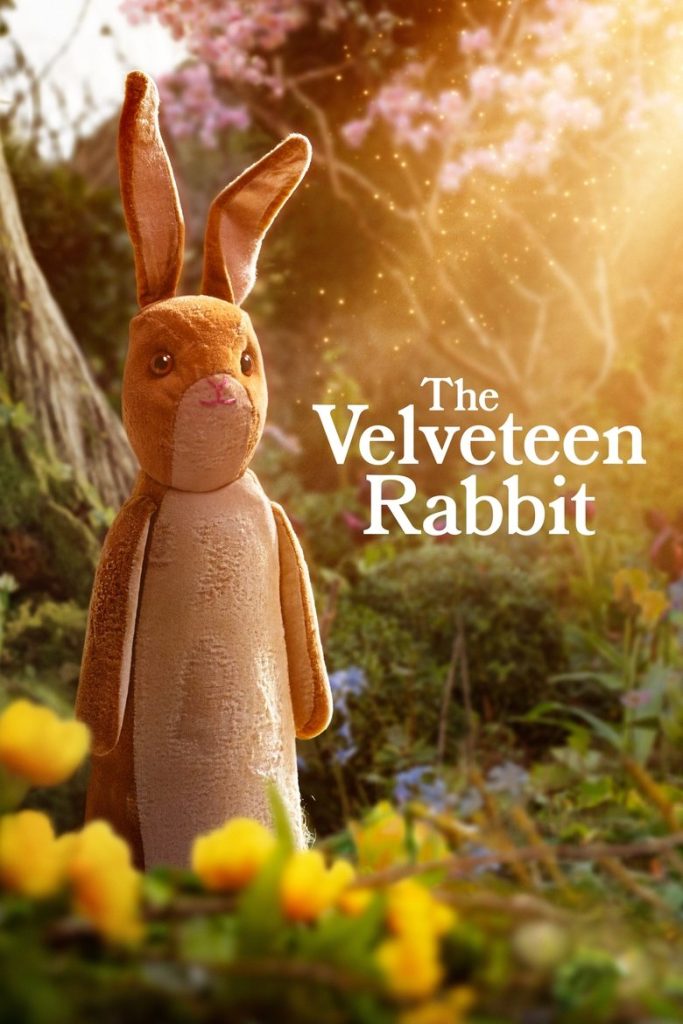
The Velveteen Rabbit is a 2023 animated family fantasy film based on the classic children's story. It follows the journey of a stuffed rabbit who longs to become real through the love of his owner. The film explores themes of friendship, imagination, and the transformative power of genuine affection in a magical, heartwarming adventure suitable for family viewing.
Parent Guide
A gentle, family-friendly adaptation of a classic children's story with positive messages about love and imagination.
Content breakdown
No violence or physical peril present in this gentle fantasy story.
No scary or disturbing content; all fantasy elements are mild and non-threatening.
No inappropriate language; dialogue is family-appropriate throughout.
No sexual content or nudity present in this children's film.
No depiction or reference to substance use of any kind.
Some mild emotional moments related to attachment, change, and the desire to be loved, handled gently and appropriately for children.
Parent tips
This gentle animated adaptation of the classic story is appropriate for most children, focusing on positive themes of love and imagination. Parents should be aware that the story involves emotional moments related to attachment and change, which might require explanation for younger viewers. The fantasy elements are mild and non-threatening, making it a good choice for family movie nights.
Parent chat guide
Parent follow-up questions
- What was your favorite toy in the movie?
- How did the rabbit feel when he was loved?
- What does it mean to be 'real' to you?
- Why do you think the rabbit wanted to become real?
- How did the boy show he cared about his toys?
- What makes something or someone special to you?
- What does the story teach us about the value of imagination?
- How do the characters' relationships change throughout the film?
- What different kinds of 'realness' does the movie explore?
- How does the film use fantasy to explore real emotional experiences?
- What commentary does the story make about childhood and growing up?
- How do the themes of transformation apply to adolescent development?
🎭 Story Kernel
This adaptation of Margery Williams’ classic explores the existential transformation from object to entity through the crucible of unconditional love. At its heart, the film is a meditation on the vulnerability required to become "Real." It posits that reality is not a state of physical perfection but a consequence of being worn thin by another's need. When young William falls ill with scarlet fever, the Rabbit’s devotion transcends its stuffing, illustrating that the soul is forged in the moments we are most needed. The narrative shifts from a simple childhood fantasy into a profound exploration of mortality and legacy, suggesting that while physical forms are transient and subject to the "burning" of time and illness, the essence of love grants a permanent, magical existence that defies the bin and the passage of time.
🎬 Visual Aesthetics
Jennifer Perrott utilizes a sophisticated hybrid of live-action and hand-drawn-style animation to delineate the boundaries between the physical world and the realm of imagination. The nursery is bathed in a nostalgic, amber glow, emphasizing a sense of safety that contrasts sharply with the sterile, cold blues of the sickroom. The animation of the toys is intentionally tactile; the Velveteen Rabbit possesses a weighted, frayed texture that makes its eventual transformation feel earned. Symbolism is heavy in the use of the "Magic Forest," a vibrant, watercolor-esque landscape that represents the Rabbit's inner longing. This visual duality serves as a metaphor for the dual nature of childhood—the grounded reality of growing up and the limitless, vibrant world of play that sustains the spirit during times of isolation and physical suffering.
🔍 Details & Easter Eggs
💡 Behind the Scenes
Produced by the Academy Award-nominated Magic Light Pictures, this 40-minute special was released on Apple TV+ in November 2023. Director Jennifer Perrott, known for her work on "Doctor Who" and "Gentleman Jack," brought a cinematic scale to this intimate story. The screenplay was penned by Tom Bidwell, who previously worked on the "Watership Down" miniseries. The production features a notable voice cast, including Nicola Coughlan as the Playroom Fairy and Alex Lawther as the Rabbit. The film stays remarkably faithful to the 1922 source material by Margery Williams while modernizing the visual delivery for a contemporary audience.
Where to watch
Choose region:
- Apple TV
- Apple TV Amazon Channel
Trailer
Trailer playback is unavailable in your region.