
The Vernon Johns Story (1994)
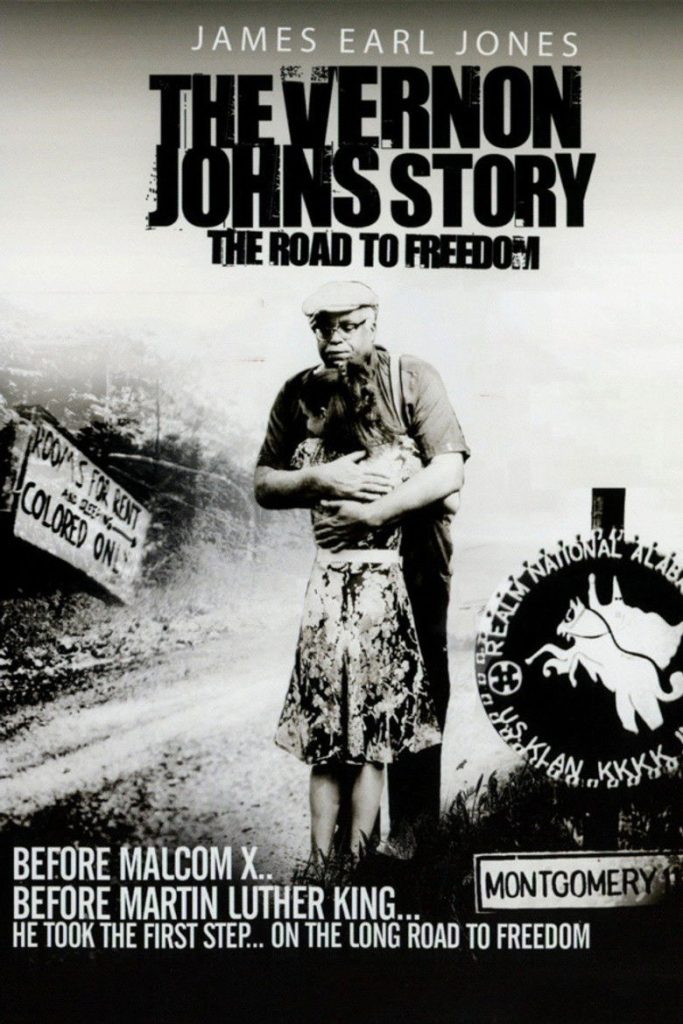
Story overview
The Vernon Johns Story is a 1994 TV movie drama that portrays the life of Vernon Johns, an early civil rights leader and predecessor to Martin Luther King Jr. at Dexter Avenue Baptist Church. The film depicts his courageous efforts to challenge racial segregation and injustice in the American South during a turbulent period. It explores themes of faith, social justice, and moral courage through historical events and personal struggles.
Parent Guide
Educational historical drama about civil rights with themes of social justice and moral courage. Suitable for family viewing with parental guidance for historical context.
Content breakdown
May include references to racial tension and historical discrimination, but no graphic violence depicted.
Themes of racial injustice and social conflict may be emotionally challenging for sensitive viewers.
No strong language expected in this type of historical drama.
No sexual content or nudity in this educational drama.
No substance use depicted in this historical drama.
Deals with serious themes of racial injustice and social change that may provoke thoughtful discussion.
Parent tips
This film provides an educational look at the early civil rights movement through the life of Vernon Johns, making it suitable for family viewing with school-aged children. Parents should be prepared to discuss historical racism and segregation, as the film depicts the realities of that era including discrimination and social tension. The PG rating suggests some content may require parental guidance, particularly for younger viewers who might need context about the historical setting.
Parent chat guide
Parent follow-up questions
- What did you notice about how people treated each other in the movie?
- How did the main character try to help people?
- What does it mean to be brave like the person in the story?
- Why do you think some people were treated unfairly in the movie?
- What challenges did Vernon Johns face in trying to make things better?
- How can we stand up for what's right in our own lives?
- What historical period does this film represent, and why was it significant?
- How did Vernon Johns use his position to advocate for change?
- What lessons about leadership and perseverance can we learn from this story?
- How does Vernon Johns' approach to civil rights compare to later leaders?
- What systemic issues of inequality does the film highlight that still exist today?
- How does the film portray the relationship between faith and social activism?
🎭 Story Kernel
The film explores the tension between radical conviction and institutional pragmatism through Vernon Johns' tenure at Dexter Avenue Baptist Church. It's not merely a civil rights origin story but a character study of a man whose uncompromising intellect and moral clarity alienate his congregation as much as the white establishment. The real conflict isn't with segregationists but with Black parishioners clinging to respectability politics—Johns' struggle reveals how liberation movements often begin by confronting the complacency of those they aim to liberate. His eventual departure, replaced by the more diplomatic Martin Luther King Jr., becomes a poignant commentary on how revolutions require both prophets and politicians.
🎬 Visual Aesthetics
The film employs a muted, almost documentary-like visual palette dominated by earth tones and shadowy interiors of the church and Johns' home, emphasizing the weight of his isolation. Cinematography frequently frames Johns in tight close-ups during sermons, contrasting with wide shots showing his physical distance from both white authorities and his own congregation. Symbolism appears subtly—the recurring image of Johns carrying groceries becomes a visual metaphor for bearing communal burdens alone. Lighting often isolates him in single light sources, visually manifesting his ideological loneliness against darker backgrounds of resistance or indifference.
🔍 Details & Easter Eggs
💡 Behind the Scenes
James Earl Jones prepared for the role by studying Johns' actual sermons and visiting Dexter Avenue Baptist Church, where he discovered Johns' original Bible annotations. The production filmed at several historic Alabama locations, including buildings that were actual sites of civil rights organizing. Director Kenneth Fink insisted on using period-accurate lighting equipment to maintain visual authenticity, which created challenges for interior scenes but contributed to the film's distinctive atmospheric quality.
Where to watch
Choose region:
- Peacock Premium
- Peacock Premium Plus
- The Roku Channel
- Tubi TV
- Amazon Video
- Apple TV
- Google Play Movies
- YouTube