
The Wandering Earth (2019)
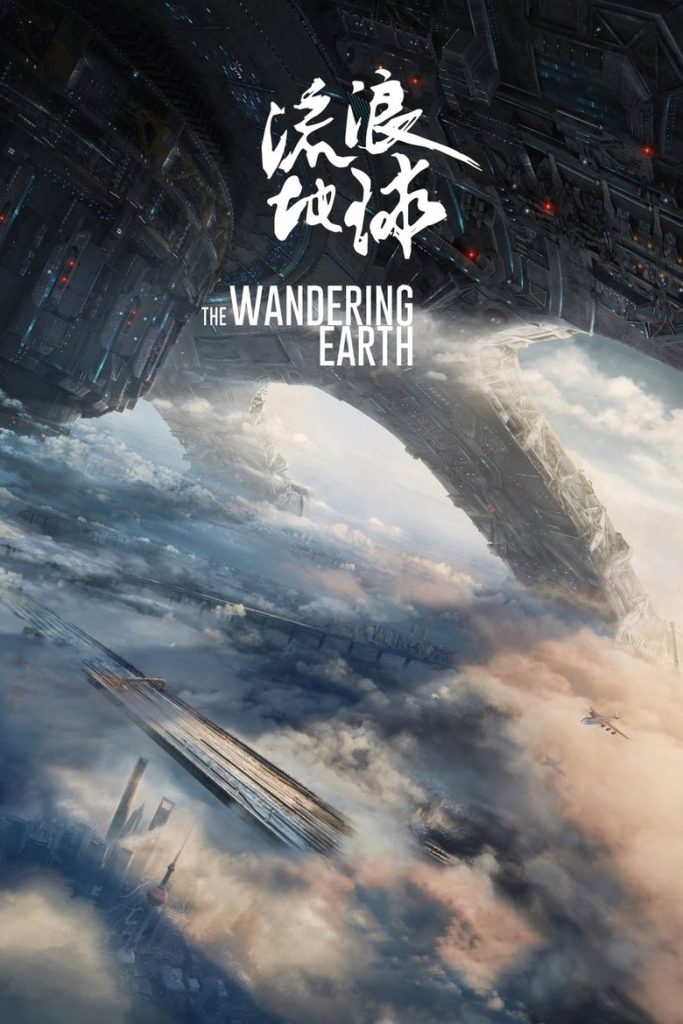
Story overview
In this 2019 Chinese sci-fi epic directed by Frant Gwo, humanity faces extinction when the Sun begins expanding toward Earth. To survive, nations unite to build massive planetary engines that will propel Earth out of the solar system on a 2,500-year journey to a new star system. The film follows a diverse group of characters—including astronauts, engineers, and ordinary citizens—as they confront catastrophic disasters, technical failures, and human conflicts during this unprecedented survival mission.
Parent Guide
A visually spectacular Chinese sci-fi epic with intense disaster sequences and strong themes of global cooperation and sacrifice. While not containing graphic violence or mature content, the constant peril and emotional intensity make it best for ages 8+ with parental guidance.
Content breakdown
Frequent intense peril throughout: massive planetary destruction, collapsing structures, explosions, freezing temperatures causing fatalities. Several characters die (mostly off-screen or implied). No graphic violence, but constant life-threatening situations create sustained tension.
Large-scale disaster scenes showing Earth's surface freezing, cities collapsing, and catastrophic engine failures. Emotional scenes of family separation and sacrifice. Some characters perish. The scale of destruction and constant crisis may be overwhelming for sensitive viewers.
No offensive language. Some intense emotional dialogue during crisis situations.
No sexual content or nudity.
No substance use depicted.
High emotional stakes throughout: themes of global extinction, family separation, sacrifice for future generations, and constant crisis management. Several emotional character deaths and reunions. The film maintains a tense, urgent tone for most of its runtime.
Parent tips
The Wandering Earth is an ambitious sci-fi spectacle with intense disaster sequences and emotional family drama. While not officially rated, it contains moderate peril, destruction, and some character deaths that may be intense for younger viewers. The film's themes of global cooperation and sacrifice are uplifting, but the constant high-stakes scenarios create sustained tension. Best suited for ages 8+ with parental guidance for the intense scenes.
Parent chat guide
Parent follow-up questions
- Did you see the big engines moving the Earth?
- How did the people work together to stay safe?
- What was your favorite vehicle in the movie?
- Why did Earth need to leave the solar system?
- What problems did the characters face during the journey?
- How did different countries cooperate in the movie?
- What scientific concepts did you notice about moving planets?
- How did the film show the importance of sacrifice?
- What cultural differences did you observe in how characters approached problems?
- How realistic do you think the planetary engineering concepts are?
- What does the film say about humanity's relationship with technology?
- How does this Chinese perspective on global crisis differ from Western sci-fi films?
🎭 Story Kernel
At its core, 'The Wandering Earth' explores the tension between collective survival and individual sacrifice. The film's true driver isn't the Earth Engine technology or the solar crisis—it's the Chinese cultural concept of 'family' expanded to planetary scale. Liu Peiqiang's space station sacrifice mirrors his son's ground-level heroism, both choosing humanity over personal reunion. The narrative cleverly subverts the typical disaster movie trope by making the solution require abandoning Earth's orbit entirely, forcing characters to confront whether preserving human civilization justifies destroying Earth's natural rhythms. The real conflict is between generations: old guards clinging to tradition versus younger voices advocating radical adaptation.
🎬 Visual Aesthetics
The film employs a striking visual dichotomy between claustrophobic underground cities and the vast emptiness of space. Earth's surface scenes use desaturated blues and grays, emphasizing the frozen planet's deathly stillness, while interior spaces glow with warm artificial lighting that feels both comforting and prison-like. The camera frequently uses extreme wide shots to emphasize humanity's insignificance against cosmic forces, then abruptly switches to tight close-ups during emotional moments. The space station sequences feature cleaner, more sterile visuals that contrast with Earth's chaotic survivalism. Notably, the Jupiter gravity slingshot sequence uses swirling orange and red hues that visually echo traditional Chinese ink paintings of cosmic phenomena.
🔍 Details & Easter Eggs
💡 Behind the Scenes
The film's massive practical effects required constructing full-scale sets of Earth Engines that stood over 30 meters tall. Director Frant Gwo insisted on minimal CGI for interior scenes, leading to the underground city being built as a physical set spanning 100,000 square feet. Actor Wu Jing (Liu Peiqiang) performed most spacewalk sequences himself while suspended on wires for up to 14 hours daily. The production team consulted with Chinese Academy of Sciences physicists to ensure the planetary physics, while dramatized, maintained scientific plausibility. Notably, the film's success (earning over $700 million worldwide) helped shift Chinese sci-fi from low-budget productions to Hollywood-scale filmmaking.
Where to watch
Choose region:
- Netflix
- Netflix Standard with Ads
Trailer
Trailer playback is unavailable in your region.