
The Water Diviner (2014)
Story overview
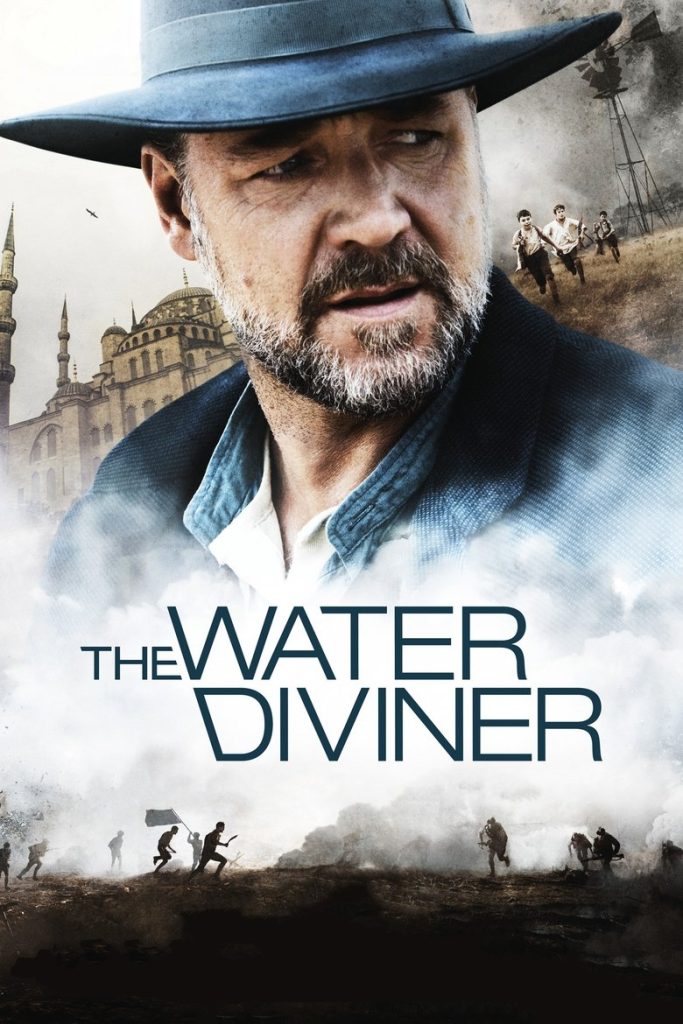
The Water Diviner is a 2014 war drama directed by Russell Crowe, starring Crowe as Joshua Connor, an Australian farmer who travels to Turkey in 1919 to uncover the fate of his three sons, who went missing during World War I. The film explores themes of grief, hope, and reconciliation as Joshua navigates the aftermath of war, encountering both hostility and unexpected kindness while searching for closure and peace.
Parent Guide
A powerful war drama with intense violence and mature themes about loss and reconciliation. Recommended for mature teens 15+ with parental guidance.
Content breakdown
Graphic war violence including battlefield scenes with explosions, gunfire, bayonet combat, and dead bodies. Scenes of hand-to-hand combat and execution. Disturbing imagery of mass graves and war casualties.
Emotionally intense scenes of grief and loss. Disturbing war aftermath imagery including skeletal remains and devastated landscapes. Tense situations of cultural conflict and hostility.
Occasional mild profanity including 'hell' and 'damn.' No strong or frequent offensive language.
No sexual content or nudity. Some mild romantic tension between characters but no explicit scenes.
Social drinking in a few scenes. Characters shown drinking alcohol in social settings, but no excessive drinking or substance abuse.
High emotional intensity throughout. Themes of profound grief, parental loss, and wartime trauma. Emotional scenes of characters confronting death and loss. The film deals with heavy themes of mourning and reconciliation.
Parent tips
This R-rated film contains intense war-related violence and emotional themes. It's best suited for mature teens and adults. Parents should preview it for younger viewers due to graphic battle scenes, disturbing imagery, and strong emotional content. The film's historical context and themes of loss may require discussion with younger audiences.
Parent chat guide
Parent follow-up questions
—
- What did Joshua want to find in Turkey?
- How did people help Joshua during his journey?
- What does it mean to be brave like Joshua?
- Why was it difficult for Joshua to find information about his sons?
- How did the war affect both Australian and Turkish characters?
- What does the title 'The Water Diviner' symbolize in the story?
- How does the film portray the psychological aftermath of war?
- What commentary does the film make about nationalism versus humanity?
- How effective is the film in showing both sides of the conflict with empathy?
🎭 Story Kernel
At its core, 'The Water Diviner' explores the collision between personal grief and historical trauma. Joshua Connor isn't just searching for his sons' bodies; he's attempting to reclaim a narrative of fatherhood and closure that the impersonal machinery of war has stolen. The film contrasts his intimate, spiritual quest (guided by dowsing and dreams) with the bureaucratic, nationalistic aftermath of Gallipoli. His journey becomes a quiet act of defiance against the notion that soldiers are merely statistics or political symbols. The relationship with Ayshe reveals how both sides of the conflict are haunted by similar ghosts of loss, suggesting that reconciliation begins with shared human suffering, not political resolution.
🎬 Visual Aesthetics
The film employs a stark visual dichotomy. The Australian outback is rendered in sun-bleached, parched golds and browns, emphasizing isolation and spiritual drought. In contrast, Turkey is initially presented through the chaotic, crowded palette of Istanbul—rich with textures and shadows—before moving to Gallipoli's haunting, monochromatic landscapes of chalky soil and bleached bones. Director Russell Crowe uses wide, static shots to convey the epic scale of historical tragedy, while intimate close-ups capture the micro-expressions of grief and connection. The dowsing sequences are filmed with a magical realism touch, the camera following the forked stick as if it's a character itself, connecting the earthly and the ethereal.
🔍 Details & Easter Eggs
💡 Behind the Scenes
This was Russell Crowe's directorial debut. He also stars as Joshua Connor. The film faced criticism from some Turkish historians for its portrayal of the Gallipoli campaign and the character of Major Hasan, though it was praised for attempting a humanizing perspective. Key battle scenes were shot in South Australia, not Turkey, using locations around Adelaide and the Flinders Ranges to double for the Gallipoli peninsula. The role of Ayshe was played by Olga Kurylenko, a Ukrainian-French actress, adding another layer of cross-cultural representation to the production.
Where to watch
Choose region:
- HBO Max
- HBO Max Amazon Channel
- Amazon Video
- Apple TV Store
- Google Play Movies
- YouTube
- Fandango At Home
Trailer
Trailer playback is unavailable in your region.