
The Water Horse (2007)
Story overview
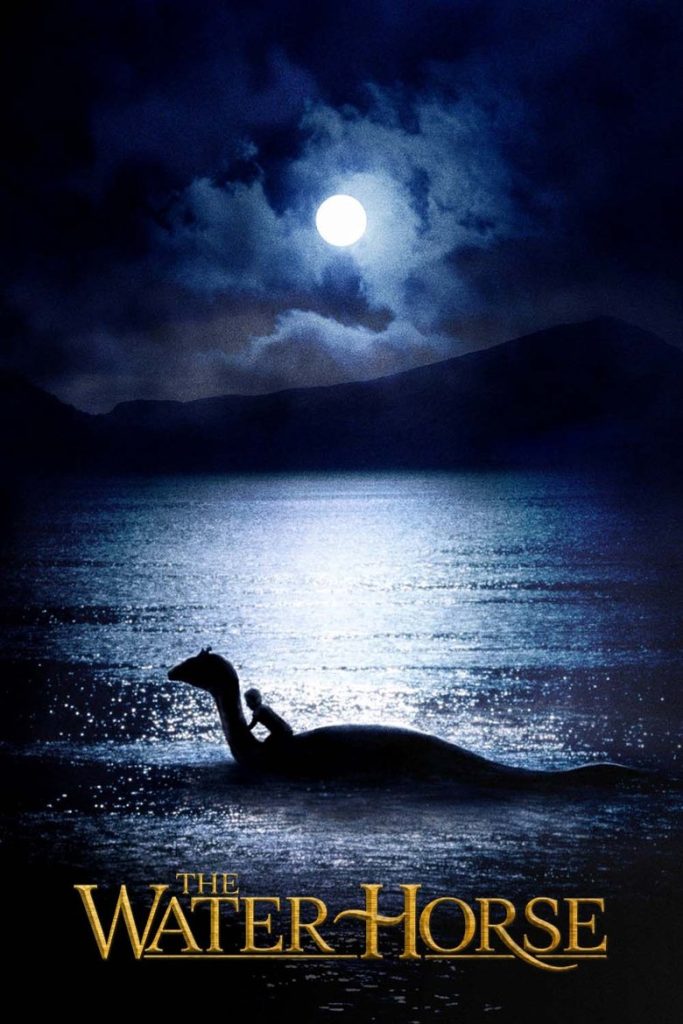
The Water Horse is a 2007 family adventure fantasy film directed by Jay Russell. Set during World War II in Scotland, it follows a lonely boy named Angus who discovers a mysterious egg that hatches into a mythical sea creature from Scottish legend—the Water Horse. As the creature, named Crusoe, grows rapidly, Angus must keep it hidden from adults, including his mother and a mysterious handyman, while navigating the challenges of wartime. The film blends heartwarming friendship with mild adventure and fantasy elements, exploring themes of loneliness, responsibility, and the magic of childhood imagination.
Parent Guide
The Water Horse is a gentle family film with mild adventure and fantasy elements. It's appropriate for most children, especially those aged 8 and older, due to some emotional themes and light peril. The film focuses on friendship, responsibility, and imagination, with no strong content in violence, language, or sexuality. Parental guidance is recommended for younger viewers who might be sensitive to mild scary moments or emotional intensity.
Content breakdown
Includes mild peril such as chases involving the Water Horse and soldiers, with no physical violence or injuries. Scenes show the creature causing minor property damage (e.g., knocking over objects) and characters in tense but non-threatening situations. Suitable for most children, but might be slightly thrilling for very young viewers.
Some mildly scary or tense moments, such as when the Water Horse grows large and is at risk of discovery, or during wartime scenes with soldiers. The creature's appearance is friendly, not frightening. No jump scares or disturbing imagery. Best for children who are comfortable with light fantasy adventure.
No offensive language, profanity, or inappropriate dialogue. The film uses clean, family-friendly language throughout.
No sexual content, nudity, or romantic themes. The focus is on platonic friendship and family dynamics.
No depiction of alcohol, drugs, or smoking. The film is set in a wartime context but does not include substance use.
Moderate emotional themes related to loneliness, loss (e.g., Angus's absent father due to war), and responsibility. Scenes may evoke empathy or slight sadness but are handled gently and positively. Suitable for children who can discuss mild emotional topics.
Parent tips
This film is suitable for most children but includes some mild peril and emotional moments. Tips: 1) The Water Horse grows quickly and causes minor mischief, which might be exciting but not scary. 2) There are wartime settings with soldiers and mild tension, but no combat violence. 3) A character's father is absent due to war, which could prompt discussions about loss or separation. 4) The creature's size and some chase scenes are thrilling but not intense. 5) It's a great film for talking about friendship, responsibility, and mythical stories. Recommended for ages 8 and up, with parental guidance for younger or sensitive viewers.
Parent chat guide
Parent follow-up questions
- What was your favorite part about the Water Horse?
- How did Angus feel when he found the egg?
- Would you like to have a secret friend like Crusoe?
- Why do you think Angus kept Crusoe a secret?
- How did the Water Horse help Angus feel less lonely?
- What would you do if you found a magical creature?
- What does the film say about responsibility and growing up?
- How does the wartime setting affect the story?
- Compare Crusoe to other mythical creatures you know.
- Analyze the themes of loss and imagination in the film.
- How does the film handle the balance between fantasy and reality?
- Discuss the symbolism of the Water Horse in Scottish culture.
🎭 Story Kernel
At its core, 'The Water Horse' is less about a mythical creature and more about the profound loneliness of childhood grief and the human need for connection in its wake. The Loch Ness Monster is the film's magnificent MacGuffin; the real story is Angus MacMorrow's silent mourning for his father, lost at sea in WWII. The creature, Crusoe, becomes the living, breathing vessel for all the love and care Angus can no longer give. His journey isn't about hiding a monster from the army, but about learning to let go of a surrogate for his dad, making the final release into the loch a heartbreaking metaphor for acceptance.
🎬 Visual Aesthetics
The film masterfully uses a muted, desaturated color palette of Scottish greys, greens, and blues, visually mirroring Angus's subdued emotional state and the wartime austerity. The camera often adopts a low-angle, child's-eye view, emphasizing the scale of adult authority and the wonder of Crusoe. The loch itself is a character—constantly shrouded in mist, it represents the unknown, the subconscious, and the final, peaceful sanctuary. The CGI of Crusoe is deliberately tactile and organic, focusing on wet scales and expressive eyes to foster genuine empathy rather than spectacle.
🔍 Details & Easter Eggs
💡 Behind the Scenes
The young actor, Alex Etel, had no prior experience with green-screen acting, so the crew built a full-scale, practical puppet of Crusoe's head and neck for key emotional scenes to give him something real to react to. The film was shot primarily in New Zealand, standing in for the Scottish Highlands. The production utilized Peter Jackson's Weta Workshop for the creature effects, with the design intentionally avoiding a dinosaur-like appearance to feel more like a ancient, believable aquatic mammal.
Where to watch
Choose region:
- Netflix
- Netflix Standard with Ads
- Tubi TV
- Amazon Video
- Apple TV Store
- Google Play Movies
- YouTube
- Fandango At Home
Trailer
Trailer playback is unavailable in your region.