
The White Helmets (2016)
Story overview
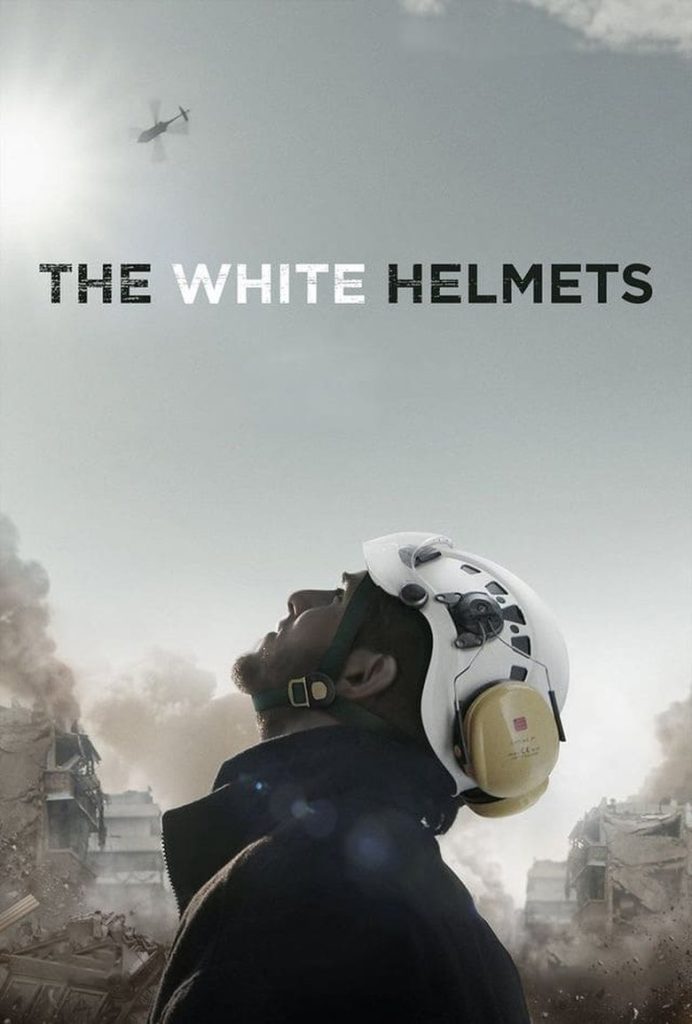
The White Helmets is a 2016 documentary that follows the work of volunteer rescue workers in Syria during the ongoing conflict. It shows their efforts to save civilians from bombings and destruction in war-torn areas. The film highlights their bravery and humanitarian mission amid extreme danger.
Parent Guide
Documentary about war zone rescue workers with moderate emotional intensity.
Content breakdown
Shows war zone destruction, rescue operations, and perilous situations without graphic violence.
Contains tense rescue scenes, destroyed buildings, and general war zone imagery that may be unsettling.
No notable offensive language.
No sexual content or nudity.
No substance use shown.
Deals with serious themes of war, danger, and humanitarian crisis.
Parent tips
This documentary contains real footage of war zones, including destruction, injured people, and tense rescue situations. While not graphic, it shows the harsh realities of conflict. Consider your child's sensitivity to distressing images and discussions about war before viewing together.
Parent chat guide
Parent follow-up questions
- What did the helpers do in the movie?
- How do people help each other when they're scared?
- What colors did you see the helpers wearing?
- Why do you think these people choose to help others during a war?
- What tools did the rescuers use to help people?
- How might you help someone who needs assistance?
- What challenges do rescue workers face in conflict zones?
- How does this documentary show both danger and hope?
- Why is it important to document real events like these?
- What ethical questions does this documentary raise about war reporting?
- How do the rescuers maintain hope in such difficult circumstances?
- What can we learn about humanitarian work from this film?
🎭 Story Kernel
The film's core isn't about heroism as spectacle, but about the radical, exhausting mundanity of hope. It expresses how the most profound political act can be the simple, repeated refusal to let a neighbor become just another body count. The characters are driven not by ideology, but by a visceral, almost biological imperative to preserve life—any life—in a system designed to erase it. Their motivation is the inversion of the war around them: where the conflict seeks to dehumanize, their labor re-humanizes, one breath at a time. The real story is the psychological toll of this Sisyphean task, where every saved child is a victory that immediately resets the clock for the next catastrophe.
🎬 Visual Aesthetics
The visual language is one of urgent, chaotic intimacy. The camera is almost always handheld, lunging into collapsed buildings alongside the rescuers, making the viewer a participant in the claustrophobic scramble. There's no composed, wide-shot heroism; the frame is tight, shaky, filled with dust and debris. The color palette is dominated by concrete grays, plaster white, and the earthy brown of rubble, punctuated jarringly by the stark red of blood or the vibrant yellow of a rescued child's shirt. This isn't cinematic symbolism—it's the brutal literalism of disaster. The 'action style' is devoid of choreography; it's pure, desperate biomechanics, a testament to the human body pushed to its absolute limit.
🔍 Details & Easter Eggs
💡 Behind the Scenes
Directed by Orlando von Einsiedel, the film was shot over three months in 2016 in Aleppo, Syria, with cinematographer Khaled Khateeb, a Syrian native, operating under extreme danger. It won the Academy Award for Best Documentary Short Subject in 2017. A poignant and dangerous piece of several of the White Helmets featured in the documentary were killed in subsequent airstrikes after filming concluded, underscoring the film's terrifying real-time stakes.
Where to watch
Choose region:
- Netflix
- Netflix Standard with Ads
Trailer
Trailer playback is unavailable in your region.