
The Wizard of Lies (2017)
Story overview
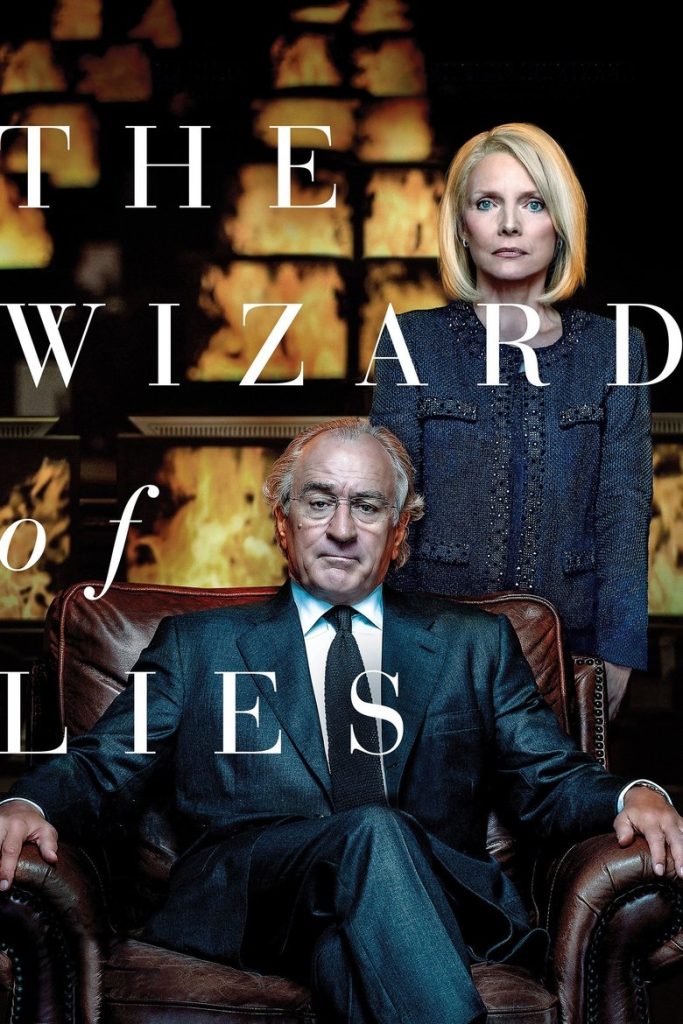
The Wizard of Lies is a 2017 TV movie based on the true story of Bernie Madoff, who orchestrated one of the largest financial frauds in history through a Ponzi scheme. The film explores how Madoff deceived thousands of investors, the devastating impact on victims who lost their life savings, and the profound effects on his own family as they grapple with betrayal and legal consequences. Directed by Barry Levinson and starring Robert De Niro as Madoff, it blends crime, drama, and thriller elements to depict the complexities of greed, deception, and moral collapse.
Parent Guide
The Wizard of Lies is a mature drama focused on financial crime and its emotional fallout, suitable for older teens and adults. It contains intense themes of deception, betrayal, and family conflict, with minimal graphic content but high emotional intensity. Parents should consider their child's maturity and ability to handle complex, real-world topics before viewing.
Content breakdown
No physical violence or peril; the tension arises from financial and emotional stakes, such as scenes depicting legal threats, public humiliation, and the stress of investigations.
Disturbing themes include the psychological manipulation of victims, the collapse of trust, and scenes showing characters in emotional distress or facing ruin. The portrayal of real-life fraud may unsettle sensitive viewers.
Occasional mild profanity (e.g., 'hell', 'damn') used in dramatic contexts; no strong or frequent swearing.
No sexual content or nudity; the focus is solely on the financial and familial aspects of the story.
Brief social drinking in scenes (e.g., characters with wine or cocktails at events), but no depiction of substance abuse or intoxication.
High emotional intensity due to themes of guilt, shame, betrayal, and loss. Scenes depict characters crying, arguing, or experiencing breakdowns as they deal with the consequences of the fraud.
Parent tips
This film is rated TV-MA for mature themes and intense emotional content. It deals with financial crime, betrayal, and family trauma, which may be confusing or distressing for younger viewers. Parents should watch it first to assess suitability for their teens. Discuss the real-life consequences of dishonesty and greed, and emphasize that it's based on true events. Be prepared to talk about complex emotions like guilt and shame, as the film shows how Madoff's actions hurt many people, including his own family.
Parent chat guide
Parent follow-up questions
—
—
- What is a Ponzi scheme in simple terms?
- Why is it wrong to lie about money?
- How did Madoff's family react to his actions?
- How does the film portray the psychological effects of fraud on Madoff and his victims?
- What ethical lessons can we learn from this true story?
- How might media dramatizations like this influence public perception of financial crimes?
- Discuss the role of family loyalty versus moral responsibility in the film.
🎭 Story Kernel
At its core, 'The Wizard of Lies' is less about the mechanics of a Ponzi scheme and more about the architecture of self-deception. The film posits that Bernie Madoff's greatest con wasn't on his clients, but on himself—constructing an identity so reliant on the illusion of genius that its collapse necessitated the destruction of his entire world, including his family. The driving force isn't greed, but a pathological need for control and adoration that metastasizes into a reality-distortion field. The tragedy unfolds not when the scheme collapses, but when Madoff, in prison interviews, still performs the role of the misunderstood mastermind, revealing that the performance has consumed the man entirely. His family's horror stems from realizing they were both audience and unwitting accomplices in his lifelong one-man show.
🎬 Visual Aesthetics
The film's visual language is a masterclass in claustrophobic intimacy, mirroring Madoff's shrinking world. Director Barry Levinson and cinematographer Eigil Bryld favor tight, unflinching close-ups, trapping De Niro's Madoff in the frame as his lies constrict around him. The color palette drains from the warm, affluent golds and browns of his penthouse life to the sterile, fluorescent blues and grays of prison visiting rooms and his final, barren office. Key scenes are staged like interrogations under harsh, single light sources, visually stripping away the facade. The most powerful symbolism is spatial: Madoff is often shot from low angles in his office, a king on a throne, but is later framed through doorways and windows, a specimen in a cage, the architecture itself charting his fall from power to imprisonment.
🔍 Details & Easter Eggs
💡 Behind the Scenes
Robert De Niro immersed himself in the role, studying hours of Madoff's actual prison interview footage and even meeting with the FBI agents who arrested him to capture Madoff's specific mannerisms and flat, detached affect. Michelle Pfeiffer, as Ruth Madoff, based her portrayal on extensive research into Ruth's background and psychology, aiming to capture the profound shock and unraveling of a woman who believed she lived a charmed life. The production meticulously recreated Madoff's former office in the Lipstick Building, using photographs and testimonies to get the details right, making the eventual visual of its empty, abandoned state all the more powerful. Much of the prison interview dialogue is adapted directly from journalist Diana B. Henriques's book and her real interviews with Madoff.
Where to watch
Choose region:
- HBO Max
- HBO Max Amazon Channel
- Amazon Video
- Apple TV Store
- Google Play Movies
- YouTube
- Fandango At Home
Trailer
Trailer playback is unavailable in your region.