
The Wizard of Oz (1939)
Story overview
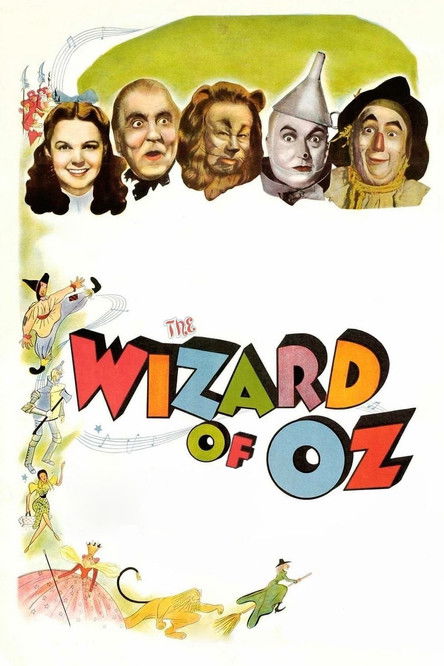
The Wizard of Oz follows young Dorothy as she's transported from her Kansas farm to the magical land of Oz. There she befriends three unique companions - a Scarecrow, a Tin Man, and a Cowardly Lion - who join her journey along the Yellow Brick Road to meet the Wizard. Their adventure is complicated by the Wicked Witch of the West who seeks to stop them. Ultimately, it's a story about friendship, courage, and discovering that what we seek might already be within us.
Parent Guide
A classic family fantasy with some potentially frightening fantasy villains and mild peril, but ultimately positive messages about friendship, courage, and self-discovery.
Content breakdown
Fantasy peril including characters being threatened by the Wicked Witch and her flying monkeys. A house is carried away by a tornado (no one shown hurt). Characters face obstacles but overcome them through cooperation.
The Wicked Witch of the West and her flying monkeys might frighten sensitive young children. The tornado scene could be unsettling. These are fantasy elements presented in a classic film style.
No offensive language. The dialogue is family-friendly throughout.
No sexual content or nudity. Characters are modestly dressed in family-appropriate costumes.
No substance use depicted. The poppy field scene involves flowers causing sleep, presented as magical fantasy.
Moderate emotional moments when characters face fears or separation from home. Ultimately uplifting resolution with positive messages about friendship and self-discovery.
Parent tips
This classic film contains some potentially frightening scenes that might be intense for very young viewers. The Wicked Witch of the West and her flying monkeys could be scary, and there are moments of peril when characters are threatened. The tornado scene at the beginning shows Dorothy's house being swept away, which might be unsettling for children who fear storms.
Despite these elements, the film offers wonderful messages about friendship, courage, and self-discovery. The colorful fantasy world and memorable musical numbers make it engaging for most children. The G rating indicates it's generally appropriate for all ages, but parents should consider their child's sensitivity to fantasy villains and mild peril.
The film's themes about finding strength within yourself and valuing home and family provide excellent discussion opportunities. The black-and-white Kansas scenes contrast beautifully with the vibrant color of Oz, creating a visual metaphor for Dorothy's journey from ordinary to extraordinary.
Parent chat guide
During viewing, be available to reassure children during intense moments. Point out how the friends support each other and how Dorothy shows bravery even when she's afraid. Notice together how the characters help each other discover their own strengths.
After the movie, discuss what each character learned about themselves. Talk about Dorothy's realization about home and how sometimes we don't appreciate what we have until we experience something different. Ask what qualities your child admired in each character and how they showed friendship and courage.
Parent follow-up questions
- What was your favorite color in Oz?
- Which friend did you like best: Scarecrow, Tin Man, or Lion?
- How did Dorothy help her friends?
- What made you laugh in the movie?
- What would you ask the Wizard for?
- Why do you think the Scarecrow, Tin Man, and Lion didn't realize they already had what they wanted?
- How did working together help the friends overcome challenges?
- What made Dorothy brave even when she was scared?
- Why was home so important to Dorothy?
- What would you do if you met the Wicked Witch?
- What do you think the Yellow Brick Road represents in the story?
- How do the characters' journeys show that sometimes we already have what we're looking for?
- Why do you think the movie starts and ends in black and white?
- What makes the Wicked Witch a memorable villain?
- How does the movie show that friendship gives us strength?
- What commentary might the film be making about appreciating what we have?
- How do the characters' perceived shortcomings actually become their strengths?
- What does the film suggest about the nature of courage and intelligence?
- How does the transition from black-and-white to color enhance the storytelling?
- What timeless themes make this 1939 film still relevant today?
🎭 Story Kernel
At its core, 'The Wizard of Oz' is a coming-of-age story disguised as a fantasy adventure. Dorothy's journey isn't about getting home—it's about realizing she already possesses the qualities she seeks. The Scarecrow, Tin Man, and Cowardly Lion represent aspects of herself she believes are missing: intelligence, compassion, and courage. The Wizard's revelation that he's a fraud forces Dorothy to understand that adulthood means recognizing your own power, not waiting for external validation. The film's true conflict is Dorothy's internal struggle between childhood's safety and adulthood's terrifying responsibility.
🎬 Visual Aesthetics
The film's visual language creates one of cinema's most powerful transitions: from the sepia-toned, confined Kansas to the overwhelming Technicolor expanse of Oz. This isn't just aesthetic—it's psychological. The camera often frames Dorothy as small against vast landscapes, emphasizing her vulnerability. The Yellow Brick Road acts as a visual anchor, a golden thread through chaos. The Wicked Witch's green skin contrasts violently with Dorothy's blue gingham, creating visual tension without dialogue. The tornado sequence's innovative special effects still feel visceral, blending practical effects with painted backdrops to create genuine disorientation.
🔍 Details & Easter Eggs
💡 Behind the Scenes
Margaret Hamilton's green makeup was copper-based and toxic, requiring her to eat through a straw and causing a severe burn that hospitalized her for six weeks. Buddy Ebsen was originally cast as the Tin Man but suffered a near-fatal allergic reaction to the aluminum powder makeup, forcing his replacement by Jack Haley. The film was a commercial disappointment upon release, only becoming profitable through television broadcasts beginning in 1956. Judy Garland was forced to wear a painful corset and had her chest bound to appear younger, while being fed amphetamines to control her weight during filming.
Where to watch
Choose region:
- HBO Max
- HBO Max Amazon Channel
- Amazon Video
- Apple TV Store
- Google Play Movies
- YouTube
- Fandango At Home
- Spectrum On Demand
- Plex
Trailer
Trailer playback is unavailable in your region.