
The Wonder (2022)
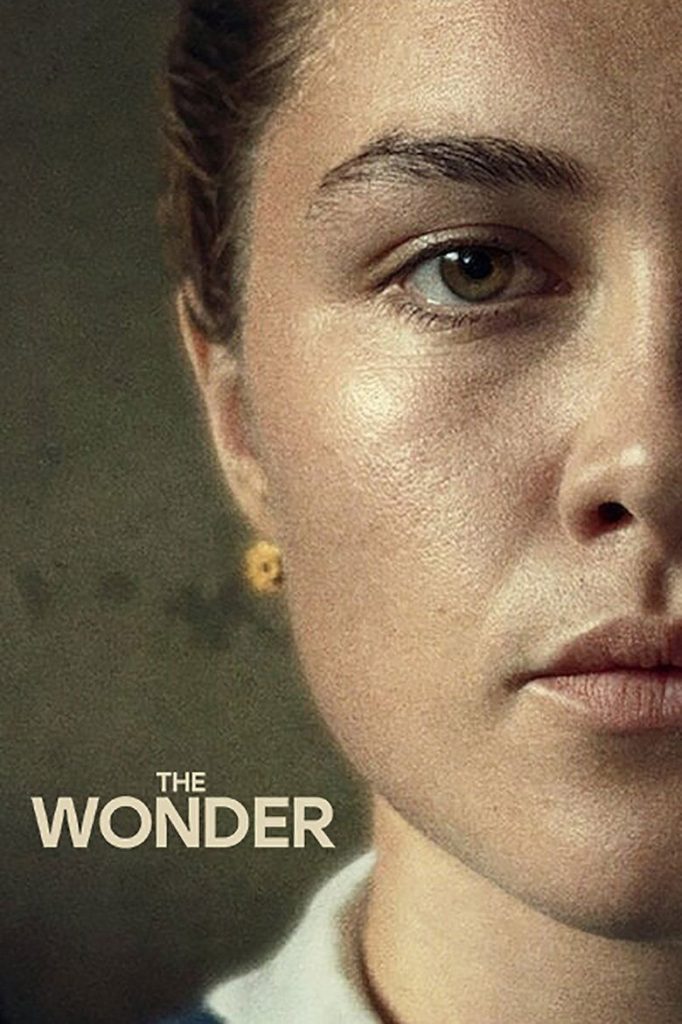
Story overview
Set in 1862 Ireland, 'The Wonder' follows English nurse Lib Wright as she investigates a young girl who claims to survive without food, exploring themes of faith, science, grief, and psychological trauma in a remote village setting.
Parent Guide
A psychologically intense period drama exploring faith, trauma, and medical ethics with atmospheric tension and emotional complexity.
Content breakdown
No graphic violence, but significant peril involving a child's deteriorating health. Psychological manipulation and coercive control are central themes. Tense confrontations and emotional distress.
Atmospheric tension throughout. Disturbing themes of child neglect, religious fanaticism, and psychological manipulation. Creeping dread rather than jump scares. Some unsettling imagery related to starvation and illness.
Period-appropriate dialogue with occasional mild profanity. No strong modern expletives.
Brief, non-explicit references to sexual relationships. No nudity or sexual scenes. Historical context includes discussions of pregnancy and childbirth.
Social drinking in period-appropriate settings. Medicinal use of alcohol and opium-based tinctures typical of 19th-century medicine.
High emotional intensity throughout. Themes of grief, trauma, faith crises, and moral dilemmas. Slow-burn psychological tension. Characters experience significant emotional distress and internal conflict.
Parent tips
This R-rated period drama deals with mature themes including religious fanaticism, child endangerment, and psychological manipulation. The atmospheric tension and emotional intensity make it unsuitable for younger viewers. Best for mature teens who can handle slow-burn psychological drama and historical context.
Parent chat guide
Parent follow-up questions
—
—
- Why do you think the girl stopped eating? What would you do if you saw someone being treated unfairly?
- How does the film explore the conflict between faith and science? What psychological factors might explain the villagers' behavior? How does the historical setting influence the characters' choices? What does the film say about trauma and healing?
🎭 Story Kernel
At its core, 'The Wonder' is not a mystery about a girl who doesn't eat, but a profound exploration of collective belief as a trauma response. The film asks what a community, and by extension a nation, needs to believe to survive its own painful history. Lib Wright, the English nurse, represents empirical, post-famine logic, while the Irish community clings to Anna's 'miracle' as a spiritual antidote to the unspeakable horror of the Great Hunger. The characters are driven not by faith in God, but by a desperate need for a narrative of divine favor to overwrite one of divine abandonment. The real conflict is between the truth that heals and the story that comforts, with Anna's body as the battleground.
🎬 Visual Aesthetics
The film's visual language masterfully constructs a world of oppressive intimacy and stark duality. Director Sebastián Lelio frames characters in tight, boxy interiors, mirroring their psychological and social confinement. The color palette is a study in earth and ash—muddy browns, stone grays, and the pale, sickly complexion of Anna—punctuated only by the vibrant green of the Irish landscape seen through windows, a beauty that feels accusatory. The camera often holds on faces in still, portraiture-like shots, forcing the audience to sit with the characters' silent anguish. The transition from the film set to the 19th-century narrative in the opening shot brilliantly establishes the film's central thesis: we are watching a story we have chosen to believe.
🔍 Details & Easter Eggs
💡 Behind the Scenes
Florence Pugh, who plays Lib, undertook significant research into Victorian nursing practices. The film was shot on location in Ireland, with many interior scenes filmed in a carefully preserved 19th-century farmhouse to enhance authenticity. The role of Anna O'Donnell was a demanding first major film role for young actor Kíla Lord Cassidy, requiring her to portray profound physical weakening. Director Sebastián Lelio is known for films exploring faith and female experience, like 'A Fantastic Woman' and 'Gloria', making 'The Wonder' a thematic continuation of his work. The screenplay is adapted from Emma Donoghue's novel, which was itself inspired by the historical phenomenon of 'fasting girls' in the Victorian era.
Where to watch
Choose region:
- Netflix
- Netflix Standard with Ads
Trailer
Trailer playback is unavailable in your region.