
The Wonderful Story of Henry Sugar (2023)
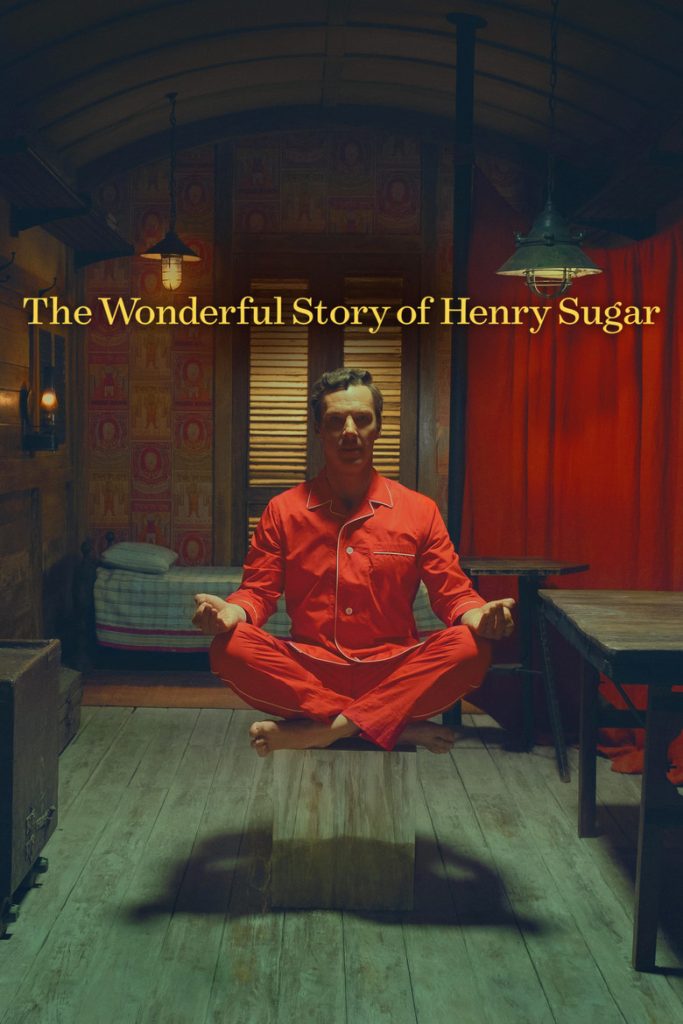
Story overview
The Wonderful Story of Henry Sugar is a whimsical fantasy adventure about a wealthy man who discovers a remarkable ability and embarks on a journey of self-discovery. Through magical elements and comedic situations, the film explores themes of greed, transformation, and the search for meaning beyond material wealth. This imaginative tale blends humor with thoughtful moments in a visually engaging style suitable for family viewing.
Parent Guide
A gentle fantasy adventure with positive messages, suitable for most children ages 8 and up with parental guidance for younger viewers.
Content breakdown
Contains fantasy peril situations and mild tension, but no physical violence or realistic danger.
Some magical elements and transformations might be momentarily startling for very young children, but nothing truly frightening.
No offensive language or crude humor present.
No sexual content, nudity, or romantic situations.
No depiction of alcohol, drugs, or tobacco use.
Contains moments of wonder, mild tension, and emotional reflection, but maintains a generally light tone.
Parent tips
This PG-rated fantasy adventure offers light entertainment with positive messages about personal growth and generosity. Parents should be aware that while the film is generally gentle, it contains some fantasy peril and magical elements that might confuse or mildly unsettle very young children. The story's exploration of wealth and morality provides good conversation starters for school-aged children about values and life choices.
Parent chat guide
Parent follow-up questions
- What was your favorite magical moment in the movie?
- How did Henry feel when he discovered his special ability?
- What colors or sounds did you like best?
- Was there anything that surprised you?
- What would you do if you had a special power like Henry?
- Why do you think Henry decided to change how he used his ability?
- What lesson do you think Henry learned by the end of the story?
- How did the magical elements help tell the story?
- What would you have done differently if you were Henry?
- How did the movie make you feel during different parts?
- What does the film suggest about the relationship between wealth and happiness?
- How does the story use fantasy elements to explore real human experiences?
- What character traits helped or hindered Henry on his journey?
- How might the story be different if set in today's world?
- What message about personal responsibility does the film convey?
- How does the film critique or examine materialism and consumer culture?
- What philosophical questions about identity and purpose does Henry's transformation raise?
- How effective are the fantasy elements as storytelling devices versus literal magic?
- What commentary does the film offer about the ethics of using special abilities?
- How does the narrative structure contribute to the film's themes?
🎭 Story Kernel
The film explores the transformation of a vacuous aristocrat into a selfless philanthropist, but it is fundamentally about the layers of storytelling. By adapting Roald Dahl’s prose with extreme fidelity, Anderson examines how a person can be fundamentally changed by a narrative. Henry Sugar’s journey from greed to grace is not just a moral fable; it is a meditation on the discipline required to master one’s own mind. The pursuit of 'seeing without eyes' begins as a selfish quest for wealth but evolves into a transcendent state where material gain becomes meaningless. It questions whether true mastery of a craft—or of oneself—inevitably leads to the dissolution of the ego, suggesting that once you can see everything, the self becomes the least interesting thing to look at.
🎬 Visual Aesthetics
Anderson pushes his signature symmetry into the realm of theatrical artifice, utilizing a 'stage-play' aesthetic where sets are physically swapped by stagehands in real-time. The cinematography by Robert Yeoman employs a 1.33:1 aspect ratio, creating a curated frame that mimics a storybook. The color palette shifts from the warm, saturated tones of the London elite to the dusty, mystical hues of India. Symbolic use of 'seeing' is literalized through the removal of prosthetics and the layering of frames within frames. The visual rhythm is dictated by the rapid-fire delivery of Dahl’s original text, making the movement of the camera and the shifting scenery feel like the turning of pages in a pop-up book, emphasizing the artifice of the medium and the joy of construction.
🔍 Details & Easter Eggs
💡 Behind the Scenes
This short film is the first of four Roald Dahl adaptations released by Wes Anderson on Netflix in 2023, marking his second foray into Dahl's world after 'Fantastic Mr. Fox.' The production is notable for its minimalist cast, where actors like Benedict Cumberbatch, Ralph Fiennes, Dev Patel, and Ben Kingsley play multiple roles across the series of shorts. Filming took place primarily at Maidstone Studios in Kent, utilizing practical effects and physical set transitions rather than digital compositing to maintain a tactile feel. Ralph Fiennes portrays Roald Dahl himself, sitting in a recreation of the author’s actual writing hut.
Where to watch
Choose region:
- Netflix
- Netflix Standard with Ads
Trailer
Trailer playback is unavailable in your region.