
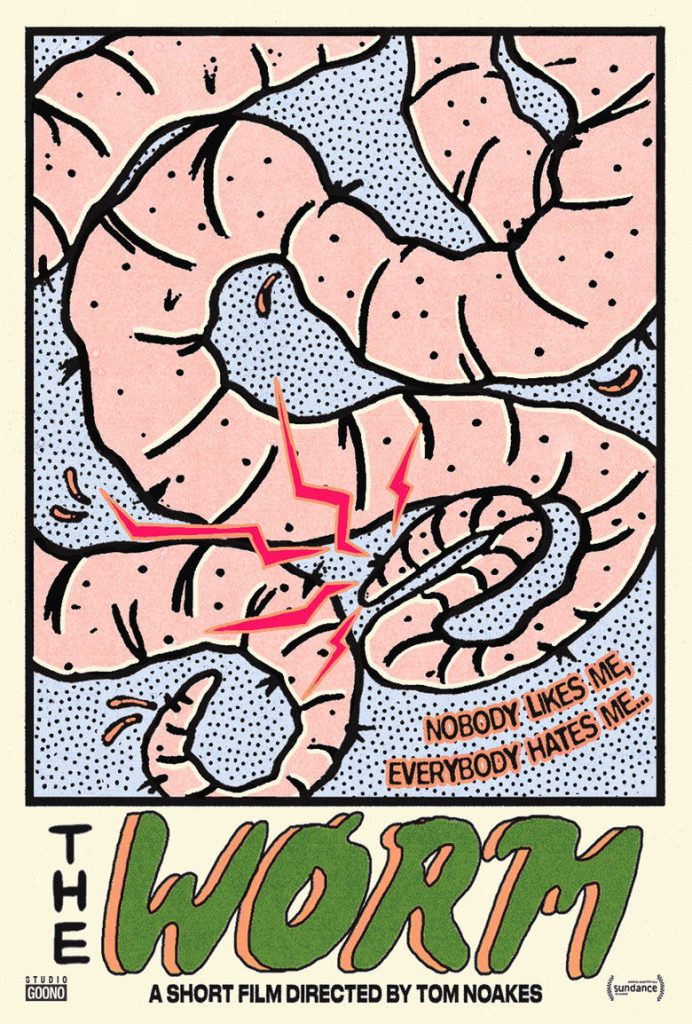
The Worm (2026)
Story overview
In this 13-minute Australian comedy-drama, a young man's peculiar belief about a worm leads his concerned family to stage an intervention. The film explores family dynamics, differing perspectives, and the humorous yet heartfelt attempts to understand one another.
Parent Guide
A gentle family comedy-drama about understanding different perspectives, suitable for most children with parental guidance for younger viewers.
Content breakdown
No violence or physical peril. The intervention involves only conversation and emotional concern.
Nothing scary or disturbing. The worm belief is presented as unusual but not frightening.
No offensive language expected in this family-oriented short film.
No sexual content or nudity.
No substance use depicted.
Mild emotional moments as family expresses concern, but overall tone remains light and humorous.
Parent tips
This short film focuses on family communication and gentle humor around an unusual belief. It's suitable for most children but may prompt questions about why the character believes something others find strange. The intervention is portrayed as caring rather than confrontational.
Parent chat guide
Parent follow-up questions
- What was your favorite part of the movie?
- How did the family help the man?
- What do you think the worm looked like?
- Why do you think the man believed in the worm?
- How did the family members show they cared?
- What does 'intervention' mean in this story?
- What might the worm symbolize in the story?
- How did the film balance comedy with family drama?
- What makes family interventions helpful or unhelpful?
- How does the film portray mental health concerns through metaphor?
- What commentary does it offer on family dynamics and belief systems?
- How effective was the short format for telling this story?
🎭 Story Kernel
The Worm explores the dehumanizing nature of institutional systems through the protagonist's futile struggle against an opaque, ever-expanding bureaucratic entity. Characters are driven not by personal ambition or traditional conflict, but by the desperate need to navigate absurd, self-perpetuating procedures that exist solely to validate their own existence. The film's true antagonist isn't a person but the system itself—a labyrinthine structure that consumes individuality while promising order. This creates a chilling commentary on modern life where the quest for compliance becomes more important than the original purpose, reducing human experience to paperwork and waiting rooms.
🎬 Visual Aesthetics
Director employs a deliberately claustrophobic visual language, with tight framing and shallow focus that mirrors the protagonist's constrained existence. The color palette shifts from sterile institutional blues and grays in bureaucratic spaces to warmer, more natural tones in rare moments of human connection—though these become increasingly scarce. Long static shots of empty corridors and repetitive procedural sequences create a hypnotic, anxiety-inducing rhythm. Symbolism emerges through recurring visual motifs: endless paperwork that physically grows, doors that lead to identical rooms, and clocks that either don't move or accelerate unpredictably, reflecting the warped reality of institutional time.
🔍 Details & Easter Eggs
💡 Behind the Scenes
The film was shot almost entirely in a single abandoned government building in Eastern Europe, chosen for its authentically oppressive architecture. Lead actor underwent a unique preparation method—spending two weeks actually processing paperwork in a real municipal office to understand the soul-crushing rhythm. Several scenes used real former bureaucrats as extras, who reportedly found the satire uncomfortably accurate. The production faced ironic bureaucratic hurdles, including a three-month delay for filming permits that mirrored the film's themes.
Where to watch
Streaming availability has not been announced yet.
