Thelma the Unicorn (2024)
Story overview
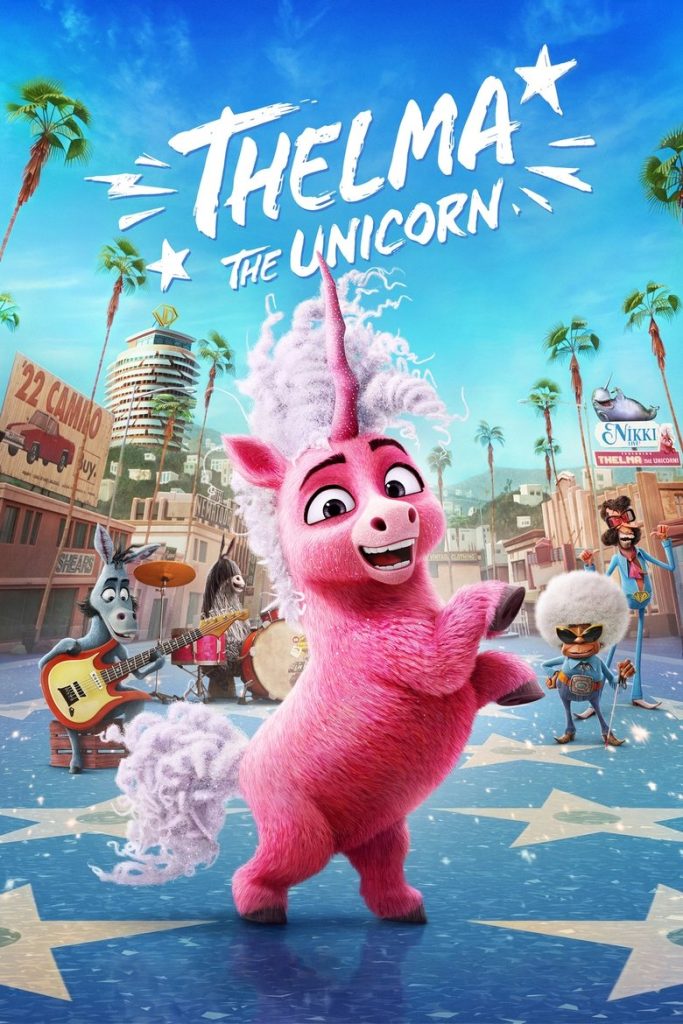
Thelma the Unicorn is an animated family film about a character who dreams of becoming a glamorous unicorn. When her wish unexpectedly comes true, she experiences rapid fame and international stardom. However, she soon discovers that this new life comes with unexpected costs and challenges. Ultimately, Thelma learns important lessons about identity, happiness, and the value of being true to oneself.
Parent Guide
A colorful animated film with positive messages about friendship, authenticity, and finding happiness in being true to oneself.
Content breakdown
No violence or physical peril depicted.
No scary or disturbing content; all fantasy elements are presented in a cheerful, family-friendly manner.
No concerning language; dialogue is appropriate for family viewing.
No sexual content or nudity.
No depiction of substance use.
Some mild emotional moments related to identity struggles and the pressures of fame, but nothing intense or distressing.
Parent tips
This PG-rated animated film explores themes of identity, fame, friendship, and self-acceptance in a colorful, family-friendly way. The story follows Thelma's journey from ordinary life to sudden stardom and back again, offering opportunities to discuss how external validation differs from genuine happiness. The film's fantasy elements and musical sequences make it engaging for children while delivering positive messages about staying true to one's values and appreciating what you already have.
Parents should be aware that while the film is generally lighthearted, it does touch on the pressures of fame and the emotional challenges of identity transformation. The PG rating likely reflects some mild thematic elements rather than any concerning content. The resolution emphasizes friendship, authenticity, and finding happiness in ordinary life rather than external glamour.
Parent chat guide
Focus conversations on the film's core themes: What makes someone special? Is being famous the same as being happy? How do we know when we're being true to ourselves versus trying to please others? These discussions can help children process the film's messages about authenticity and self-worth. You might also talk about how Thelma's friendship remained important throughout her journey.
Parent follow-up questions
- What was your favorite colorful part of the movie?
- How did Thelma look different when she became a unicorn?
- Why was Thelma's friend important to her?
- What made Thelma happy at the end?
- Would you like to be a unicorn too?
- What do you think was the hardest part about being famous for Thelma?
- Why did Thelma decide to go back to being ordinary?
- What does it mean to be 'true to yourself'?
- How did Thelma's feelings change during the movie?
- What would you do if you suddenly became famous?
- What does this film say about the difference between popularity and true happiness?
- How does the movie show that appearances can be deceiving?
- What pressures do you think come with sudden fame?
- Why is it sometimes difficult to be yourself when others expect something different?
- What lessons about friendship does this story teach?
- How does this film comment on celebrity culture and social media fame?
- What does Thelma's journey reveal about authentic versus manufactured identity?
- How might this story relate to real-world pressures to conform or perform for others?
- What values does the film ultimately promote about self-acceptance?
- In what ways does the fantasy element serve as a metaphor for real-life experiences?
🎭 Story Kernel
Thelma the Unicorn serves as a vibrant critique of the modern celebrity industrial complex, disguised as a whimsical children's adventure. At its heart, the film explores the psychological toll of living a lie for the sake of external validation. Thelma’s transformation from a plain pony to a shimmering icon is not a fairy tale evolution but a cautionary transformation. It dissects the 'fake it until you make it' culture, illustrating how the pursuit of a curated, glittery persona can lead to profound isolation. By the time Thelma realizes that her magic is just a layer of industrial paint, the movie has effectively argued that authenticity is the only true form of stardom. It is a story about the bravery required to be ordinary in a world obsessed with the extraordinary.
🎬 Visual Aesthetics
The film’s aesthetic, crafted by Mikros Animation, utilizes a deliberate color dichotomy to drive its narrative. The farm sequences are rendered in warm, organic, and somewhat muted tones, grounding Thelma’s reality in the tactile world of mud and hay. Conversely, the pop-star world is an explosion of synthetic neons, lens flares, and aggressive pinks that feel visually overwhelming. This saturation mirrors the sensory overload of sudden fame. The character designs are expressive and slightly caricatured, leaning into the quirky sensibilities of co-director Jared Hess. Symbolically, the unicorn horn is a fragile, glued-on accessory that serves as a constant visual reminder of the precariousness of Thelma’s deception, often appearing slightly askew during moments of high emotional stress or moral compromise.
🔍 Details & Easter Eggs
💡 Behind the Scenes
The film is an adaptation of the best-selling children’s book by Australian author Aaron Blabey, who also serves as an executive producer. It marks the feature film debut for lead voice actress Brittany Howard, the Grammy-winning powerhouse from Alabama Shakes, who brings a unique musical authenticity to the role. Co-director Jared Hess infuses the project with the same deadpan, eccentric humor found in his cult classic Napoleon Dynamite. The production involved a global collaboration, with animation services provided by Mikros Animation, known for their work on The Mitchells vs. the Machines, ensuring a high-energy and stylistically distinct visual experience.
Where to watch
Choose region:
- Netflix
- Netflix Standard with Ads
Trailer
Trailer playback is unavailable in your region.