
There Will Be Blood (2007)
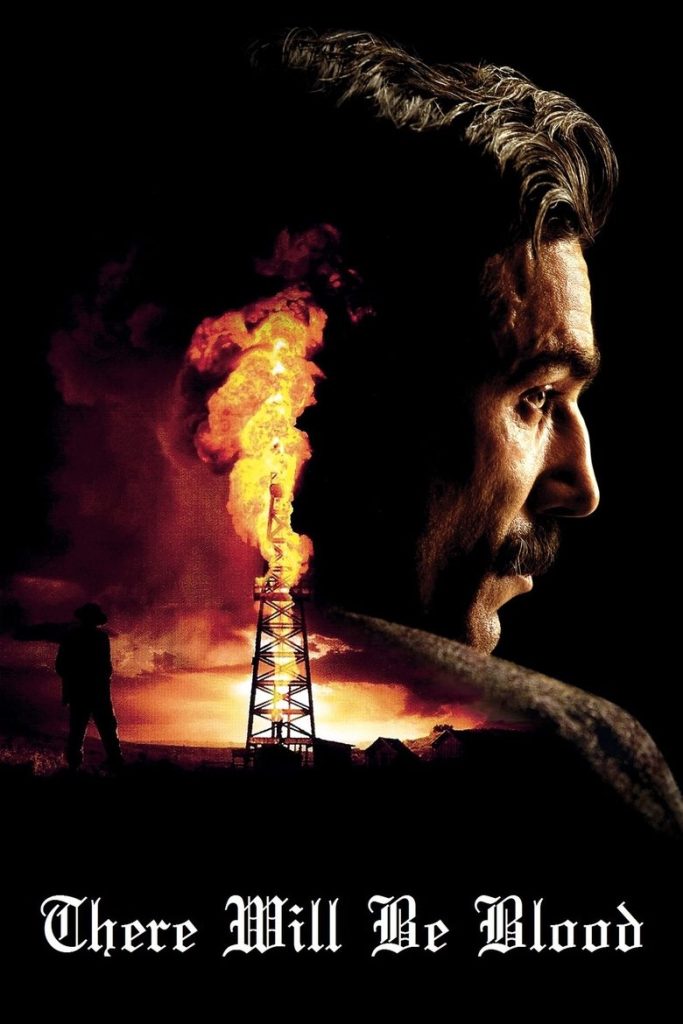
Story overview
This intense drama follows an ambitious oil prospector who manipulates landowners in early 20th-century California to acquire their valuable properties. He presents himself as a family man while concealing his ruthless business tactics. The story explores his escalating conflict with a local religious leader who questions his motives, leading to a dangerous rivalry that tests both men's principles and survival.
Parent Guide
A psychologically intense drama about moral corruption and ambition with mature themes suitable for older teens.
Content breakdown
Contains intense confrontations, workplace accidents, and psychological threats rather than graphic violence. Some scenes show physical altercations and dangerous situations in oil fields.
Psychological tension and manipulative behavior create unease. Themes of greed, deception, and moral decay may disturb sensitive viewers. No horror elements but sustained atmospheric intensity.
Some strong language including profanity, though not excessive. Period-appropriate dialogue includes confrontational exchanges and emotional outbursts.
No sexual content or nudity present in the film.
Characters drink alcohol in social and business settings. Some scenes show drinking as part of historical context and character development.
High emotional intensity throughout with themes of betrayal, manipulation, and psychological deterioration. Characters experience significant emotional turmoil and moral conflicts.
Parent tips
This R-rated film contains strong themes of greed, manipulation, and moral corruption that may be difficult for younger viewers to process. The protagonist's ruthless business practices and emotional manipulation of his son create a tense atmosphere throughout. Parents should be aware that the film explores complex adult themes including religious hypocrisy, capitalism's dark side, and psychological deterioration without graphic violence.
Parent chat guide
Parent follow-up questions
- What did you notice about how the people talked to each other?
- How did the music make you feel during different parts?
- What colors did you see most in the movie?
- Did you see any animals or nature in the film?
- What was your favorite part to watch?
- How did the main character show he cared about his son?
- What made some scenes feel tense or exciting?
- Why do you think people wanted oil in the story?
- How did the setting (time and place) affect the story?
- What did you learn about how people lived long ago?
- How does the film show the difference between what people say and what they do?
- What strategies did the oil prospector use to get what he wanted?
- How does the movie portray competition between different beliefs or values?
- What consequences did characters face for their actions?
- How did the relationship between father and son change throughout the story?
- How does the film critique unchecked ambition and capitalism?
- What commentary does the movie make about religion and business in American history?
- How does the protagonist use family image as a business strategy?
- What does the film suggest about the psychological effects of greed?
- How does the cinematography and pacing contribute to the film's tense atmosphere?
🎭 Story Kernel
Paul Thomas Anderson's epic is less about oil than about the corrosive nature of American ambition and the spiritual vacuum at its core. Daniel Plainview isn't driven by mere wealth, but by a pathological need to dominate and destroy any semblance of community or connection. His rivalry with Eli Sunday isn't business versus religion—it's two competing forms of charlatanism battling for souls in a barren landscape. The film charts how capitalism and faith become twisted reflections of each other, both requiring absolute submission. Plainview's final confession 'I drink your milkshake!' reveals his true motivation: not to possess, but to drain others completely.
🎬 Visual Aesthetics
Robert Elswit's cinematography creates a visual language of isolation and intrusion. Early scenes use wide, empty landscapes that gradually constrict as Plainview's obsession grows. The famous oil derrick fire sequence employs chaotic, handheld camerawork that makes the viewer feel the heat and panic. The color palette shifts from earthy browns and yellows to the stark black-and-white of Plainview's final mansion, mirroring his moral decay. Anderson's long takes, particularly in dialogue scenes, create unbearable tension as characters psychologically strip each other bare. The bowling alley finale's clinical lighting turns domestic space into an execution chamber.
🔍 Details & Easter Eggs
💡 Behind the Scenes
Daniel Day-Lewis based Plainview's voice on director John Huston's gravelly baritone. The massive oil derrick set was built from scratch in Marfa, Texas, where the fire scene required real flames shooting 70 feet high. Paul Dano originally played only Paul Sunday but replaced another actor as Eli during filming, creating his dual role. The final bowling alley scene took five days to shoot, with Day-Lewis and Dano staying in character between takes. Jonny Greenwood's score was initially rejected by the studio as 'too abrasive' before Anderson fought for its inclusion.
Where to watch
Choose region:
- Paramount+ Amazon Channel
- Paramount+ Roku Premium Channel
- Paramount Plus Essential
- Paramount Plus Premium
- Amazon Video
- Apple TV
- Google Play Movies
- YouTube
- Fandango At Home
- Spectrum On Demand
- Kanopy
Trailer
Trailer playback is unavailable in your region.