
They’ll Love Me When I’m Dead (2018)
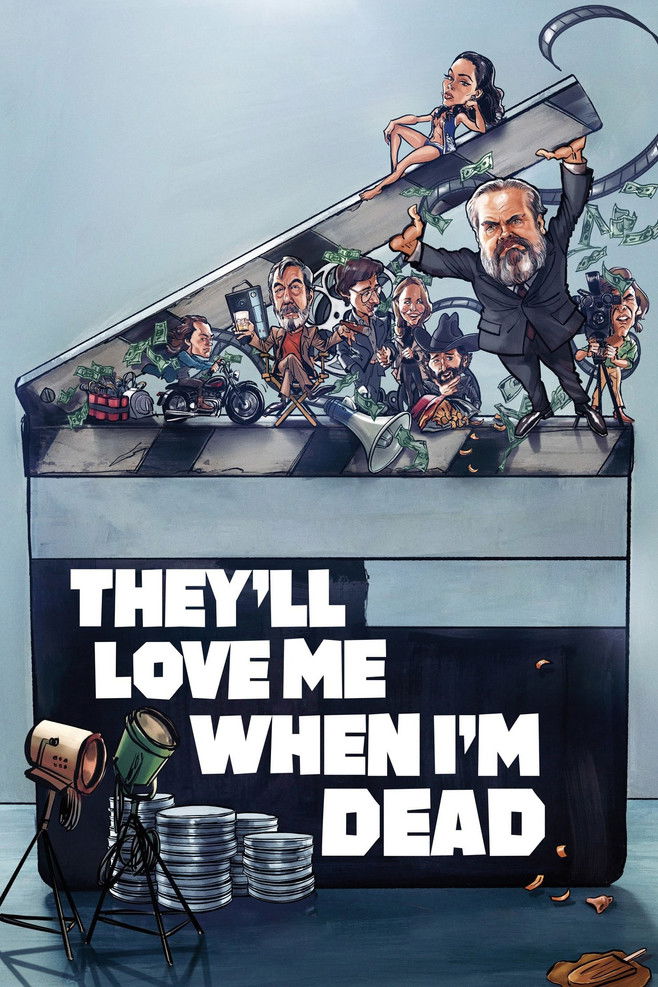
Story overview
This documentary explores the final years of legendary filmmaker Orson Welles as he struggles to complete his last film, 'The Other Side of the Wind.' It provides insight into his creative process, Hollywood relationships, and the challenges of independent filmmaking in the 1970s.
Parent Guide
A documentary about filmmaking challenges and artistic legacy, suitable for mature audiences interested in cinema history.
Content breakdown
No violence or physical peril depicted.
Some discussions of artistic frustration and the challenges of aging may be emotionally complex for younger viewers.
Occasional strong language typical of documentary interviews about Hollywood.
Brief discussions of adult themes related to film content, but no explicit sexual content or nudity.
Some references to social drinking in Hollywood contexts.
Explores themes of artistic struggle, legacy, and the challenges of completing creative work later in life.
Parent tips
This documentary is best suited for older teens and adults interested in film history. It contains mature themes about artistic struggle, aging, and Hollywood politics. The TV-MA rating reflects occasional strong language and discussions of adult topics.
Parent chat guide
Parent follow-up questions
—
—
—
- What did you learn about Orson Welles from this documentary?
- How does this film show the challenges of creative work?
- What makes someone's artistic legacy important?
🎭 Story Kernel
The movie is a poignant exploration of artistic obsession and the tragic gap between vision and execution. It's not just about Welles's unfinished film 'The Other Side of the Wind'; it's a meta-narrative on the very nature of creation and legacy. The core theme is the desperate, often self-destructive drive to create something authentic in an industry that commodifies art. The characters, especially Welles and his surrogate John Huston, are propelled by a need to prove their relevance and genius, even as time and resources slip away. The film expresses the loneliness of the artist, surrounded by collaborators yet fundamentally isolated in the pursuit of a personal, uncompromising vision that may never be fully realized or understood.
🎬 Visual Aesthetics
The documentary employs a fragmented, collage-like visual style, mirroring the chaotic, unfinished state of Welles's project. It seamlessly blends archival footage, modern interviews, and clips from 'The Other Side of the Wind' itself. The camera language is intimate yet restless, often using close-ups on aged, weary faces to convey the weight of memory and regret. The color palette shifts from the vibrant, saturated tones of the 1970s film-within-a-film to the more subdued, realistic hues of the documentary interviews, visually distinguishing between the dream of the project and the reality of its collapse. This juxtaposition creates a powerful symbolism: the brilliant, chaotic art versus the sobering, often sad aftermath of its creation.
🔍 Details & Easter Eggs
💡 Behind the Scenes
The documentary's title, 'They'll Love Me When I'm Dead,' is a quote attributed to Orson Welles himself, summing up his cynical view of posthumous fame. Much of the footage from 'The Other Side of the Wind' was meticulously restored from over 1,000 reels found in a Paris vault decades after shooting stopped. Key figures like Peter Bogdanovich and Frank Marshall, who were young collaborators on the original film, appear as older men in the documentary, providing a poignant through-line of loyalty and unfinished business spanning nearly 50 years.
Where to watch
Choose region:
- Netflix
- Netflix Standard with Ads
Trailer
Trailer playback is unavailable in your region.