Thor: The Dark World (2013)
Story overview
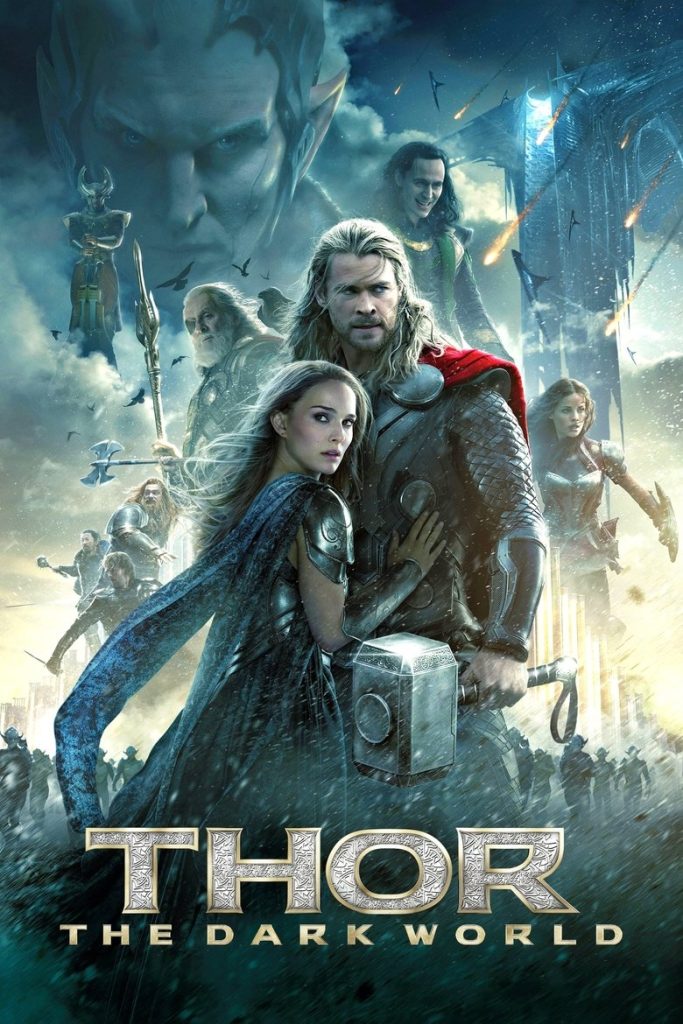
In this Marvel superhero sequel, Thor battles Malekith, leader of an ancient dark elf race, who seeks to plunge the universe into eternal darkness using a powerful weapon called the Aether. The story follows Thor's journey across realms to protect Earth and Asgard, reuniting with scientist Jane Foster who becomes infected with the Aether. The film features epic battles, cosmic threats, and explores themes of sacrifice, duty, and family loyalty.
Parent Guide
A fantasy action film with moderate violence, some frightening elements, and themes of sacrifice. Suitable for mature children 10+ with parental guidance for younger viewers sensitive to intense sequences.
Content breakdown
Fantasy violence throughout: battles with hammers, swords, energy weapons, and hand-to-hand combat. Characters are stabbed, thrown, and hit with energy blasts. Several intense sequences including a spaceship battle, palace invasion, and final confrontation. Some characters die (implied or off-screen). Minimal blood shown.
Dark elves have pale, scarred appearances that may be frightening. The Aether (red liquid energy) infects a character in a disturbing way. Some intense peril scenes with world-threatening stakes. Dark, shadowy environments and monstrous creatures. A character's mother dies (off-screen, emotional impact shown).
Occasional mild language: 'hell' (2-3 times), 'damn' (1-2 times). No strong profanity.
Brief kissing between Thor and Jane. Some romantic tension and flirting. No nudity or explicit sexual content.
No depiction of alcohol, drugs, or tobacco use. Characters drink what appears to be mead or ale in Asgardian celebration scenes, but not portrayed as intoxication.
Themes of sacrifice, loss, and duty. A mother's death affects main characters. Family conflict between Thor, Loki, and Odin. High-stakes peril with universe-threatening consequences. Some betrayal and tense relationship dynamics.
Parent tips
This PG-13 superhero film contains moderate fantasy violence and peril. Consider these points: 1) Several intense battle scenes with weapons, energy blasts, and hand-to-hand combat, though blood is minimal. 2) Some frightening creatures and dark fantasy elements. 3) Brief mild language. 4) Romantic tension but no explicit content. 5) Themes of sacrifice and loss may be emotionally intense for younger viewers. Best for mature children 10+ who can handle superhero action.
Parent chat guide
Parent follow-up questions
- Did you like Thor's hammer? What was your favorite part?
- How did Thor help his friends?
- Were there any scary parts? What made you feel safe?
- Why did Malekith want to destroy everything? Was that a good reason?
- How did Jane use science to help solve problems?
- What made Loki's choices complicated? Was he good or bad?
- What did Thor sacrifice to save others?
- How does the film show consequences of past actions (like Odin's war with dark elves)?
- What different motivations did characters have (power, revenge, protection, love)?
- How did the Aether represent both danger and power?
- What makes Thor a different kind of hero compared to other Marvel characters?
- How does the film explore themes of destiny versus choice?
- What commentary might the film make about imperialism (Asgard's history with other realms)?
- How does Loki's character development reflect complex family dynamics?
- How does the visual style contribute to the mythological tone versus scientific elements?
🎭 Story Kernel
At its core, 'Thor: The Dark World' is about the burden of legacy and the messy, often contradictory, nature of duty. Thor is torn between his royal obligation to Asgard and his personal loyalty to Jane Foster, who has become a vessel for the Aether. This conflict mirrors the film's central tension: the clash between ancient, rigid cosmic orders (represented by the Dark Elves and Odin's rule) and the chaotic, unpredictable force of love and connection. Malekith's motivation isn't just conquest; it's a nihilistic desire to return the universe to a state of primordial darkness before light—a rejection of the current cosmic legacy. The characters are driven not by clear heroism, but by reactive desperation: Thor to save Jane, Loki to survive and manipulate, and Odin to maintain a fading status quo.
🎬 Visual Aesthetics
The film's visual language is a stark study in contrast. Asgard is rendered in burnished golds and warm light, all gleaming spires and regal halls, creating a tangible sense of an aging, brittle empire. This is violently juxtaposed with the cold, desaturated grays and blues of Svartalfheim and the inky, chaotic swirls of the Aether's reality-warping power. The camera often employs dutch angles during tense palace intrigues, visually destabilizing Asgard's supposed order. The action, particularly the finale's portal-hopping battle across London, uses spatial disorientation as a weapon—characters and debris tumble between worlds, making geography itself unstable and reflecting the plot's collapsing cosmic boundaries.
🔍 Details & Easter Eggs
💡 Behind the Scenes
Chris Hemsworth performed many of his own stunts, including the brutal, mud-soaked fight on Svartalfheim. The London locations, particularly the climax at the Royal Naval College in Greenwich, were chosen for their otherworldly, neoclassical architecture that could plausibly sit beside Asgardian ruins. Tom Hiddleston's Loki was originally slated to die permanently; his resurrection was a late script change influenced by test audiences and his character's popularity. The Dark Elves' language was constructed by the same linguist who created the Dothraki language for 'Game of Thrones'.
Where to watch
Choose region:
- Disney Plus
- Amazon Video
- Apple TV Store
- Google Play Movies
- YouTube
- Fandango At Home
Trailer
Trailer playback is unavailable in your region.