
Three Colors: Red (1994)
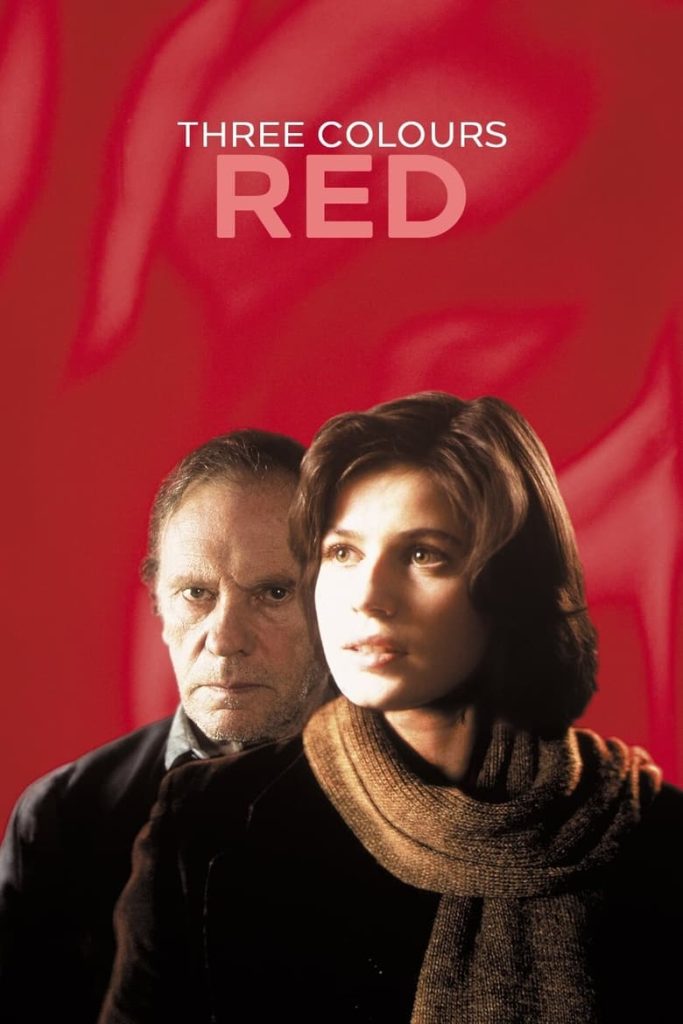
Story overview
Three Colors: Red is a 1994 drama film that explores themes of human connection and chance encounters. The story follows a model who develops an unexpected relationship with a retired judge, revealing intertwined lives and philosophical reflections. As the final installment of the Three Colors trilogy, it examines fraternity and the invisible threads that link people together.
Parent Guide
A thoughtful, artistic drama with mature themes about human relationships and philosophical concepts. Best suited for mature teenagers and adults who can appreciate slow-paced, character-driven storytelling.
Content breakdown
No physical violence depicted. Some emotional tension and relationship conflicts.
Contains mature themes about human relationships and emotional complexity that may be challenging for younger viewers.
May contain occasional mild language consistent with R-rated dramatic films.
Contains mature romantic themes and may include brief nudity or sexual references typical of R-rated dramas.
May include social drinking or brief references to substance use in adult contexts.
Deals with complex emotional relationships, loneliness, and philosophical themes that require emotional maturity.
Parent tips
This R-rated film contains mature themes and content that may not be suitable for younger viewers. Parents should be aware that the movie deals with complex emotional relationships and philosophical concepts that require a certain level of maturity to appreciate. The film's pacing is deliberate and thoughtful, which may challenge younger audiences accustomed to more action-oriented storytelling.
Parent chat guide
Parent follow-up questions
- What colors did you see in the movie?
- Did you see any animals or pets in the film?
- What was your favorite part of the movie?
- How did the people in the movie help each other?
- What did you think about the different places in the movie?
- How do you think the characters' lives were connected?
- What does it mean to be a good neighbor or friend?
- How did the characters show kindness to each other?
- What would you do if you met someone very different from you?
- How do small choices we make affect other people?
- What do you think the color red symbolized in the film?
- How did the characters deal with feelings of loneliness?
- What does the film suggest about chance and destiny?
- How do people from different generations understand each other?
- What makes a relationship meaningful between people?
- How does the film explore the concept of fraternity or brotherhood?
- What philosophical questions about human connection does the movie raise?
- How do the characters' past experiences shape their present relationships?
- What commentary does the film make about modern isolation versus connection?
- How does the film's structure and pacing contribute to its themes?
🎭 Story Kernel
At its core, 'Three Colors: Red' explores the interconnectedness of human lives and the possibility of redemption through chance encounters. The film examines how seemingly random connections—like Valentine's car hitting Joseph's dog, or Auguste's parallel life to the judge's past—reveal the invisible threads that bind us. It's driven by characters seeking genuine human connection in a world of superficial relationships: Valentine's loneliness as a model, the judge's self-imposed isolation as punishment for his voyeurism, and Auguste's doomed romance. The film suggests that true freedom (the 'liberty' of the trilogy's theme) comes not from independence but from meaningful interdependence and the courage to break cycles of emotional detachment.
🎬 Visual Aesthetics
Kieślowski's visual language in 'Red' is masterfully restrained yet deeply symbolic. The color red appears not as a dominant palette but as strategic punctuation—Valentine's red jacket, the judge's red curtains, the red Jeep—marking moments of emotional significance and connection. Cinematographer Piotr Sobociński employs intimate close-ups that create psychological intimacy, particularly in the judge's dimly lit study where most conversations occur. The camera often frames characters through windows, mirrors, and other barriers, visually reinforcing themes of separation and observation. The final shot of the seven survivors from the ferry disaster—with Valentine and Auguste finally meeting—is composed with deliberate symmetry, suggesting the harmonious resolution of previously fractured lives.
🔍 Details & Easter Eggs
💡 Behind the Scenes
Irène Jacob, who plays Valentine, was Kieślowski's first and only choice for the role after working with her in 'The Double Life of Véronique.' The Geneva filming locations were specifically chosen for their neutral, modern architecture that reflects the characters' emotional isolation. The film's budget was significantly higher than the previous two Colors films, allowing for the elaborate ferry disaster sequence. 'Red' was Kieślowski's final film before his retirement and untimely death, making the themes of connection and legacy particularly poignant. The judge's house was an actual location rather than a set, chosen for its distinctive windows that created natural frames for shots.
Where to watch
Choose region:
- HBO Max
- HBO Max Amazon Channel
- Criterion Channel
- Amazon Video
- Apple TV
- Fandango At Home
Trailer
Trailer playback is unavailable in your region.