
Three Colors: White (1994)
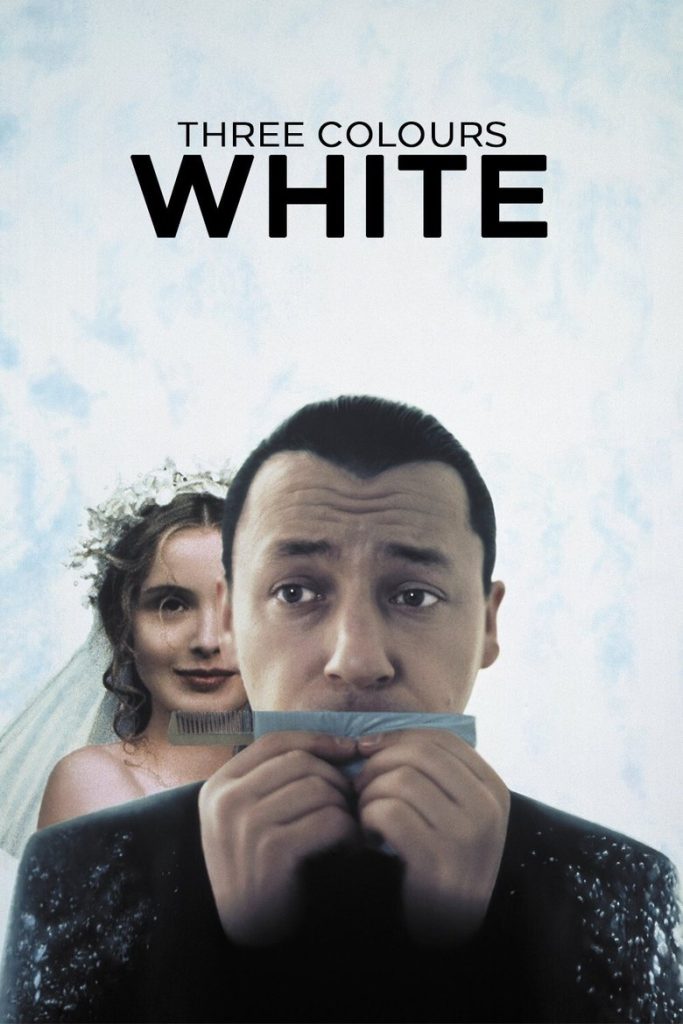
Story overview
Three Colors: White is a 1994 French-Polish comedy-drama mystery film that explores themes of equality, revenge, and redemption through the story of a Polish immigrant in France. The film follows a man who experiences a humiliating divorce and loss of status, leading him to devise an elaborate plan to regain his dignity and seek justice. As part of Krzysztof Kieślowski's Three Colors trilogy, it uses symbolic elements to examine complex human relationships and cultural differences between Eastern and Western Europe.
Parent Guide
A thoughtful art-house film exploring mature themes of relationships, revenge, and cultural identity through symbolic storytelling. Best suited for older teens and adults who can appreciate nuanced character studies and European cinema conventions.
Content breakdown
Some tense situations and emotional conflict, but no graphic violence depicted.
Emotional distress and humiliation themes may be unsettling for sensitive viewers.
May contain some strong language consistent with R-rated films about adult relationships.
Themes of sexual relationships and intimacy are present, though not graphically depicted.
Social drinking may be shown in adult settings.
Strong themes of betrayal, humiliation, and revenge create emotionally complex situations.
Parent tips
This film deals with mature themes including marital breakdown, revenge plots, and cultural displacement that may be difficult for younger viewers to understand. The R rating indicates content that may not be suitable for children under 17 without parental guidance. While not graphically violent, the film contains emotional intensity and complex relationship dynamics that require emotional maturity to process appropriately.
Parent chat guide
Parent follow-up questions
- What did you notice about the different places in the movie?
- How did the characters show they were friends or not friends?
- What colors did you see in the movie and how did they make you feel?
- What does 'fairness' mean to the different characters in the story?
- How do people show they're upset without using words?
- Why do you think the main character wanted to prove something to his ex-wife?
- What does the title 'White' symbolize in this story about equality?
- How does the film show differences between French and Polish cultures?
- What are some healthy and unhealthy ways to deal with feeling humiliated?
- How does the film explore the concept of equality versus equity in relationships?
- What commentary does the film make about immigration and cultural adaptation?
- How does the director use visual symbolism to convey emotional states and themes?
🎭 Story Kernel
Kieślowski's 'White' explores equality not as a noble ideal but as a transactional necessity for human dignity. Karol's journey from humiliated exile to vengeful puppeteer reveals how equality is often pursued through imbalance—he must become superior to achieve parity with Dominique. The film suggests equality in love is impossible; instead, relationships operate on shifting power dynamics. Karol's elaborate scheme to frame Dominique creates a perverse equality through mutual imprisonment, questioning whether justice in human relationships requires mutual destruction rather than mutual respect.
🎬 Visual Aesthetics
Kieślowski employs a deliberately muted, almost clinical visual palette dominated by whites, grays, and cold blues, mirroring Karol's emotional numbness and Warsaw's wintry landscape. The camera maintains a detached, observational distance during Karol's humiliation, then becomes more intimate as he gains control. Key scenes use stark compositions—Karol dwarfed by the Paris metro escalator, the chessboard-like arrangement of characters in the finale. The recurring pigeon imagery connects Karol's initial freedom to his final captivity, while the cold, institutional spaces contrast with brief moments of warmth in Mikolaj's friendship.
🔍 Details & Easter Eggs
💡 Behind the Scenes
Zbigniew Zamachowski (Karol) initially turned down the role, believing he wasn't right for it; Kieślowski personally convinced him. The Warsaw scenes were shot during an unusually mild winter, requiring artificial snow. Julie Delpy (Dominique) learned Polish phonetically for her courtroom scene. The film's budget was significantly lower than 'Blue,' forcing creative solutions like using the director's own apartment for some Paris scenes. Kieślowski considered making the entire trilogy in color-coded monochrome before settling on selective color symbolism.
Where to watch
Choose region:
- HBO Max
- HBO Max Amazon Channel
- Criterion Channel
- Amazon Video
- Apple TV
- Fandango At Home
Trailer
Trailer playback is unavailable in your region.