
Three Little Pigs (1933)
Story overview
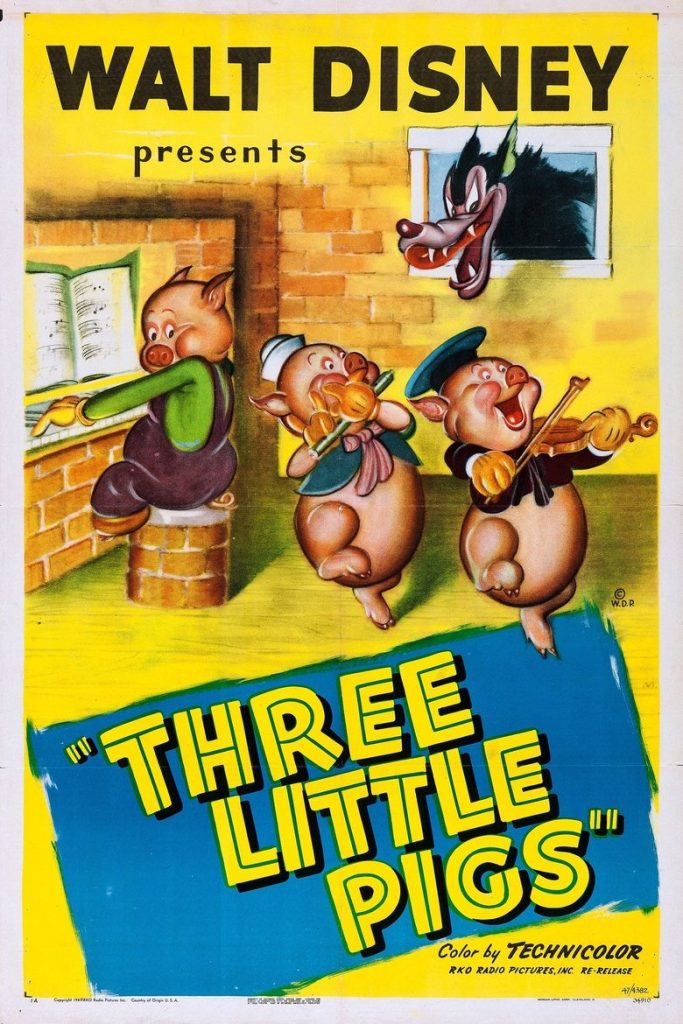
This classic animated short film follows three pigs building houses of different materials. Two pigs construct flimsy homes of hay and sticks while their brother builds a sturdy brick house. When a clever wolf tries to blow down their houses and trick them, the pigs must rely on each other for safety. The story is accompanied by the memorable song 'Who's Afraid of the Big Bad Wolf?' and delivers a simple moral about preparation and cooperation.
Parent Guide
A classic animated short with mild peril and positive messages about preparation and cooperation. Suitable for all ages with minimal concerns.
Content breakdown
The wolf blows down houses and attempts to trick the pigs, but no one is harmed. The peril is cartoonish and brief.
The wolf might be slightly intimidating to very young children, but he's more silly than truly frightening. No disturbing imagery.
No inappropriate language. The dialogue is simple and family-friendly.
No sexual content or nudity. Characters are anthropomorphic animals wearing simple clothing.
No substance use depicted. The pigs are shown working and singing.
Mild tension when the wolf appears, but resolution is quick and positive. The overall tone is light and musical.
Parent tips
This 1933 Disney short is appropriate for all ages with its gentle humor and classic storytelling. The wolf's attempts to blow down houses might be slightly intense for very young children, but the resolution is quick and positive. The film's brief runtime makes it easy to watch in one sitting, and its musical elements add to the entertainment value.
The story provides excellent opportunities to discuss themes of preparation, hard work, and sibling relationships. Parents can use the different house-building approaches to talk about making good choices and thinking ahead. The wolf character, while not overly frightening, serves as a mild antagonist that children can understand without being traumatized.
Since this is an older animation, parents might want to explain the historical context and different animation style to curious children. The film's simple plot and clear moral make it accessible even for preschoolers, while older children can appreciate the classic animation and musical elements.
Parent chat guide
During viewing, you might point out how the pigs work differently and ask simple questions like 'Which house looks strongest?' or 'What do you think will happen next?' For very young children, you could reassure them during the wolf scenes that everything will be okay. Singing along with the 'Who's Afraid of the Big Bad Wolf?' song can make it more interactive.
After watching, discuss why the brick house was strongest and what the story teaches about preparation. Ask how the pigs helped each other and what they might do differently next time. You could also talk about how stories can teach us lessons and compare this version to other Three Little Pigs stories they might know.
Parent follow-up questions
- Which house would you want to live in?
- What was your favorite part of the movie?
- How did the pigs help each other?
- What sound did the wolf make?
- Would you be afraid of the big bad wolf?
- Why do you think the brick house was strongest?
- What could the first two pigs have done differently?
- How did the wolf try to trick the pigs?
- What does this story teach us about being prepared?
- How did the song make the story more fun?
- What materials would you use to build a strong house today?
- How does this version compare to other Three Little Pigs stories you know?
- What does the story say about working hard versus taking shortcuts?
- Why do you think this story has remained popular for so long?
- How does the animation style differ from modern cartoons?
- What broader life lessons can we take from this simple story?
- How does the film use music to enhance the storytelling?
- What does this classic tale reveal about values from the 1930s?
- How might you update this story for modern audiences?
- What makes certain stories endure across generations?
🎭 Story Kernel
The film's core is a stark allegory for preparedness and the value of quality work versus expediency. It's not merely about a predator; it's about the consequences of cutting corners when building shelter—both physical and metaphorical. The first two pigs are driven by a desire for leisure and immediate gratification, prioritizing play over security. The third pig is motivated by a deeper understanding of threat and the discipline of deferred satisfaction. Their choices directly determine their survival, making this a brutal lesson in personal responsibility and the non-negotiable laws of cause and effect in a dangerous world.
🎬 Visual Aesthetics
The animation employs a clear visual hierarchy to symbolize stability. The straw and stick houses are depicted with shaky, sketchy lines and bright, insubstantial colors that seem to vibrate with inherent fragility. In contrast, the brick house is drawn with solid, unwavering lines and a muted, earthy color palette of reds and browns that visually 'anchors' it to the ground. The wolf's animation is all about predatory motion—stretching, puffing, and lunging with a fluid menace that contrasts with the pigs' more rigid, frantic movements. The camera often adopts a low angle when focusing on the brick house, emphasizing its imposing, fortress-like quality.
🔍 Details & Easter Eggs
💡 Behind the Scenes
This 1933 Disney Silly Symphony was groundbreaking as one of the first cartoons to use the multi-plane camera, creating a remarkable sense of depth, especially in the scene where the wolf climbs the brick house. The song 'Who's Afraid of the Big Bad Wolf?' became a massive hit and an anthem of resilience during the Great Depression, with audiences projecting their own economic fears onto the wolf. Voice artist Billy Bletcher, who voiced the wolf, was known for his iconic villain roles and improvised much of the huffing and puffing sounds, creating a signature of cinematic menace.
Where to watch
Choose region:
- Disney Plus