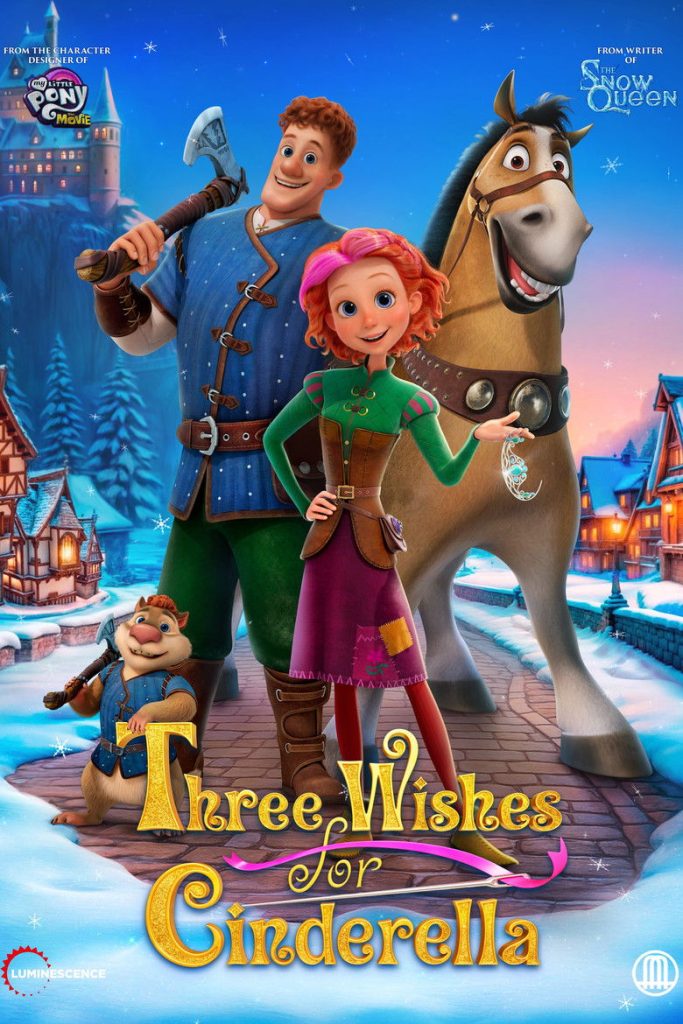
Three Wishes of Cinderella (2026)

Released: 2026-01-31 Recommended age: 6+ No IMDb rating yet
Three Wishes of Cinderella

Movie details

  • Genres: Animation
  • Country / region: Armenia, Czech Republic
  • Original language: en
  • Premiere: 2026-01-31

Story overview

In this animated retelling of the classic Cinderella story, a young woman dreams of attending the royal ball to meet Prince Merliflore, whom she admires from afar. Her cruel Stepmother overworks her with household chores, but a magical nut helps her complete her tasks in time for the ball. At the event, Cinderella discovers that the Prince isn't who she imagined him to be, leading her to realize that her true love has been nearby all along.

Parent Guide

A gentle animated retelling of Cinderella with mild emotional themes and positive messages about self-worth and true love recognition. Suitable for most children with some parental guidance for younger viewers regarding the emotional mistreatment elements.

Content breakdown

Violence & peril
Mild

No physical violence. Mild peril includes emotional mistreatment by the Stepmother who overworks Cinderella and is generally unkind. The magical elements are whimsical and not threatening.

Scary / disturbing
Mild

The Stepmother's cruel behavior might be emotionally upsetting for sensitive young children. No truly frightening imagery or intense scary scenes.

Language
None

No offensive language expected in this family-friendly animated film.

Sexual content & nudity
None

No sexual content or nudity. Romantic elements are limited to innocent admiration and realization of true feelings.

Substance use
None

No depiction of alcohol, drugs, or substance use.

Emotional intensity
Mild

Moderate emotional themes include mistreatment, longing, disappointment, and romantic realization. The emotional arc is gentle and age-appropriate, with a positive resolution.

Parent tips

This animated film offers a gentle twist on the traditional Cinderella tale with themes of self-discovery and recognizing true love. Parents should be aware of the depiction of emotional mistreatment by the Stepmother, which may be upsetting for very young children. The magical elements are mild and whimsical. The story promotes positive messages about inner worth, kindness, and looking beyond appearances.

Parent chat guide

After watching, you might discuss: How did Cinderella's feelings about the Prince change? Why was it important that she realized her true love was nearby? How did she show kindness even when treated poorly? What does the story teach us about judging people by their appearances? How did the magical nut help Cinderella, and what does this represent about finding help when needed?

Parent follow-up questions

  • How did Cinderella feel when her Stepmother was mean to her?
  • What was your favorite part with the magical nut?
  • Who was your favorite character and why?
  • Why do you think Cinderella admired the Prince before meeting him?
  • How did Cinderella's understanding of love change during the story?
  • What does this story teach us about kindness?
  • What does the story suggest about the difference between admiration and true love?
  • How does the film handle the theme of emotional abuse in a way appropriate for children?
  • What modern elements might this retelling include compared to traditional versions?
  • How does this version challenge traditional fairy tale romance tropes?
  • What commentary might the film be making about societal expectations of romance?
  • How does the magical element serve as a metaphor for inner resources or support systems?
⚠️ Deep Film Analysis (Contains Spoilers) · Click to Expand
A fairy tale where the real magic is learning to wish for yourself, not just a prince.

🎭 Story Kernel

The film subverts the classic Cinderella narrative by making the titular three wishes the central conflict, not the romance. Cinderella's journey is about agency and self-worth. Her initial wishes, focused on escape and external validation, reflect her internalized oppression. The pivotal moment isn't the ball, but her final wish—a choice that redefines her destiny on her own terms. The stepfamily and prince are obstacles, but the core driver is Cinderella's evolution from a character who is wished *for* to one who consciously wishes *for herself*. The movie expresses that true transformation comes from internal choice, not external magic.

🎬 Visual Aesthetics

The visual language creates a stark contrast between confinement and possibility. Cinderella's domestic scenes use a muted, desaturated palette with tight, restrictive framing, often shooting her through windows or doorways. The magical sequences, particularly during the wish fulfillments, explode with a warm, luminous color palette—golds and deep blues—and employ fluid, sweeping camera movements. The Fairy Godmother's magic is visualized not as sparkly dust, but as organic, growing light, symbolizing inner potential. The ball scene's opulence is deliberately over-saturated, almost garish, visually critiquing the hollow glamour of the prince's world versus the authentic warmth of her final, self-made choice.

🔍 Details & Easter Eggs

1
The chipped blue bowl Cinderella eats from early on mirrors the color and eventual shape of the magical carriage, foreshadowing that her 'magic' originates from her humble, resilient everyday life, not an external source.
2
In scenes before her transformation, background reflections in polished surfaces often subtly distort Cinderella's image, visually representing her fractured sense of self and lack of a clear identity under her stepfamily's rule.
3
The prince's castle features numerous grand clocks, all permanently stopped. This is a visual metaphor for the stagnant, unchanging nature of the royal life she is initially tempted by, contrasting with the organic, growing magic of her own path.

💡 Behind the Scenes

The film was shot primarily in the Czech Republic, utilizing historic castles and rustic villages to ground the fairy-tale elements in a tangible, earthy reality. The director insisted on practical effects for the magical sequences where possible, using complex lighting rigs and in-camera tricks to create the 'growing light' effect, aiming to make the magic feel earned and physical. A notable challenge was the animal actors for the mice and birds; trainers worked for months to achieve the specific, non-anthropomorphized behaviors seen on screen, wanting the creatures to feel like real companions, not cartoon sidekicks.

Where to watch

Streaming availability has not been announced yet.

SkyMe App
SkyMe Guide Download on the App Store
VIEW