
Thru the Mirror (1936)
Story overview
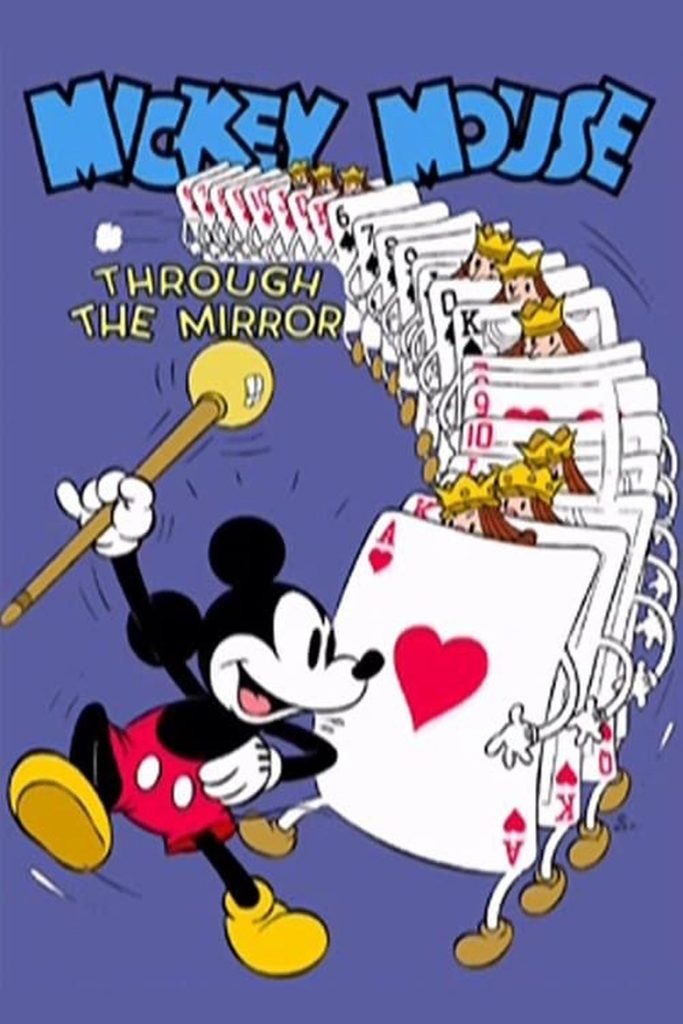
Thru the Mirror is a 1936 animated short film featuring Mickey Mouse. After reading Alice in Wonderland, Mickey falls asleep and dreams he enters a magical world behind a mirror where household objects come to life. In this whimsical fantasy, Mickey interacts with animated furniture and experiences playful adventures in this surreal environment. The film blends classic Disney animation with lighthearted comedy in a brief nine-minute runtime.
Parent Guide
A gentle, classic Disney animated short suitable for all ages with no concerning content.
Content breakdown
No violence, fighting, or dangerous situations present.
No scary elements; all content is lighthearted and whimsical.
No inappropriate language; dialogue is minimal and family-friendly.
No sexual content or nudity of any kind.
No depiction of alcohol, drugs, or substance use.
Emotional tone is consistently cheerful and playful throughout.
Parent tips
This classic Disney short is generally appropriate for most children, featuring Mickey Mouse in a gentle fantasy adventure. The film contains no concerning content, but very young viewers might find the concept of objects coming to life slightly confusing or surprising. At just nine minutes long, it's an easily digestible introduction to vintage animation that can spark conversations about imagination and dreams.
Parent chat guide
Parent follow-up questions
- What was your favorite thing that moved in Mickey's dream?
- Have you ever dreamed about toys or furniture that could talk?
- How did Mickey feel when he saw the mirror world?
- What would you do if your toys came to life?
- What color was Mickey's outfit in the movie?
- Why do you think Mickey dreamed about going through the mirror?
- How is this story similar to or different from Alice in Wonderland?
- What would you do if you found yourself in a world where furniture was alive?
- How did the animators make the furniture seem like it had feelings?
- What was the most surprising thing that happened in the mirror world?
- What do you think this story says about imagination and creativity?
- How does this 1936 animation style compare to modern cartoons you watch?
- Why might someone dream about familiar objects behaving differently?
- What techniques did the animators use to bring the furniture to life?
- How does this short film use fantasy to explore everyday experiences?
- How does this film reflect 1930s animation techniques and storytelling?
- What themes about reality versus imagination does this short explore?
- How does the concept of 'through the looking glass' connect to broader literary traditions?
- In what ways does this film use surrealism to create humor?
- How might this vintage animation be received differently by modern audiences versus original viewers?
🎭 Story Kernel
At its core, 'Thru the Mirror' explores the seductive chaos of escapism through Mickey Mouse's journey into a distorted reflection of his own world. The film isn't about a literal adventure but about the psychological thrill of breaking routine—Mickey isn't driven by a quest but by pure curiosity that quickly spirals into playful anarchy. The mirror world represents not an alternate reality but a carnivalesque version of his own domestic space, where familiar objects rebel against their mundane functions. This short masterfully captures that moment when boredom transforms into imaginative liberation, only to reveal how easily control can slip away when we play with reflections of ourselves.
🎬 Visual Aesthetics
The animation employs a liquid, morphing visual language where objects defy physics with rubbery elasticity—playing cards become acrobats, furniture waltzes, and Mickey's own body stretches like taffy. A muted, dreamlike color palette of soft blues and warm browns in the real world gives way to vibrant, saturated reds and golds in the mirror realm, visually marking the transition from reality to fantasy. The camera mimics Mickey's disorientation with dizzying pans and impossible perspectives, particularly during the dance sequence where the room itself seems to spin. Symbolism emerges through the mirror's surface, which acts less as a portal and more as a membrane between order and chaos.
🔍 Details & Easter Eggs
💡 Behind the Scenes
Released in 1936, 'Thru the Mirror' was directed by David Hand, who later supervised 'Snow White and the Seven Dwarfs.' The film's surreal animation was heavily influenced by the work of animator Norm Ferguson, known for his 'squash and stretch' techniques. Interestingly, this short was produced during a period when Disney was experimenting with more abstract, non-narrative animation, bridging the gap between earlier Silly Symphonies and the feature films to come. The musical score incorporates a jazzy rendition of 'Tit for Tat,' composed by Leigh Harline, who would later win an Oscar for 'When You Wish Upon a Star.'
Where to watch
Choose region:
- Disney Plus