
Tin Toy (1988)
Story overview
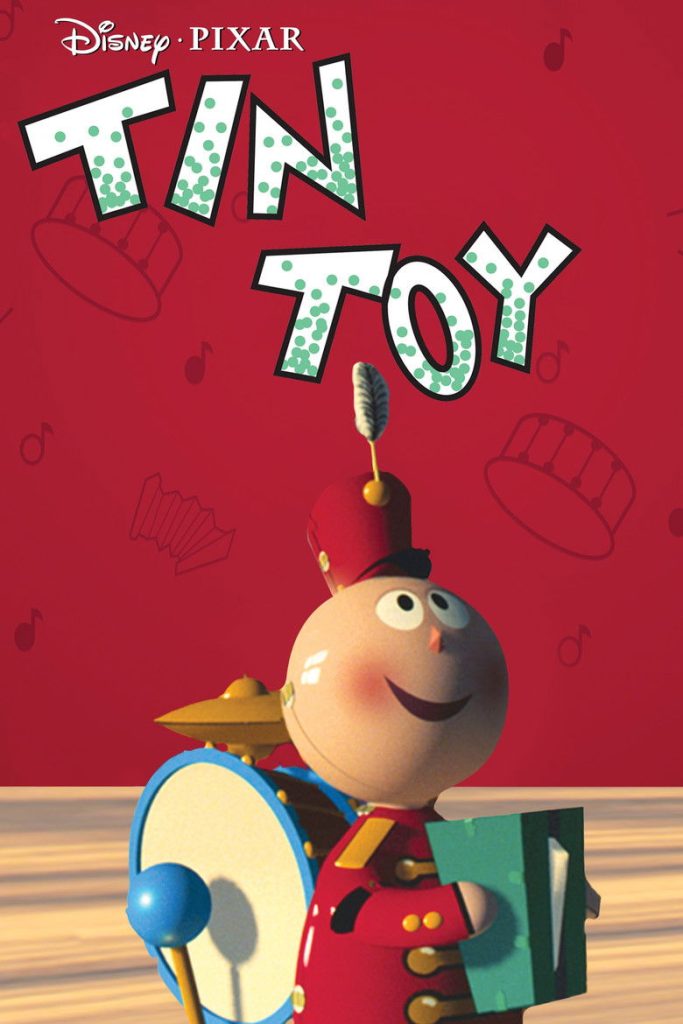
Tin Toy is a charming 5-minute animated short film from 1988 that explores the perspective of a toy encountering a baby for the first time. The story follows Tinny, a wind-up toy who initially perceives the baby as a terrifying, drooling monster and tries to escape. Through his journey, Tinny comes to understand that the baby's clumsy, curious behavior isn't malicious but rather innocent exploration, leading him to realize he actually wants to be played with. The film beautifully captures the simple joys and frustrations of childhood play from a toy's viewpoint.
Parent Guide
A completely harmless, delightful animated short suitable for viewers of all ages. The film contains no problematic content and offers positive messages about perspective, understanding, and the joy of play.
Content breakdown
No violence whatsoever. Tinny experiences brief moments of perceived danger when he thinks the baby might harm him, but these are portrayed as comical misunderstandings rather than actual peril.
Nothing scary or disturbing. The baby is shown from Tinny's exaggerated perspective as a 'monster' with loud noises and looming presence, but this is clearly humorous exaggeration that even young children will recognize as funny rather than frightening.
No dialogue in the film, only musical score and sound effects. No language concerns of any kind.
No sexual content or nudity. The baby wears a diaper in typical infant fashion.
No substance use of any kind.
Very mild emotional moments when Tinny feels lonely or initially frightened, but these are brief and resolved positively. The overall tone is lighthearted and cheerful.
Parent tips
This gentle animated short is perfect for family viewing with no concerning content. The brief moments where Tinny feels threatened by the baby are portrayed humorously rather than frighteningly. The film provides excellent opportunities to discuss perspective-taking with children - how the same situation (a baby playing) can look very different from a toy's point of view versus a human's. The short runtime makes it ideal for young attention spans, and the G rating ensures it's appropriate for all ages.
Parent chat guide
Parent follow-up questions
- Did you think the baby was scary like Tinny did at first?
- What was your favorite part of the movie?
- How do you think Tinny felt when he wanted to be played with?
- Do you have any toys that might feel the same way?
- Why do you think Tinny changed his mind about the baby?
- Have you ever misunderstood someone's intentions like Tinny did?
- What does this story teach us about perspective?
- How does the movie show that babies learn through play?
- How does the animation help tell the story without dialogue?
- What does Tinny's journey teach us about fear and understanding?
- How might this story be different if told from the baby's perspective?
- What techniques did the filmmakers use to make the baby seem 'monstrous' to Tinny?
- How does this early Pixar short demonstrate themes that would later appear in Toy Story?
- What commentary does the film make about consumerism and toys' 'purpose'?
- How does the lack of dialogue affect the storytelling effectiveness?
- What technical achievements in early computer animation does this film represent?
🎭 Story Kernel
At its core, 'Tin Toy' explores the existential horror of purpose through the lens of consumer objects. The one-man-band tin toy, Billy, begins with the manufactured desire to be played with, only to discover that a child's affection is chaotic, destructive, and ultimately terrifying. The film subverts the typical toy narrative—it's not about being loved and discarded, but about the raw, unpredictable power of the user. Billy's drive shifts from seeking validation to pure survival, mirroring how purpose, once attained, can become a prison. The baby, presented not as innocent but as a force of nature, becomes the antagonist, making the film a darkly comic parable about the creator-consumer relationship.
🎬 Visual Aesthetics
The visual language of 'Tin Toy' is a masterclass in early CGI conveying tangible dread. The camera often adopts Billy's low-angle perspective, making the ordinary living room feel like a vast, threatening landscape. The color palette is dominated by the warm, saturated tones of 80s suburban decor, which ironically heightens the uncanny valley of the plastic baby's design—its rosy cheeks and blank eyes become sinister. The animation of the baby is key; its clumsy, physics-driven movements lack the polished smoothness of Billy, visually cementing it as an unpredictable, organic terror versus the ordered, mechanical toy.
🔍 Details & Easter Eggs
💡 Behind the Scenes
'Tin Toy' (1988) was a watershed moment for Pixar, winning the Academy Award for Best Animated Short Film and proving the emotional potential of CGI. Director John Lasseter and his tiny team created it on a shoestring budget, with the complex baby model (nicknamed 'Billy') pushing their software to its limits. The baby's design was intentionally made to be slightly unsettling to amplify the toy's fear. This short directly demonstrated to skeptical executives that computer animation could tell a compelling story, paving the way for 'Toy Story' and the entire Pixar empire.
Where to watch
Choose region:
- Disney Plus
- Amazon Video
- Apple TV Store
- Google Play Movies
- YouTube
- Fandango At Home
Trailer
Trailer playback is unavailable in your region.