
Tinker Bell (2008)
Story overview
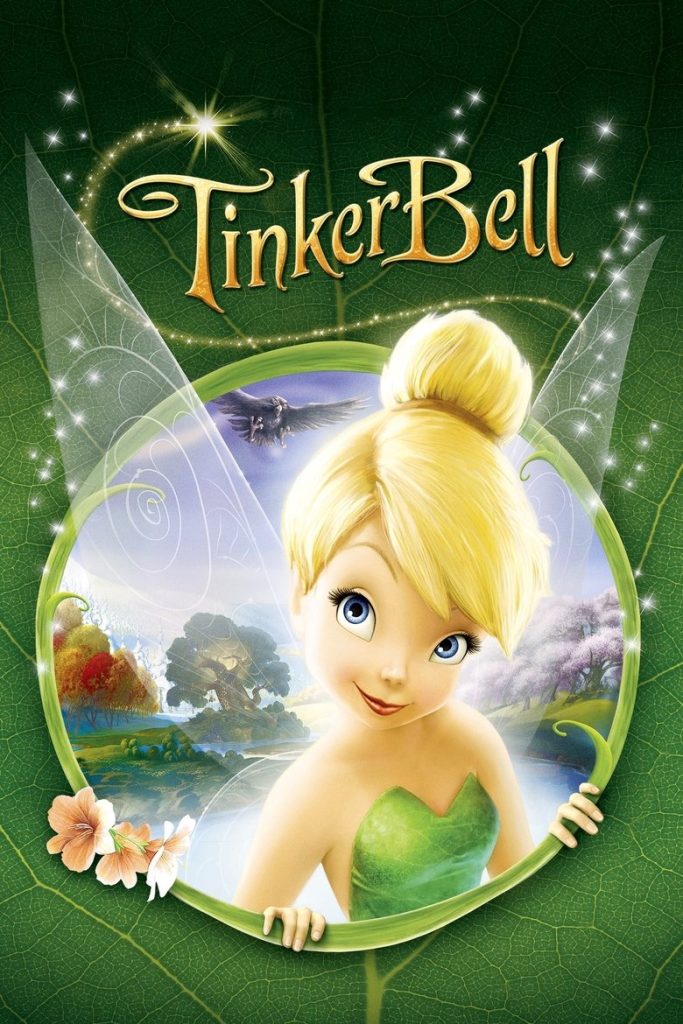
Tinker Bell is a 2008 animated family film that explores the magical world of Pixie Hollow, where fairies use their unique talents to bring seasons to the human world. The story follows Tinker Bell as she discovers her own special abilities and learns important lessons about friendship, teamwork, and self-acceptance. This gentle adventure features beautiful animation and introduces Disney's iconic fairy character in her first speaking role, offering wholesome entertainment for young viewers.
Parent Guide
A completely safe, gentle animated film with positive messages about self-discovery and teamwork. Perfect for family viewing with no concerning content.
Content breakdown
No violence of any kind. There are brief moments of mild tension when characters face small challenges, but nothing threatening or dangerous.
Nothing scary or disturbing. The film maintains a consistently cheerful, magical tone throughout.
No inappropriate language. All dialogue is polite and family-friendly.
No sexual content or nudity. Characters are modestly dressed in fairy attire.
No substance use of any kind.
Very mild emotional moments when characters feel disappointed or frustrated, but these are quickly resolved with positive outcomes.
Parent tips
Tinker Bell is a completely family-friendly film with a G rating that makes it appropriate for all ages. The movie contains no violence, scary content, or problematic material, focusing instead on positive themes like discovering one's talents, working together, and embracing differences. Parents can feel confident showing this to even the youngest children, though some very sensitive preschoolers might find a few brief moments of mild tension when characters face small challenges.
Parent chat guide
Parent follow-up questions
- What was your favorite fairy in the movie?
- What colors did you see in Pixie Hollow?
- How do you think the fairies help the seasons change?
- What would your fairy talent be?
- Did you see any animals in the movie?
- Why was Tinker Bell unhappy at first about her talent?
- How did the fairies work together to solve problems?
- What did Tinker Bell learn about herself by the end?
- Which season do you think is most important and why?
- What makes a good friend, according to the movie?
- What message does the movie send about accepting yourself?
- How does the film show that different talents are all valuable?
- What responsibilities do the fairies have in their world?
- How might the story be different if Tinker Bell had a different talent?
- What does cooperation look like in Pixie Hollow?
- How does the film portray personal growth and self-discovery?
- What societal structures exist in Pixie Hollow, and are they fair?
- How does the animation style contribute to the magical atmosphere?
- What themes about identity and purpose does the story explore?
- How might this story connect to real-world situations about finding your place?
🎭 Story Kernel
At its core, 'Tinker Bell' is a deceptively simple story about identity formation within rigid systems. Tinker's journey isn't about becoming a tinker—it's about discovering that her innate curiosity and problem-solving nature were her true talents all along. The film explores how institutional roles (tinker, garden fairy, water fairy) attempt to define individuals, and the quiet rebellion of finding purpose through passion rather than assignment. Tinker's initial failure at other fairy crafts mirrors the universal experience of trying to fit into prescribed boxes before realizing one's unique contribution. The climax—where she repairs the music box not through magic but through mechanical ingenuity—validates specialized skills in a world that often celebrates only the flashiest abilities.
🎬 Visual Aesthetics
The animation employs a soft-focus, ethereal quality for Pixie Hollow that contrasts sharply with the more textured, realistic mainland. Tinker Bell's workshop is bathed in warm copper and gold tones, while nature fairies' environments use cooler greens and blues—visually reinforcing their elemental divisions. The camera frequently adopts low-angle shots when Tinker is working, emphasizing her focus and the grandeur of small objects. Most notably, the film uses scale masterfully: thimbles become cauldrons, buttons become shields, and dewdrops become swimming pools. This visual language makes the fairy world feel both miniature and expansive simultaneously, creating a unique sense of wonder through perspective manipulation rather than sheer spectacle.
🔍 Details & Easter Eggs
💡 Behind the Scenes
Mae Whitman, who voices Tinker Bell, recorded many of her workshop scenes while actually tinkering with small mechanical objects to capture authentic frustration and triumph sounds. The animators studied hummingbird flight patterns for fairy movements, creating that distinctive hovering quality. Pixie Hollow's design was inspired by English cottage gardens and Victorian-era scientific illustrations. Interestingly, this was Disney's first CGI film featuring Tinker Bell as a lead character, despite her being one of their oldest icons—bridging traditional animation legacy with new technology.
Where to watch
Choose region:
- Disney Plus
- Amazon Video
- Apple TV
- Google Play Movies
- YouTube
- Fandango At Home
Trailer
Trailer playback is unavailable in your region.