
Tinker Bell and the Legend of the NeverBeast (2014)
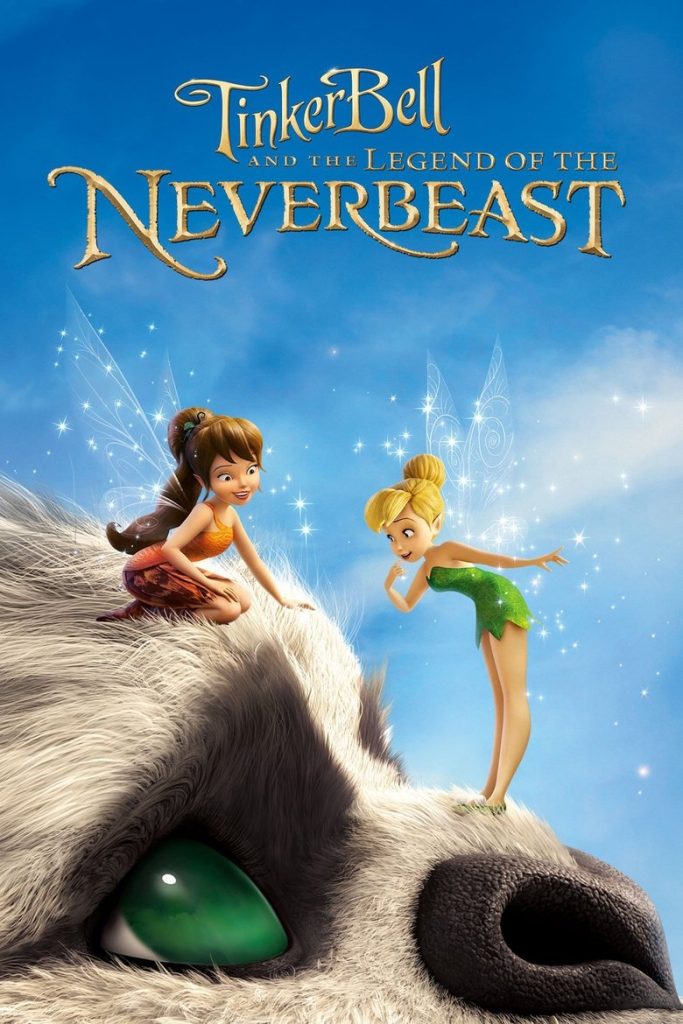
Story overview
Tinker Bell and the Legend of the NeverBeast is a family-friendly animated adventure where animal fairy Fawn discovers a mysterious creature that others fear will destroy their home. Fawn must convince her fairy friends to help rescue this misunderstood being despite opposition from the scout fairies. The story explores themes of friendship, courage, and looking beyond appearances to understand others.
Parent Guide
A gentle animated adventure with positive messages about empathy and understanding, suitable for all ages.
Content breakdown
Some mild tension and peril as fairies face potential danger from a creature and conflict among themselves, but no actual violence.
The NeverBeast might appear intimidating initially, and there are moments of tension, but nothing truly frightening.
No inappropriate language.
No sexual content or nudity.
No substance use.
Mild emotional moments related to friendship, misunderstanding, and protecting others.
Parent tips
This film is rated G and is appropriate for all ages, featuring positive messages about empathy, teamwork, and challenging assumptions. There are mild moments of tension when the fairies face potential danger from the creature and conflict among themselves, but these are resolved through understanding and cooperation. The animation is colorful and engaging, with animal characters that will appeal to younger viewers while the story's deeper themes about prejudice and protection can spark meaningful conversations with older children.
Parent chat guide
Parent follow-up questions
- Which fairy was your favorite and why?
- What animals did you see in the movie?
- How did the fairies help each other?
- What was your favorite colorful part?
- How did the story make you feel?
- Why were some fairies afraid of the NeverBeast at first?
- How did Fawn show she was a good friend?
- What did the fairies learn about the NeverBeast?
- Have you ever helped someone who was misunderstood?
- What would you do if you saw a creature that looked scary?
- What does this story teach us about judging others by appearance?
- How did the different fairy talents help solve problems?
- Why is it important to protect animals and nature?
- What would you have done if you were in Fawn's situation?
- How did the characters show courage in the story?
- How does this film explore themes of prejudice and misunderstanding?
- What real-world situations mirror the conflict between protecting nature and fearing the unknown?
- How do the different fairy roles represent different approaches to problem-solving?
- What does the NeverBeast symbolize in terms of environmental protection?
- How does the film balance entertainment with meaningful messages?
🎭 Story Kernel
At its heart, the film is a poignant exploration of prejudice and the courage required to challenge institutional narratives. Fawn's journey isn't about taming a beast, but about confronting the systemic fear-mongering perpetuated by Nyx and the Scout Fairies. The NeverBeast, Gruff, is merely a catalyst; the true conflict is between blind obedience to protocol (represented by the protective barriers and alarms) and empathetic curiosity. The climax reveals that the 'monster' is a guardian, and the real danger was the fairies' own readiness to destroy what they didn't understand. It's a narrative about how fear, when weaponized as 'protection,' can make us the antagonists in our own story.
🎬 Visual Aesthetics
The film employs a distinct visual dichotomy. The Pixie Hollow scenes are bathed in a familiar, saturated palette of pastels and warm light, representing order and safety. In contrast, the NeverBeast's territory uses cooler, muted greens and blues, with dramatic low-angle shots making Gruff appear monstrous, mirroring the fairies' perspective. The camera often adopts Fawn's point-of-view during discoveries, pulling us into her curiosity. The action of the final storm is rendered with chaotic, swirling energy and stark lightning, visually externalizing the internal chaos of fear versus truth. The transformation of the glowing green stones from objects of terror to symbols of salvation is the film's central visual metaphor.
🔍 Details & Easter Eggs
💡 Behind the Scenes
This was the final film in the Disney Fairies franchise of animated features. Ginnifer Goodwin, who voiced Fawn, has mentioned in interviews that this particular story resonated with her due to its themes of advocacy and challenging the status quo. The design of the NeverBeast, named Gruff, was intentionally made to look unlike traditional Disney creatures, combining elements of prehistoric mammals and rock formations to emphasize his 'otherness' within Pixie Hollow's world.
Where to watch
Choose region:
- Disney Plus
- Amazon Video
- Apple TV
- Google Play Movies
- YouTube
- Fandango At Home
Trailer
Trailer playback is unavailable in your region.