
Tinker Bell and the Pirate Fairy (2014)
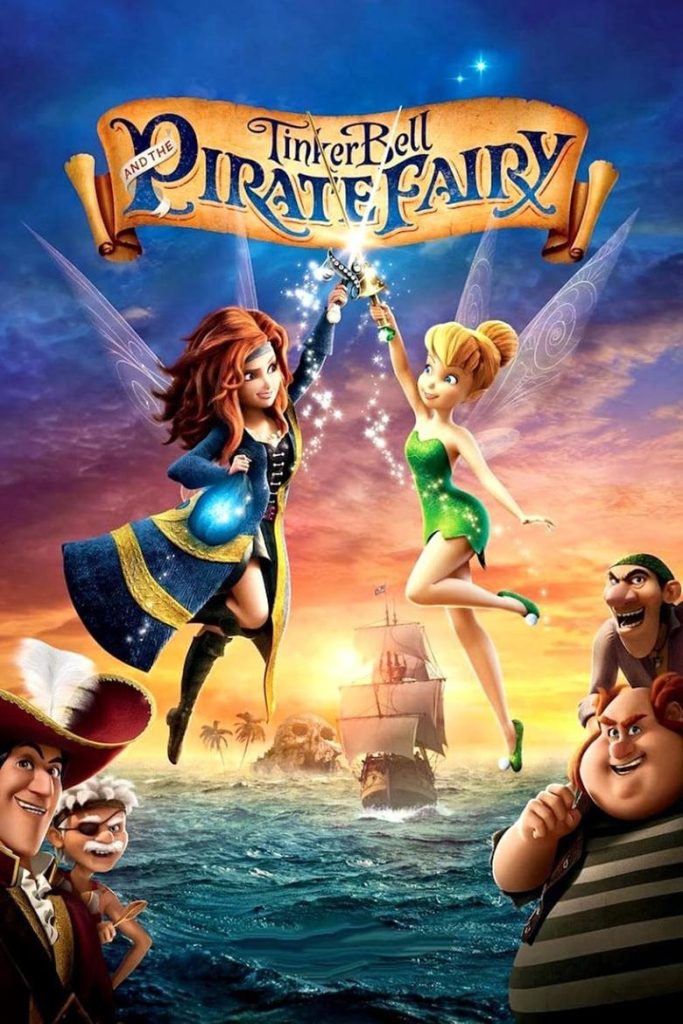
Story overview
This animated family film follows Zarina, a curious fairy who becomes fascinated with Blue Pixie Dust's potential and leaves Pixie Hollow to join a pirate crew. Tinker Bell and her fairy friends embark on a quest to find Zarina, leading to an adventure where they confront pirates including a young cabin boy who will become Captain Hook. The story explores themes of friendship, curiosity, and finding one's place while maintaining the magical fairy world setting.
Parent Guide
A gentle animated adventure suitable for all ages with positive messages about friendship and curiosity.
Content breakdown
Cartoonish fantasy action with fairy magic and mild pirate confrontations; no realistic violence or weapons.
No frightening imagery; pirates are presented in a non-threatening, cartoonish manner.
No concerning language; all dialogue is family-appropriate.
No sexual content or nudity; characters are modestly dressed fairies and pirates.
No depiction of substance use.
Mild emotional moments related to friendship conflicts and adventure excitement.
Parent tips
This G-rated film is appropriate for all ages with minimal concerning content. There are some mild fantasy action sequences involving fairy magic and pirate confrontations, but no realistic violence or scary imagery. The story presents positive messages about teamwork, forgiveness, and following your dreams while showing consequences for impulsive decisions.
Parents might appreciate how the film portrays female characters as intelligent, capable leaders who solve problems through cooperation rather than aggression. The pirate elements are presented in a cartoonish, non-threatening manner suitable for young viewers. The film's runtime of 78 minutes makes it manageable for most children's attention spans.
Parent chat guide
After the movie, consider talking about the difference between healthy curiosity and reckless behavior. You might also discuss how the characters showed forgiveness and how conflicts were resolved peacefully. For older children, you could explore themes of leadership and responsibility.
Parent follow-up questions
- What was your favorite fairy in the movie?
- What colors did you see in Pixie Hollow?
- How did the fairies help each other?
- What magic things did you see?
- Was there anything that made you laugh?
- Why do you think Zarina left Pixie Hollow?
- How did Tinker Bell and her friends work as a team?
- What did you think about the pirate characters?
- What would you do if you discovered something new like Blue Pixie Dust?
- What makes someone a good friend?
- What do you think the movie was saying about following your dreams versus being responsible?
- How did the characters show forgiveness in the story?
- What leadership qualities did you notice in different characters?
- Why do you think the young cabin boy was included in the story?
- How did the movie balance adventure with safety for young viewers?
- What themes about identity and belonging did you notice in Zarina's journey?
- How does this portrayal of pirates compare to other pirate stories you know?
- What messages about gender roles did you observe in the character dynamics?
- How effectively did the film handle the concept of consequences for one's actions?
- What creative choices in the animation or storytelling stood out to you?
🎭 Story Kernel
At its core, 'Tinker Bell and the Pirate Fairy' is a surprisingly poignant exploration of identity and belonging. The film cleverly subverts the traditional 'good vs. evil' fairy narrative by positioning Zarina, the titular Pirate Fairy, not as a villain, but as a misunderstood outcast. Her drive stems from a profound sense of alienation within Pixie Hollow's rigid, talent-based society. The real conflict isn't about magic dust; it's about the systemic rejection of curiosity and non-conformity. Tinker Bell's journey to understand Zarina becomes a mirror for the audience, questioning what happens when a community fails to nurture its most inventive minds, pushing them toward isolation and, in this case, a pirate's life.
🎬 Visual Aesthetics
The film's visual language creates a stark dichotomy between the ethereal, sun-drenched pastels of Pixie Hollow and the gritty, shadowy textures of the pirate ship. This isn't just aesthetic; it's thematic. Camera work in Hollow is stable and wide, emphasizing order and community. Aboard the ship, angles become dynamic and canted, mirroring Zarina's chaotic, liberated state. The action sequences, particularly the fairy-pirate skirmishes, blend whimsical fairy flight with swashbuckling physicality, a visual metaphor for the clash of two worlds. The Blue Pixie Dust, when unleashed, paints the screen in vibrant, swirling cerulean hues, symbolizing both unchecked power and pure, unadulterated potential.
🔍 Details & Easter Eggs
💡 Behind the Scenes
Mae Whitman, who voices Tinker Bell, is also known for her role as Amity Blight in 'The Owl House,' another series deeply concerned with magical outsiders and found family. Christina Hendricks, voicing Zarina, brings a nuanced vulnerability to the role that elevates the character beyond a simple antagonist. The film's production involved extensive research into period-accurate pirate ship designs to contrast with the wholly invented bioluminescent ecology of Pixie Hollow, creating a tangible world clash. This was the first 'Tinker Bell' film to integrate a substantial male human character (the young James Hook) as a central plot element, bridging the fairy and human worlds more directly.
Where to watch
Choose region:
- Disney Plus
- Amazon Video
- Apple TV
- Google Play Movies
- YouTube
- Fandango At Home
Trailer
Trailer playback is unavailable in your region.