
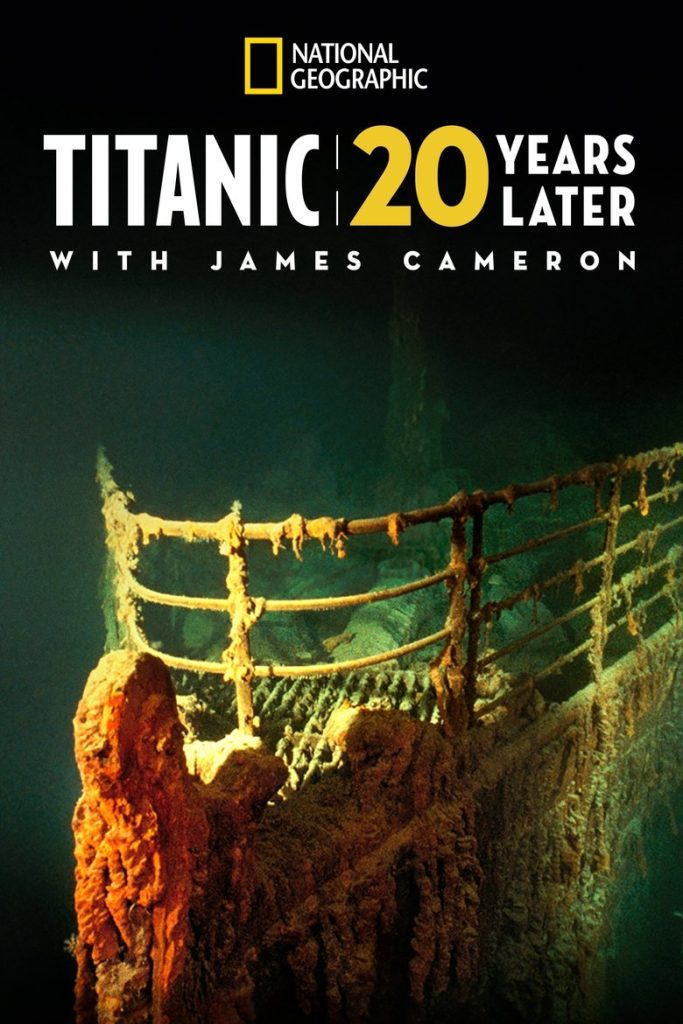
Titanic: 20 Years Later with James Cameron (2017)
Story overview
This 2017 documentary commemorates the 20th anniversary of James Cameron's film 'Titanic' by revisiting the historical disaster. Hosted by Cameron himself, it features interviews with experts like Robert D. Ballard (who discovered the wreck) and descendants of passengers, blending archival footage, CGI reconstructions, and scientific analysis to examine the ship's sinking, its cultural impact, and ongoing research. The tone is educational and reflective, focusing on historical accuracy and memorializing the tragedy without dramatizing personal stories.
Parent Guide
A safe, educational documentary suitable for most children, with no concerning content. Best for ages 8+ due to mature themes handled factually.
Content breakdown
Discusses the sinking and loss of life historically, with no violent or perilous visuals; includes CGI of the ship breaking apart, but not graphic.
Mentions death and tragedy in a respectful, educational context; might be somber for sensitive viewers, but no jump scares or disturbing imagery.
No offensive or strong language; dialogue is professional and informative.
No sexual content or nudity.
No depiction or mention of substance use.
Emotionally reflective on the historical loss, but presented calmly; unlikely to cause distress beyond general sadness about the event.
Parent tips
Ideal for family viewing with children aged 8+, this documentary offers a factual, age-appropriate exploration of the Titanic disaster. Parents can use it to discuss history, engineering, and the importance of safety. No graphic or intense content is present, but younger viewers might find discussions of death and loss somber. Consider watching together to answer questions about the event's scale and historical context.
Parent chat guide
Parent follow-up questions
- What was the Titanic?
- Did people use boats like this long ago?
- What do you see in the ocean pictures?
- How did the Titanic sink?
- What tools do scientists use to explore shipwrecks?
- Why do we make movies about history?
- What mistakes led to the Titanic disaster?
- How has technology changed since 1912?
- What can we learn from historical tragedies?
- How does this documentary compare to fictional accounts of the Titanic?
- What ethical issues arise in memorializing disasters?
- How does James Cameron's film influence public perception of history?
🎭 Story Kernel
The documentary isn't about Titanic's sinking; it's about James Cameron's 20-year obsession with his own creation. The real story is how the director's relentless pursuit of scientific and historical accuracy about the ship has become a parallel journey to the film's fictional romance. We see Cameron not as a filmmaker, but as an explorer haunted by his own myth-making, constantly testing his artistic decisions against cold, hard data from the wreck. The characters are driven by Cameron's need to reconcile his blockbuster spectacle with historical truth, creating a meta-narrative about the burden of creating a cultural monument.
🎬 Visual Aesthetics
Cameron employs a stark visual dichotomy: the warm, saturated flashbacks to 1997's filmmaking process contrast sharply with the cold, blue-hued present-day underwater footage and clinical lab scenes. The camera often frames Cameron in tight close-ups during technical discussions, emphasizing his intense focus, then pulls back to wide shots of the empty soundstage where Titanic once 'sailed,' highlighting the ghost of the production. The visual language shifts from Hollywood grandeur to scientific documentary, mirroring Cameron's own journey from showman to researcher.
🔍 Details & Easter Eggs
💡 Behind the Scenes
Much of the documentary was shot using the same deep-sea submersibles Cameron employed for his actual Titanic wreck dives, blurring the line between film production and exploration. Kate Winslet and Leonardo DiCaprio provided new interviews but separately, as scheduling prevented a joint session—echoing the characters' final separation. Cameron insisted on returning to the original Baja California tank, which had been dismantled; the empty space becomes a poignant character. The production secretly used some of the original 1997 VFX renders, upscaled with modern technology, to create seamless comparisons.
Where to watch
Choose region:
- Disney Plus