
Titanic: The Digital Resurrection (2025)
Story overview
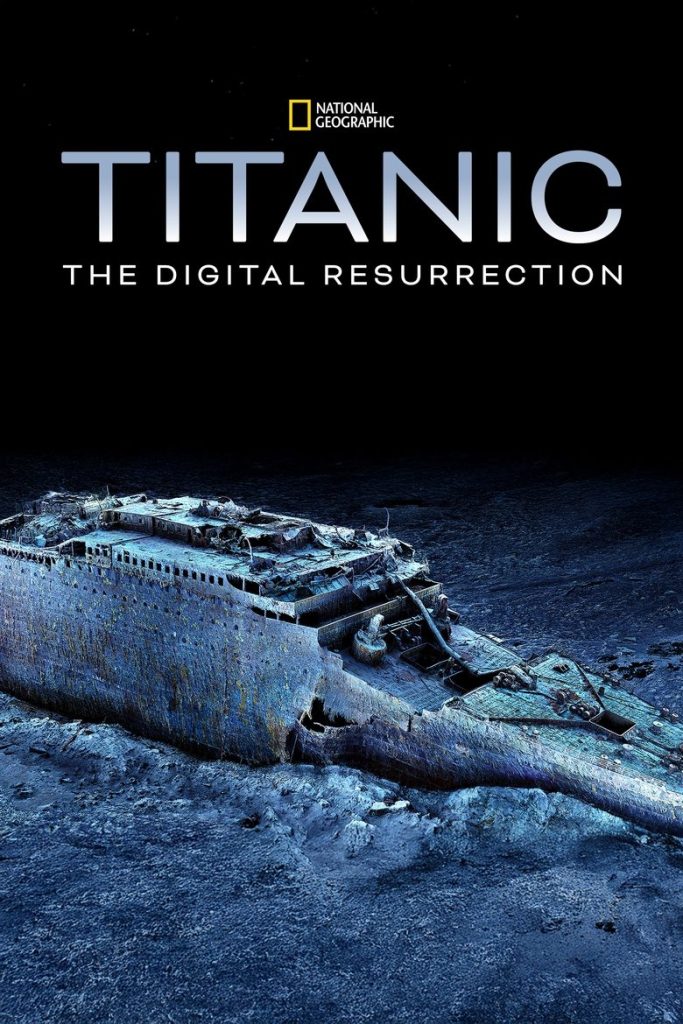
This 2025 documentary uses advanced scanning and CGI to create a detailed 3D digital model of the Titanic wreck. Experts investigate the ship's final moments, exploring both heroic and cowardly actions during the sinking, aiming to reveal the true story behind the disaster.
Parent Guide
Educational documentary suitable for most children, focusing on historical investigation through technology rather than dramatic reenactment.
Content breakdown
Discusses historical disaster with sinking ship, but no visual depictions of violence or peril. May mention people in danger historically.
Some children might find discussion of shipwreck and loss of life unsettling. No graphic or disturbing imagery shown.
No concerning language expected in educational documentary format.
No sexual content or nudity in this historical documentary.
No depiction or discussion of substance use.
Historical tragedy discussed but presented through analytical, technological lens rather than emotional dramatization.
Parent tips
This documentary focuses on historical investigation using technology, with no graphic depictions of the sinking. It's educational but may discuss tragic events; preview if concerned about sensitivity to historical disasters. Suitable for school-aged children interested in history or technology.
Parent chat guide
Parent follow-up questions
- What is a big ship?
- What does a scanner do?
- Can you name something that floats?
- How do you think technology helps us learn about the past?
- What does 'heroism' mean to you?
- Why is it important to remember historical events?
- How might digital models change how we study history?
- What ethical questions arise when investigating disasters?
- How do different perspectives affect historical accounts?
- How does this documentary's approach compare to traditional historical methods?
- What responsibilities do filmmakers have when portraying real tragedies?
- How can technology both preserve and potentially distort historical understanding?
🎭 Story Kernel
The documentary transcends typical maritime history by framing the Titanic not as a sunken relic, but as a digital twin. It explores the intersection of archaeology and cutting-edge technology, shifting the narrative from speculative mystery to forensic certainty. By digitally draining the Atlantic, the film expresses a human obsession with closure and the preservation of memory against the inevitable decay of the physical world. It isn't just about the ship; it is about our refusal to let the past dissolve into the silt. The core theme is the resurrection of truth through data, providing a final, frozen-in-time look at the site before the iron-eating bacteria finish their work, effectively turning a graveyard into a permanent digital monument that survives long after the physical wreck has collapsed into dust.
🎬 Visual Aesthetics
The visual language is defined by the digital twin aesthetic—a ghostly, hyper-realistic recreation that removes the obscuring marine snow and darkness of the abyss. The cinematography utilizes photogrammetry to create a seamless 3D model, allowing the camera to perform impossible maneuvers through the debris field. This creates a surreal, clinical beauty; the ship appears as if it were sitting in a vacuum. The symbolism of draining the ocean serves as a powerful metaphor for clarity and revelation. The contrast between the rusted, organic decay of the actual wreck and the sharp, clean lines of the digital reconstruction highlights the tension between the ephemeral nature of steel and the permanence of digital information, offering a god-like perspective on a human tragedy that was previously shrouded in the murky depths of the North Atlantic.
🔍 Details & Easter Eggs
💡 Behind the Scenes
The project was a massive collaboration between Magellan Ltd, a deep-sea mapping company, and Atlantic Productions. The data was captured during a six-week expedition in 2022 using two specialized submersibles nicknamed Romeo and Juliet. Director Fergus Colville steered the narrative toward a scientific autopsy rather than a dramatized retelling. The expedition faced significant challenges, including unpredictable North Atlantic weather and the technical difficulty of operating remote-controlled vehicles at a depth of 3,800 meters. The resulting 3D model, totaling 16 terabytes of data, is considered the most significant step in Titanic research since the wreck's discovery in 1985.
Where to watch
Choose region:
- Disney Plus
- Hulu
Trailer
Trailer playback is unavailable in your region.