
Titli (2015)
Story overview
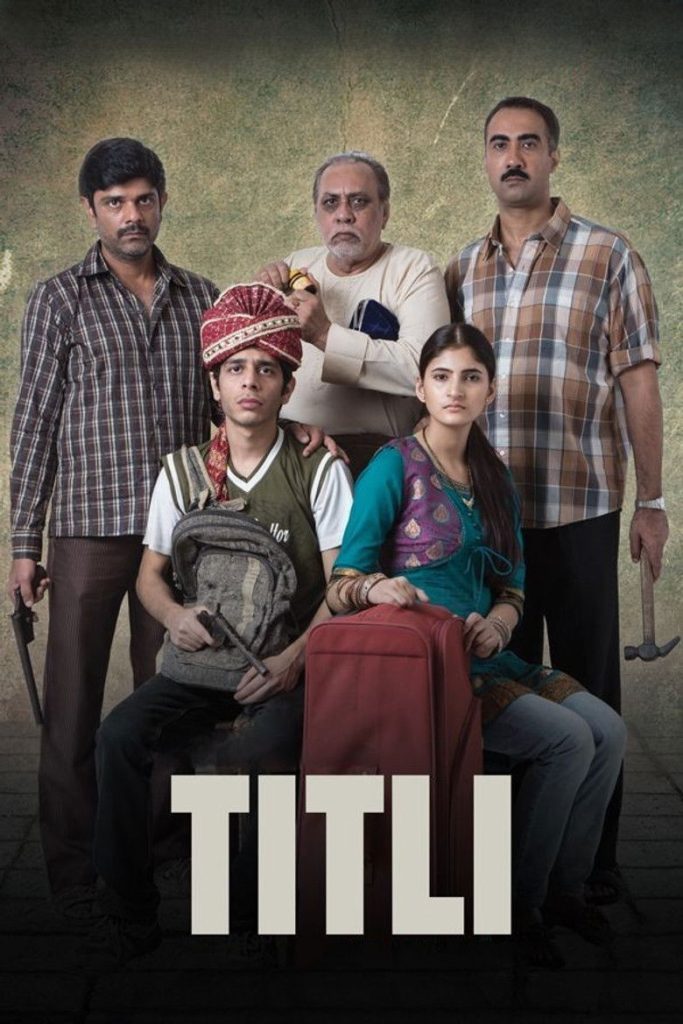
Titli is a 2015 Indian drama film set in Delhi, following a young man named Titli who struggles to escape the oppressive control of his older brothers, who are involved in criminal activities. The film explores themes of family pressure, desperation for freedom, and the harsh realities of urban life, blending intense drama with elements of action and crime as Titli attempts to forge his own path away from violence and coercion.
Parent Guide
Titli is a gritty, realistic drama with strong themes of crime, family conflict, and violence. It is not suitable for children due to intense scenes and mature content. Recommended for viewers aged 16 and up, with parental guidance advised for discussions on its heavy themes.
Content breakdown
Contains scenes of physical violence, including fights, assaults, and threats. There are depictions of criminal activities such as carjacking and coercion, with intense peril and a sense of danger throughout. Some scenes may be graphic and unsettling.
Features disturbing themes of family abuse, control, and desperation. The tense atmosphere and realistic portrayal of urban crime can be unsettling. No supernatural or horror elements, but the psychological tension and emotional distress are prominent.
Includes strong language and profanity in Hindi, with subtitles in English. There is use of swear words and aggressive dialogue related to the criminal context and family conflicts.
Minimal sexual content; may include suggestive themes or brief references, but no explicit nudity or sexual scenes. Focus is more on relationships and power dynamics rather than sexual content.
Occasional depictions of smoking and alcohol use in social or tense situations. No prominent drug use or abuse shown, but substance use is present as part of the characters' environment.
High emotional intensity due to themes of family conflict, desperation, and moral dilemmas. Characters experience fear, anger, and sadness, which may be impactful for sensitive viewers. The film's realistic style adds to the emotional weight.
Parent tips
This film is best suited for mature teens and adults due to its intense themes and realistic portrayal of crime and family conflict. Parents should be aware that it contains strong violence, disturbing scenes, and emotional intensity that may not be appropriate for younger viewers. Consider watching it with older teens to discuss the social and moral issues presented.
Parent chat guide
Parent follow-up questions
—
—
- What did you think about Titli's relationship with his brothers?
- How did the movie show people trying to change their lives?
- What parts of the story felt scary or sad to you?
- How does the film portray the cycle of violence and crime in families?
- What ethical dilemmas did Titli face, and how would you have handled them?
- Discuss the social and economic factors that influence the characters' choices.
- How does the movie use tension and emotion to drive the narrative?
🎭 Story Kernel
At its core, 'Titli' is a brutal examination of inherited violence and the impossibility of escape within Delhi's lower-class ecosystem. The film isn't about Titli's desire for a better life, but his inability to conceive of one outside the familial structure of crime. His brother Vikram isn't just a criminal but the patriarch of a toxic system, where loyalty is enforced through violence and economic dependence. Titli's marriage to Neelu becomes another cage—a transactional arrangement meant to secure his share of the family business, not freedom. The film's tragedy lies in how every attempt at rebellion—the carjackings, the marriage, the final act of violence—only tightens the chains, proving that in this world, the family is both sanctuary and prison.
🎬 Visual Aesthetics
Director Kanu Behl employs a claustrophobic visual language, with handheld cameras and tight close-ups that make Delhi's cramped spaces feel suffocating. The color palette is dominated by grimy yellows and browns, mirroring the moral decay. Violence isn't stylized but abrupt and messy—the carjackings are shot with chaotic urgency, emphasizing panic over prowess. Recurring shots of narrow staircases and barred windows visually reinforce the characters' trapped existence. The final scene's wide shot of Titli walking away isn't liberation but displacement—he carries the violence with him, now the sole architect of his own confined future.
🔍 Details & Easter Eggs
💡 Behind the Scenes
Shashank Arora (Titli) and Amit Sial (Vikram) underwent extensive workshops to portray their volatile brotherly dynamic. The film was shot on location in Delhi's lesser-known housing complexes to capture authentic urban claustrophobia. Director Kanu Behl drew from personal observations of family dynamics in Delhi's middle-class neighborhoods. The raw, improvisational feel of the carjacking scenes was achieved using hidden cameras and non-professional drivers to elicit genuine reactions.
Where to watch
Choose region:
- Netflix
- Netflix Standard with Ads
- Apple TV Store
- Google Play Movies
- YouTube