
To Be or Not to Be (1942)
Story overview
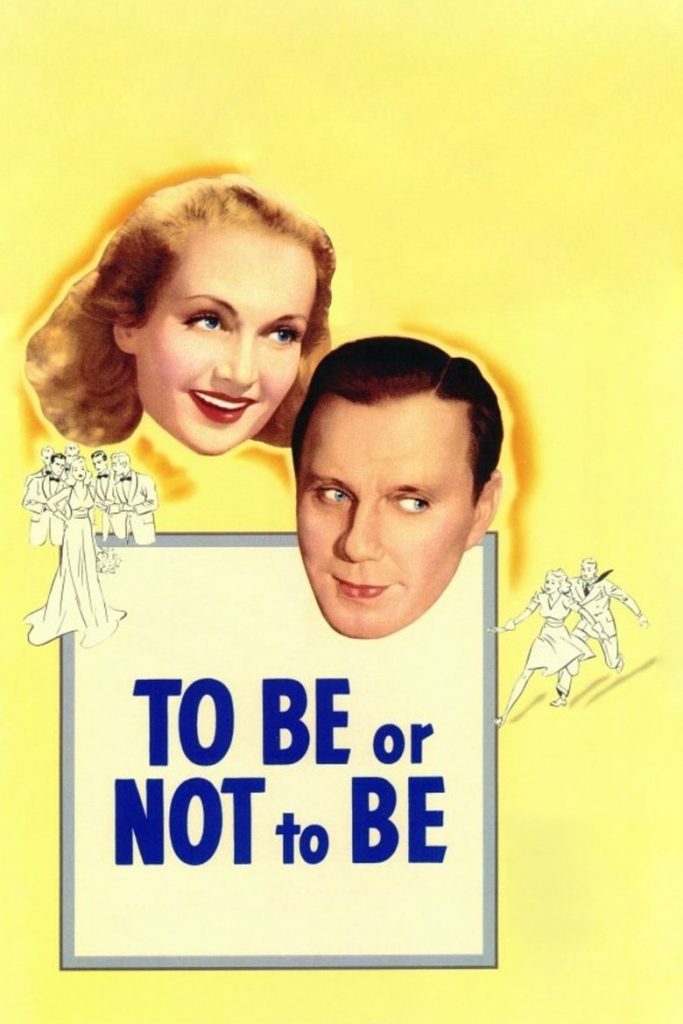
To Be or Not to Be is a 1942 comedy set during the Nazi occupation of Poland. The film follows an acting troupe that gets involved in espionage when a Polish soldier needs their help to identify a German spy. Through clever disguises and theatrical performances, the actors use their skills to outwit the occupying forces. The movie blends humor with wartime tension while maintaining a generally lighthearted tone.
Parent Guide
A classic wartime comedy that uses humor to address serious themes, best for children who can understand historical context and theatrical deception.
Content breakdown
Implied danger from wartime occupation and espionage, but no graphic violence. Some tense moments involving deception and potential discovery.
Wartime setting and themes of occupation might be concerning without context. No graphic or realistically frightening content.
No offensive language noted. Period-appropriate dialogue without modern profanity.
No sexual content or nudity. Romantic elements are very mild and appropriate for all ages.
No substance use depicted. Social drinking may be implied in period-appropriate settings.
Themes of danger and deception create some tension, but the comedic tone keeps emotions generally light. Historical context may require emotional processing for sensitive viewers.
Parent tips
This classic film presents serious historical events through a comedic lens, which may require context for younger viewers. While the humor is generally gentle, the wartime setting involves themes of deception, danger, and occupation that could be confusing or concerning without explanation. The film's portrayal of Nazis as buffoons rather than realistic threats creates a unique tone that parents should help children understand as a specific artistic choice rather than historical reality.
Parent chat guide
Parent follow-up questions
- Did you like the people pretending to be other people?
- What was your favorite funny part?
- How did the actors help the soldier?
- Was it confusing when people wore different costumes?
- Did you understand why they had to be careful?
- Why do you think the actors decided to help the soldier?
- How did using acting skills help them solve problems?
- What made some scenes funny even though the situation was serious?
- How did the characters work together as a team?
- What would you do if you saw someone pretending to be someone else?
- How does the film use humor to talk about serious historical events?
- What do you think about portraying dangerous situations as funny?
- How do the characters use intelligence rather than violence to solve problems?
- What messages does the film send about standing up to bullies or oppressors?
- How does the movie show ordinary people becoming heroes?
- How effective is comedy as a way to address traumatic historical events?
- What artistic choices did the filmmakers make to balance humor with the seriousness of occupation?
- How does the film reflect attitudes toward World War II during the time it was made?
- What does the movie suggest about the power of theater and performance in difficult times?
- How might this film be received differently today versus when it was released in 1942?
🎭 Story Kernel
At its core, 'To Be or Not to Be' explores performance as survival—both on stage and in occupied Warsaw. The characters aren't driven by ideology but by the desperate need to maintain their identities through artifice. The Bronskis' theater troupe uses their skills not for art but for espionage, blurring lines between actor and resistance fighter. The film suggests that in extreme circumstances, the ability to convincingly play a role becomes the ultimate weapon, and authenticity becomes a luxury few can afford. It's less about war than about the theatricality of power and the performative nature of evil.
🎬 Visual Aesthetics
Lubitsch employs a deceptively simple visual style—bright, evenly lit interiors contrast sharply with the grim reality outside. The camera moves with theatrical precision, framing characters as if on a stage. Costumes serve as visual metaphors: Nazi uniforms become costumes within costumes. Notice how scenes in the theater use deep focus to show multiple layers of performance simultaneously, while intimate moments employ tight close-ups that reveal the human faces behind both the theatrical makeup and the political uniforms.
🔍 Details & Easter Eggs
💡 Behind the Scenes
The film faced controversy upon release for making comedy out of Nazi occupation. Jack Benny, primarily known for radio comedy, took a career risk with this dramatic role. The famous 'Heil Hitler' scene was filmed just weeks after America entered WWII. Remarkably, the production managed to secure authentic Polish military uniforms from recent immigrants. Lubitsch, a German Jewish director who fled the Nazis, infused personal experience into what appears as light comedy.
Where to watch
Choose region:
- HBO Max
- HBO Max Amazon Channel
- YouTube TV
- Criterion Channel
- TCM
- Amazon Video
- Apple TV Store
- Google Play Movies
- YouTube
- Fandango At Home